As Swiss Glaciers Melt at Record Pace, Europe Faces a Climate Reality Check
Swiss glaciers shrink as climate crisis fuels extreme heat across Europe
Switzerland’s iconic peaks are losing their icy armor as an unrelenting heatwave forces a premature "glacier loss day," signaling a deepening crisis for the continent’s water security.
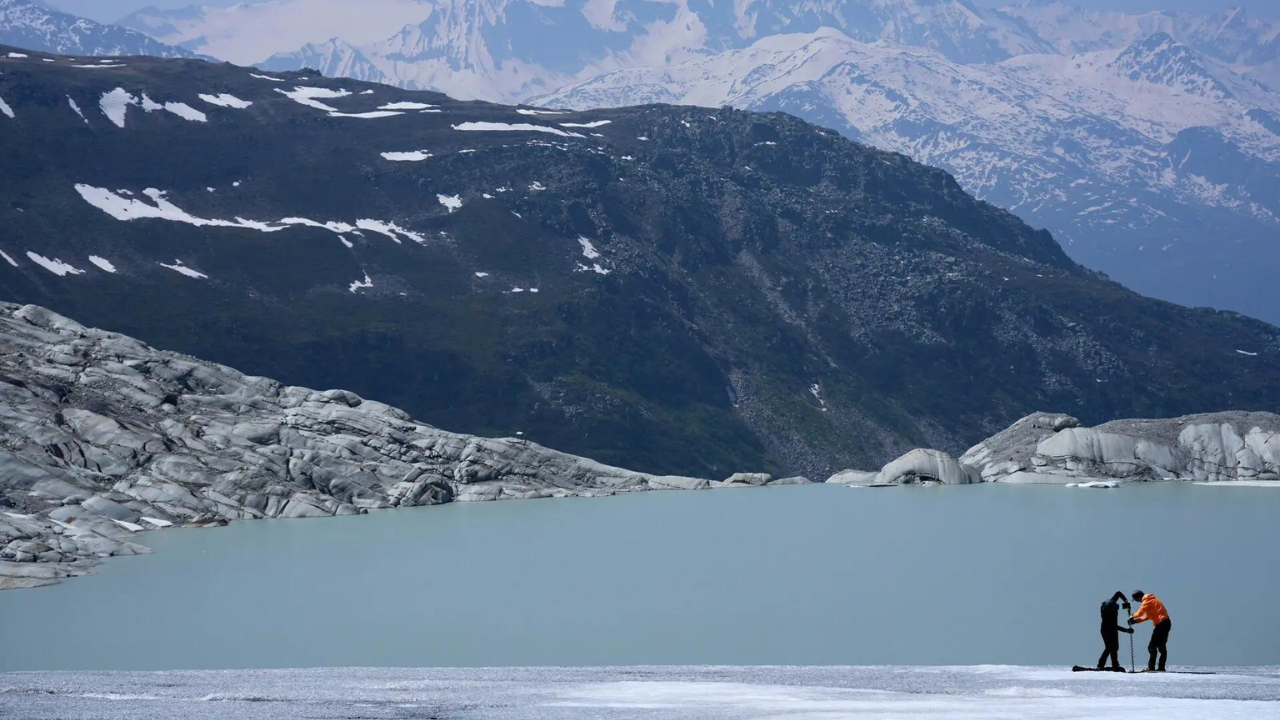
The Rhone Glacier is currently shedding its icy skin at a staggering speed. Over just ten days of the recent European heatwave, researchers observed a vertical ice melt of nearly one metre—a visceral, rapid disappearance that has alarmed the scientific community. Matthias Huss, who leads the glacier monitoring body GLAMOS, has confirmed that Switzerland is poised to hit "glacier loss day" by Monday. This grim milestone marks the point when the entire winter’s accumulation of snow and ice has been exhausted, leaving the glaciers vulnerable to the searing heat that will persist through October.
This year’s trajectory is uncomfortably reminiscent of 2022, the worst year on record for Alpine ice loss. The systemic problem, according to experts, is not just the intensity of a single heatwave, but the arrival of extreme warmth far too early in the season. Switzerland started the year with 25% less snow cover than the 2010-2020 average, and a premature warm spell in May accelerated the melting process, exposing dark, ancient ice that absorbs more solar radiation than reflective snow.
The Cumulative Impact of Climate Change
Compounding this natural attrition is a curious but destructive byproduct of global weather patterns: Sahara dust. Deposits blown over the Alps in March darkened the surface of the glaciers, drastically reducing their ability to reflect sunlight and further hastening the thaw. When combined with the chronic lack of winter snow, these factors have created a "perfect storm" for the Alps. Scientists are now observing that we are effectively three months ahead of a "healthy" state, a gap that is becoming increasingly difficult to bridge.
The trend is no longer an outlier; it is a pattern. Attribution studies continue to link these record-breaking heatwaves directly to human-induced climate change. As the glaciers shrink, they cease to act as the "water towers" of Europe, a shift that threatens the long-term stability of the continent’s water supply and hydro-power potential.
Why it matters
The rapid disappearance of these glaciers is a flashing red warning light for global environmental stability. For a region like Europe, the loss of ice is not merely a loss of scenery; it is an economic and ecological disruption. Glaciers act as natural reservoirs, buffering the impacts of dry summers. As they vanish, the continent loses its primary mechanism for regulating water flow, heightening the risk of extreme droughts and flash floods downstream. While policy debates at forums like COP continue to grind forward, the physical reality on the ground—the actual melting of ice—is accelerating faster than the political response. We are witnessing the literal erosion of a landscape that has defined the region for centuries, proving that the climate crisis is not a future threat, but an active, ongoing process.
Priya Nair covers parties, elections and the business of power for PoliticalPedia.