Anatomy of a Mutiny: Why the Trinamool Congress is Facing an Unprecedented Rebellion
Why is there a rebellion in the Trinamool Congress? | Explained
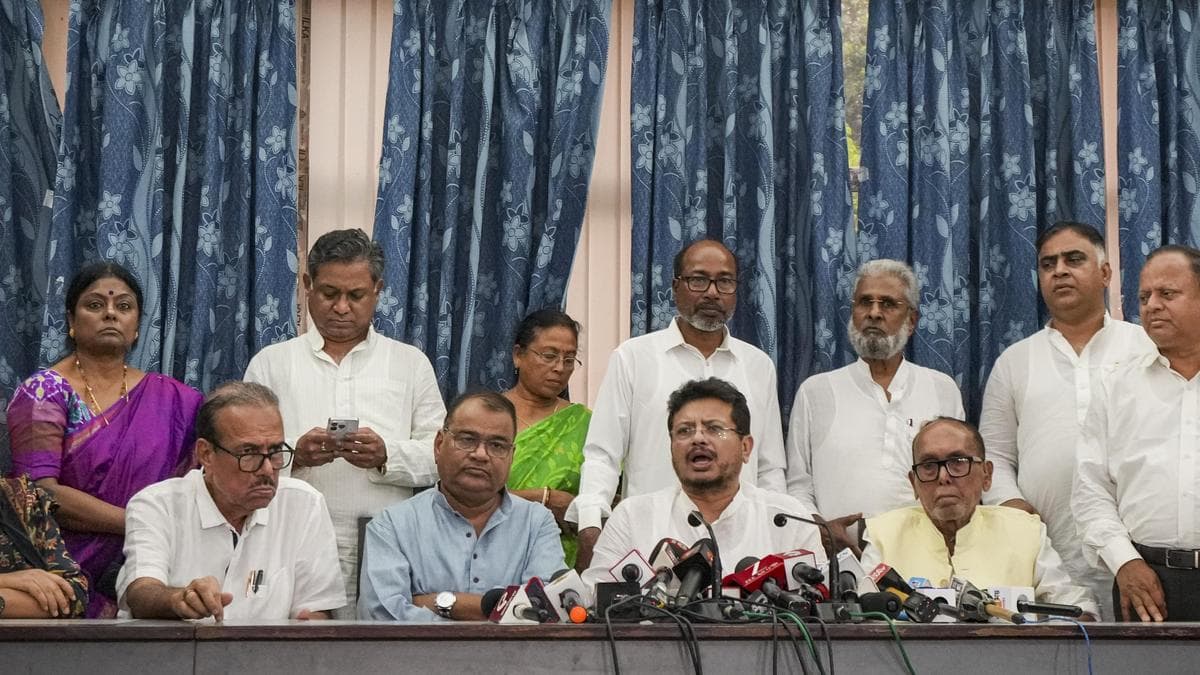
A signature scandal has spiralled into a deep existential crisis for the Trinamool Congress, as a majority of legislators break ranks to challenge the party’s central leadership.
The political landscape in West Bengal is currently undergoing a tectonic shift following an open revolt within the Trinamool Congress. On June 3, the equilibrium of the state’s ruling party shattered when 58 of its 80 MLAs submitted a formal letter to Speaker Rathindra Bose, effectively endorsing expelled legislator Ritabrata Banerjee as the Leader of the Opposition. This defiance, which sees more than two-thirds of the legislative party bypassing the traditional command structure, marks a significant departure from the iron-fisted control usually associated with the party hierarchy.
The Signature Scandal and the Trigger
The roots of this rebellion trace back to a contentious dispute over the appointment of the Leader of the Opposition. On May 20, the party leadership formally nominated 82-year-old veteran Sovandeb Chattopadhyay for the position. However, the move triggered immediate suspicion when MLAs Ritabrata Banerjee and Sandipan Saha alleged that their signatures on the nomination letter had been forged. The subsequent filing of an FIR at the Hare Street Police Station—and the subsequent legal notice served to party general secretary Abhishek Banerjee—transformed an internal bureaucratic disagreement into a high-stakes criminal investigation.
While Chief Minister Suvendu Adhikari has publicly maintained that the CID probe is a result of legitimate complaints rather than political vendetta, the fallout was swift. On June 1, the party expelled both Banerjee and Saha for "anti-party activities." Rather than silencing the dissent, the expulsion acted as a catalyst. Within 48 hours, the legislature party fractured, with the rebels claiming that their faction—not the one sanctioned by the top brass—represented the "real" Trinamool Congress in the 18th West Bengal Legislative Assembly.
A Party in Limbo
This crisis is far more complex than a standard legislative disagreement. The rebels have stopped short of declaring a formal defection to the BJP or announcing a breakaway party, opting instead to operate as a "responsible Opposition" while still identifying under the Trinamool banner. This "middle-field" strategy has paralyzed the party's functioning, leading to the dissolution of all internal committees as the leadership struggles to regain its grip. The situation bears a striking resemblance to previous instances of regional party fragmentation, raising questions about whether the Trinamool is headed toward a total institutional collapse similar to the Shiv Sena split in Maharashtra.
The Broader Impact
The ripple effects of this revolt are being felt far beyond the assembly floor. Reports of nearly 20 MPs being in contact with the BJP, combined with the potential resignation of senior figures like Kolkata Mayor Firhad Hakim, suggest that the "twin flowers" are losing their ability to hold the ranks together. For a party that has administered West Bengal for 15 years, the loss of control over its own legislators signals a profound erosion of authority. As the leadership retreats into its ivory tower, the widening gap between the party brass and the grassroots MLAs threatens to dismantle the organization’s influence in both the state assembly and upcoming national parliamentary proceedings.
The PoliticalPedia Editorial Desk brings verified, sourced political news and analysis from across India.