Amid Exam Chaos, Delhi Students Rally Behind CJP Protest for Education Reform
Hopes and fears compete as Delhi students join CJP protest for education reforms
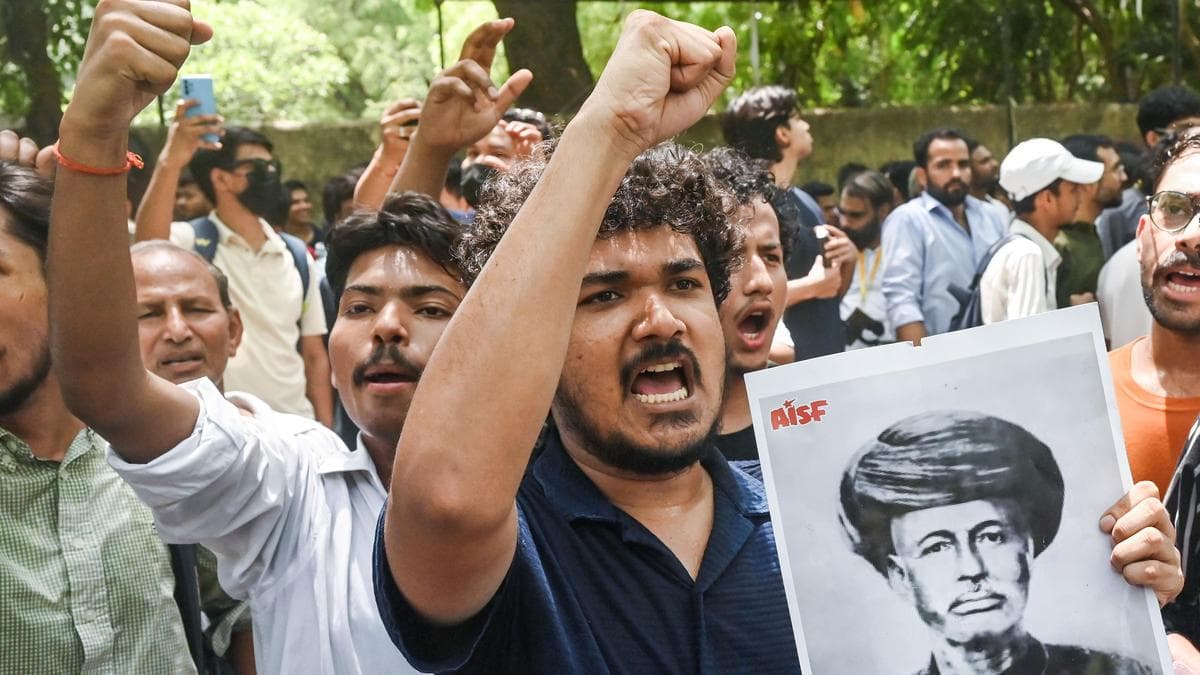
Students from major universities gathered at Jantar Mantar to demand accountability for examination irregularities, marking the debut of a novel political movement.
The usually bustling Jantar Mantar turned into a theatre of frustration and resolve this week as a diverse assembly of youth gathered to confront the ongoing crisis in India’s examination system. The demonstration, organised by the Cockroach Janta Party (CJP)—a self-described satirical political movement—served as a rallying point for students from Delhi University (DU), Jawaharlal Nehru University (JNU), and Jamia Millia Islamia. While the platform was unconventional, the grievances were stark: persistent paper leaks and systemic irregularities that have left thousands of students in professional and academic limbo.
A Movement in Its Infancy
The protest drew a crowd bearing placards that pulled no punches. Slogans such as "Cockroaches do not ruin lives, BJP does" and pointed critiques regarding the education of politicians’ children abroad highlighted the growing class-based resentment within the student community. For many attendees, like Krishna Agarwal, a student at DU’s Shri Ram College of Commerce, the event was a first foray into activism. “I am here to see what students can do to make wrongs right,” he said, reflecting the hopes of a generation seeking structural reform in the wake of recurring exam scandals.
Solidarity Without Endorsement
Despite the significant turnout, the relationship between mainstream student organisations and the CJP remains cautious. While members of the All India Students’ Association (AISA) arrived in substantial numbers, their leadership was quick to clarify that their presence was in solidarity with the cause rather than an endorsement of the movement itself. These groups noted that they are waiting for the CJP to evolve before committing to a long-term partnership, preferring to maintain their independence as they navigate the shifting political landscape of campus activism.
The Push for Accountability
The primary demand remains the resignation of Union Education Minister Dharmendra Pradhan. The atmosphere at the site was marked by a blend of determination and skepticism. JNU student union president Aditi Mishra, who was recently rusticated in connection with campus vandalism allegations, noted the diversity of the crowd, which included school students and activists carrying portraits of Dr. B.R. Ambedkar. She expressed a desire for this momentum to persist, aiming to challenge the political establishment on its handling of national education standards.
An Uncertain Path Forward
As the protest concluded, the mood among the participants remained complex. While the students were united in their anger over the current state of examinations, questions linger regarding the future of the movement. Some attendees expressed private concerns about potential political affiliations, specifically regarding the CJP’s links to the Aam Aadmi Party (AAP). As these students return to their respective campuses, the challenge for the CJP will be to prove it is a sustainable vehicle for reform rather than a passing wave of dissent, as thousands wait to see if their voices will lead to tangible policy changes.
The PoliticalPedia Editorial Desk brings verified, sourced political news and analysis from across India.