A Silent Cry in Manhattan: The Final Protest of Lobga Rangzen
Tibetan protester sets himself on fire outside UN headquarters in New York City
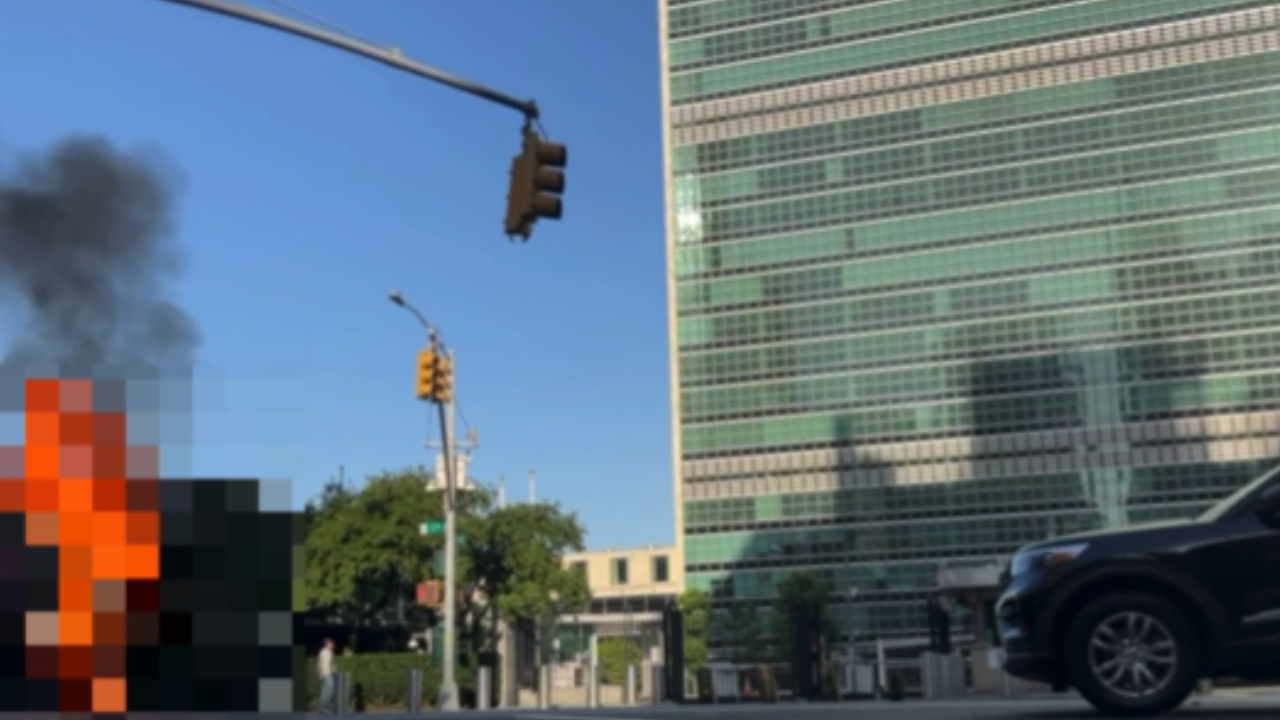
A Tibetan man’s desperate act of self-immolation outside the United Nations headquarters in New York City has reignited global discourse on the long-standing struggle for Tibetan independence.
The evening rush hour in New York City is usually defined by the rhythmic chaos of taxi horns and commuters. On Thursday, however, that rhythm was shattered at the intersection of East 43rd Street and First Avenue. Surveillance footage captured a man, identified by acquaintances as Lobga Rangzen, placing a Tibetan flag on the sidewalk before setting himself on fire. For the nearly two decades he had lived in the US, Rangzen had been a face in the crowd; in his final moments, he became a symbol of a protest that spans continents.
Police and security personnel were at the scene within seconds, extinguishing the flames, but the injuries proved fatal. Rangzen was pronounced dead at Bellevue Hospital shortly after. While the NYPD cordoned off the area, investigators recovered leaflets from the site—one of which bore the stark, familiar slogan, "China Out of Tibet." For an hour, the Tibetan flag remained alone on the pavement, a silent marker of a protest that refused to be ignored.
A Pattern of Desperation
This incident is not an isolated tremor in the Tibetan movement. According to data from the advocacy group Free Tibet, more than 150 Tibetans have turned to self-immolation since 2009. These acts, though harrowing, are intended as a final, visceral appeal to the international community. Protesters consistently call for the return of the Dalai Lama, the release of the Panchen Lama, and an end to what they characterize as oppressive Chinese rule.
The timing of this tragedy has drawn additional scrutiny. Reports suggest the act occurred just one day after Beijing enforced a new ethnic unity law, further heightening tensions. Whether this was a direct catalyst remains a subject of investigation, but the symbolism of choosing the UN headquarters—the global forum for diplomacy and human rights—as the backdrop for his final act is difficult to misinterpret.
Why it Matters
The tragedy highlights a persistent, uncomfortable reality: when political avenues feel closed or ignored, individuals may resort to extreme measures to bring their cause into the light. The "Free Tibet" movement has long struggled to maintain its place in the global news cycle, often sidelined by larger geopolitical shifts. By targeting the UN, Rangzen brought the debate on Tibetan self-determination back to the doorstep of the world’s most powerful decision-makers.
Ultimately, this is about the power of the individual voice against the machinery of the state. As the world’s attention remains fractured across multiple crises, such an act forces an abrupt, painful confrontation with a decades-old struggle. It serves as a stark reminder that while regimes may enforce unity laws or exert control, the desire for autonomy and cultural preservation continues to burn with a intensity that international diplomacy has yet to extinguish.
Kabir Sharma writes on culture, technology and everyday life for PoliticalPedia.