Mamdani Rejects Trump’s Vision for US at America’s 250th Anniversary Speech: ‘How Weak, Unoriginal’
Mamdani Rejects Trump's Vision For US At America's 250th Anniversary Speech: 'How Weak, Unoriginal'
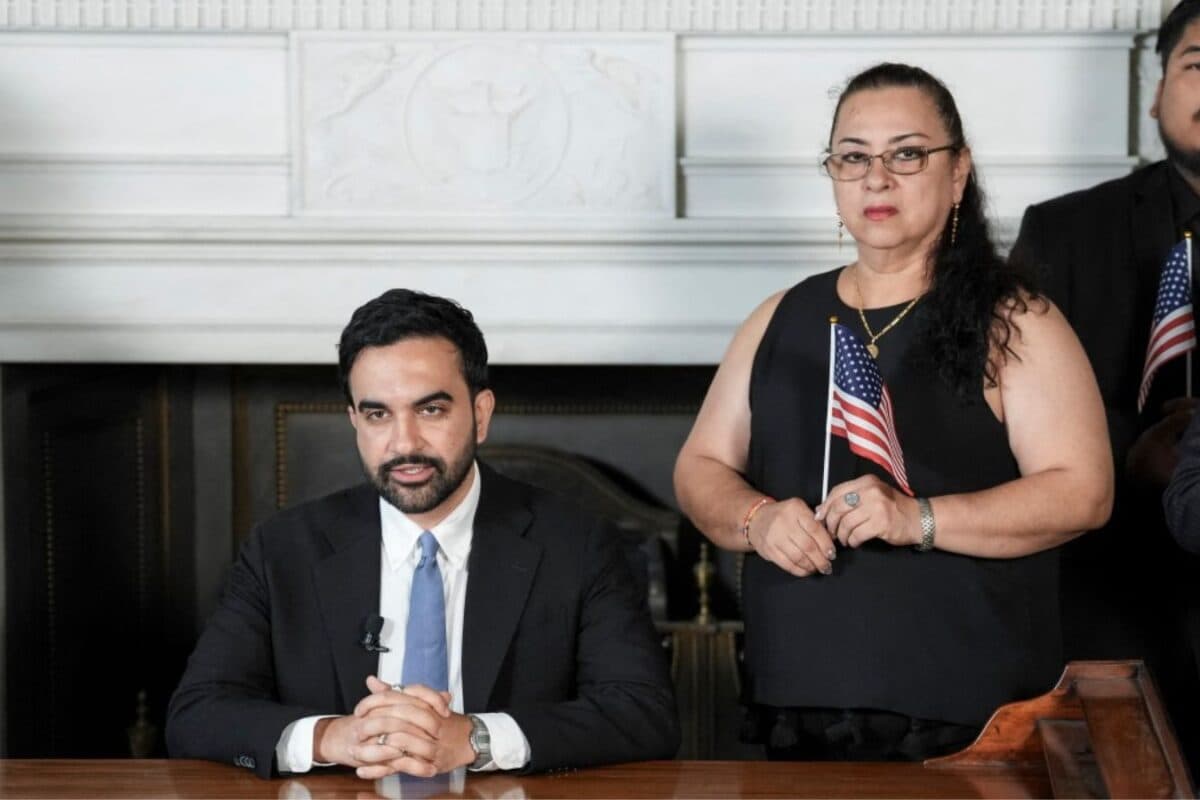
New York City Mayor Zohran Mamdani uses a historic setting to challenge the exclusionary rhetoric defining the nation’s current political divide.
Behind a desk that once belonged to George Washington, New York City Mayor Zohran Mamdani stood this week to address a nation standing at a crossroads. As America marks its 250th anniversary, the celebration has become a stage for two competing visions of the country’s future. Without uttering his predecessor’s name, Mamdani delivered a stinging retort to the MAGA movement, labelling the exclusionary politics currently dominating the discourse as “small,” “weak,” and “how unoriginal.”
A Tale of Two Americas
The setting was deliberate. By speaking from City Hall, a site where the struggle for American independence first simmered, the Ugandan-born mayor sought to reclaim the narrative of what it means to be an American. Flanked by newly naturalised citizens, Mamdani argued that the country’s strength has historically been forged by those the power-brokers dismissed as outsiders. He castigated those who insist that the nation belongs only to individuals with a specific skin shade or accent, framing this brand of nationalism as a betrayal of the country’s founding ideals.
This address comes on the heels of a significant legal victory for the status quo: the US Supreme Court’s recent decision to uphold birthright citizenship, a move that stymied President Donald Trump’s efforts to narrow the definition of who belongs. While the President prepared his own celebratory address at Mount Rushmore, Mamdani’s words served as an ideological counterpoint, emphasising that the work of fulfilling the Declaration of Independence remains an ongoing, inclusive project.
Why It Matters
This friction captures a deeper, systemic anxiety within the United States. At 250, the nation is wrestling with its identity—is it a rigid fortress defined by heritage, or a fluid, multicultural experiment? Mamdani’s rejection of the Trumpian vision highlights a growing divide between municipal leaders in major urban hubs and the federal administration’s harder-line stance on immigration. For global observers, this isn't just local rhetoric; it signals a volatile domestic climate where the very definition of citizenship is being litigated in real-time, impacting everything from labor markets to social cohesion.
Beyond the Rhetoric
Mamdani’s speech was not merely a critique; it was an attempt to shift the focus toward the "forces of progress" that he believes have historically vanquished division. He painted a picture of an America sustained not by political titans, but by the everyday struggle of its workers—the nurse checking on a neighbour, the families striving for stability. By invoking this paradox of American exceptionalism—that the country’s most important stories were written by those told they were anything but exceptional—the Mayor sought to reposition immigration as the engine, rather than the enemy, of national growth.
As the country celebrates its semiquincentennial, the underlying tension remains palpable. With the political class increasingly polarised, the rhetoric on display in New York and South Dakota suggests that the next phase of the American story will be defined less by its past achievements and more by the struggle over who is invited to participate in its future.
Rohan Gupta covers the economy, markets and companies for PoliticalPedia.