A Region Under Siege: Cash Bounties and Sedition Charges Follow Deadly Crackdown in PoK
Pak launches manhunt for four PoK protesters after crackdown killing 19 kids, 7 pregnant women
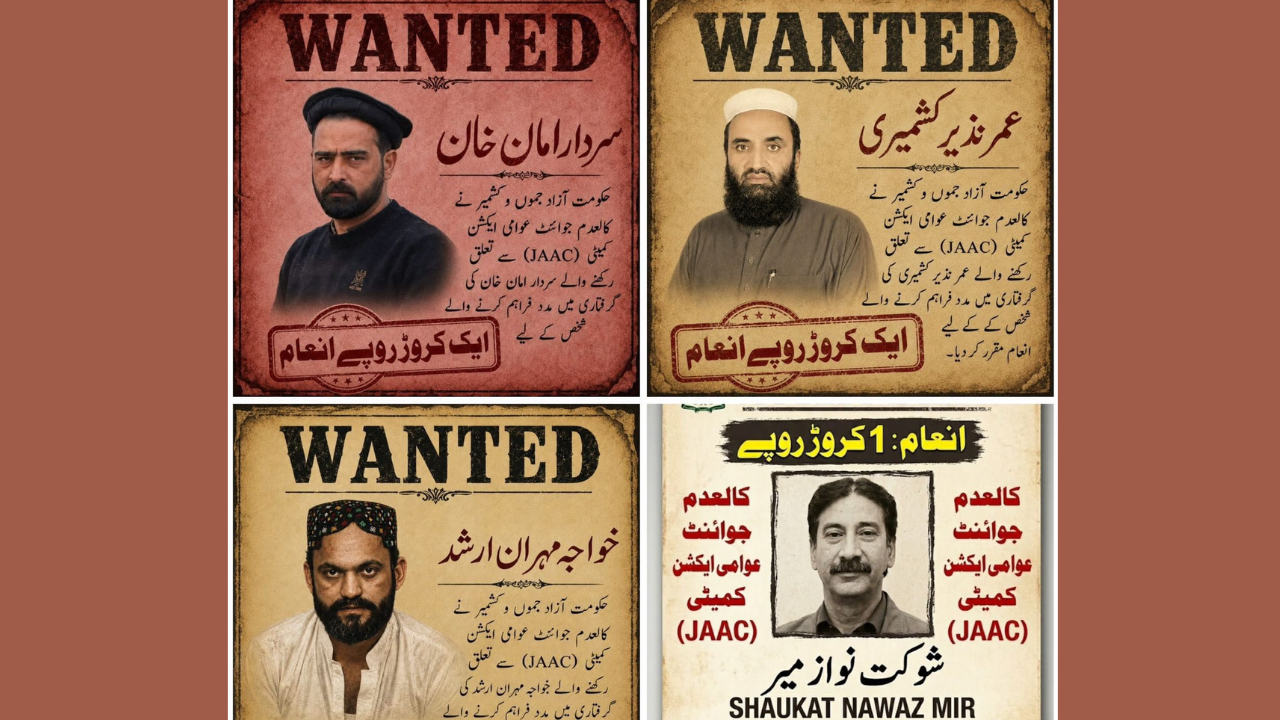
As the Pakistan-occupied Kashmir administration moves to silence dissent with sedition charges and heavy financial bounties, reports of mass casualties among vulnerable civilians cast a dark shadow over the region.
The uneasy calm currently hanging over Pakistan-occupied Kashmir (PoK) masks a boiling point of civil unrest. Following massive demonstrations led by the Joint Awami Action Committee (JAAC), local authorities have launched a systematic manhunt for four key protest leaders, slapping a bounty of Rs 1 crore on their heads. This escalation comes on the heels of a brutal security crackdown that has left the region reeling, with reports suggesting that the violence has claimed 26 lives, including 19 children and seven pregnant women.
The unrest, which intensified between June 5 and June 9, was reportedly triggered by the Barmang Bridge shooting. According to a detailed intelligence dossier, the Pakistani military responded to the JAAC’s campaign for economic reforms by deploying roughly 14,000 troops from the mainland. The subsequent deployment saw the use of live ammunition against unarmed mourners and civilian convoys, effectively turning the Mirpur division and surrounding districts like Bhimber and Kotli into a militarized zone.
A Pattern of Suppression
The authorities have not only labeled the JAAC a banned organization under anti-terrorism laws but have also initiated sedition proceedings against its primary leaders. The strategy appears to be a total suppression of the movement: the administration imposed a complete communication blackout, severing internet and mobile connectivity to stifle the flow of information. Throughout this period, towns and villages observed a total shutdown, with banks, medical stores, and essential services forced to shutter as fear took hold.
While official government figures in Pakistan account for 11 deaths, the intelligence dossier paints a far more harrowing picture of civilian loss. This discrepancy in the death toll has drawn international scrutiny; recently, at least 50 British MPs wrote to the UK government, characterizing the actions against protesters as "barbaric" and demanding intervention regarding the glaring human rights violations.
Why it matters
The gravity of the situation in Pakistan-occupied Kashmir signals a widening disconnect between the local population and the state apparatus. By resorting to kinetic force—including the alleged targeting of non-combatants—the administration risks radicalizing a protest movement that originally centered on legitimate economic grievances. When a government treats peaceful activists and civilian convoys as existential threats to be met with military-grade force, it usually indicates a fragile grip on administrative legitimacy. The international outcry, led by the British parliamentary group and condemnation from New Delhi, suggests that the cost of this crackdown will not be limited to the immediate loss of life, but will likely result in long-term diplomatic isolation for those responsible for the violence.
India has already condemned the violence against the protesters, with the Ministry of External Affairs keeping a close watch on the deteriorating conditions. As the manhunt for the JAAC leaders continues, the situation remains fluid, with the region's infrastructure struggling to recover from the combined impact of state-imposed blackouts and the trauma of a violent military intervention.
Arjun Mehta reports on government, policy and Parliament for PoliticalPedia, in English and Hindi.