A cosmic ‘first responder’ is falling to Earth, and a robot is racing to save it
Nasa's ageing telescope in space is falling towards Earth. Now a robot is being sent to rescue it
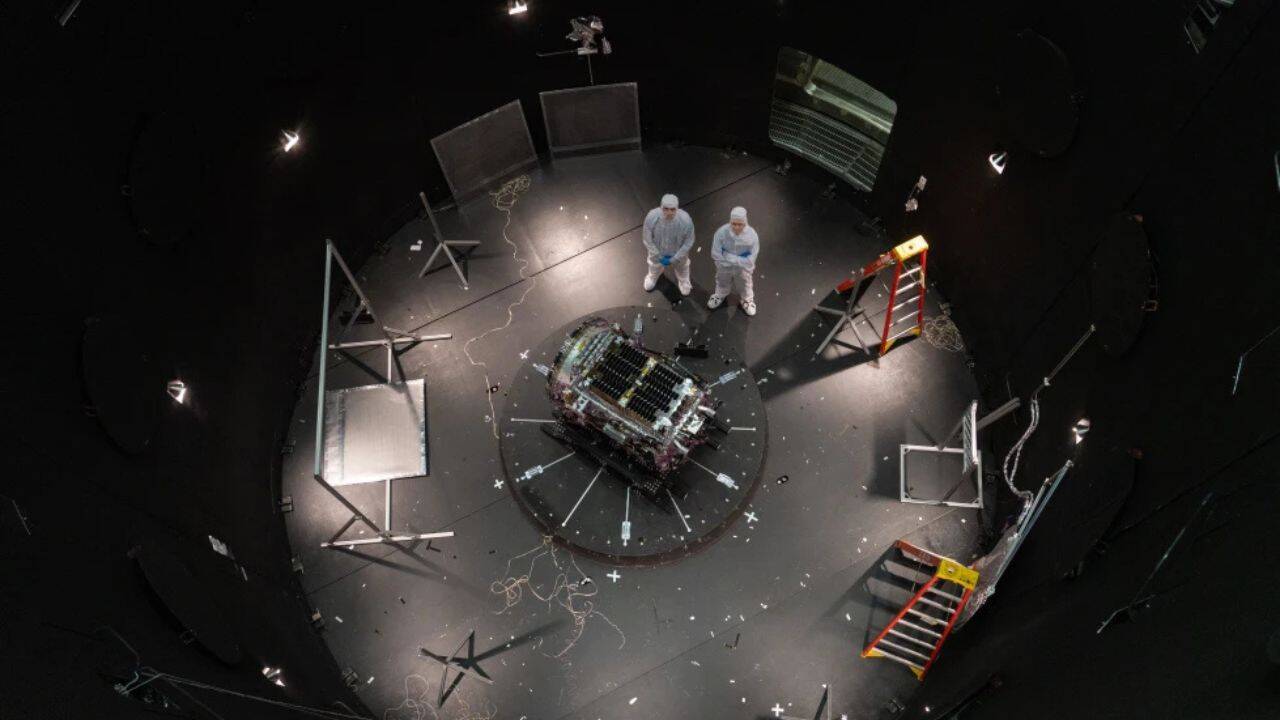
In a high-stakes salvage operation, NASA is deploying a pioneering robotic craft to rescue the ageing Swift observatory from atmospheric incineration.
The Neil Gehrels Swift Observatory, a veteran of two decades in orbit, is currently spiralling toward an inglorious end. Launched in 2004, the space telescope has served as astronomy’s most reliable "first responder," detecting over 1,700 gamma-ray bursts—the most violent explosions in the universe. But intense solar activity in 2024 caused Earth’s upper atmosphere to bloat, dragging the spacecraft down toward a 90% chance of uncontrolled re-entry by the end of 2026. Now, NASA is betting on a daring, $30 million rescue mission to pull the telescope back from the brink of destruction.
A race against atmospheric drag
Unlike the Hubble Space Telescope, which received multiple service calls from astronauts aboard the Space Shuttle, Swift was never designed for maintenance. It lacks standard docking ports or mechanical handles for a spacecraft to latch onto. To save it, NASA has partnered with Katalyst Space Technologies, an Arizona-based startup, to build an autonomous robotic servicer named "Link." The mission timeline is unprecedented; while typical satellite servicing takes years of planning, this project has moved from contract to launch readiness in roughly nine months.
The rescue plan is as audacious as it is technical. A Pegasus rocket, carried aloft by an aircraft and released over the South Pacific, will ignite in mid-air to ferry the Link spacecraft into low-Earth orbit. Once in position, the robot must perform a series of delicate rendezvous proximity operations. It will use a custom-built, "do-no-harm" capture mechanism to physically grip the observatory and push it into a higher, more stable orbit. Success would represent the first time a robotic craft has autonomously rescued an unprepared satellite.
Why it matters: The end of the ‘throwaway’ era
This mission is more than just a salvage job; it is a calculated pivot in how humanity approaches orbital assets. For decades, space agencies have operated under a "throwaway" culture, where expensive hardware is abandoned once it runs low on fuel or loses altitude. By choosing to rehabilitate Swift rather than letting it burn up—and opting for a $30 million commercial contract over the hundreds of millions required for a replacement mission—NASA is betting that on-orbit servicing is the future of space exploration. If the Link spacecraft succeeds, it could set a new precedent for routine, cost-effective maintenance in space, essentially turning ageing observatories into long-term infrastructure.
The clock is ticking. With launch operations scheduled for June 27, the team at NASA’s Goddard Space Flight Center is watching the skies closely. While the agency has faced tough missions before, the prospect of losing such a versatile scientific tool has spurred a sense of urgency not seen in years. Whether it succeeds or not, this rescue attempt marks a shift toward a more sustainable, hands-on approach to keeping our eyes on the universe.
Arjun Mehta reports on government, policy and Parliament for PoliticalPedia, in English and Hindi.