A $9 Receipt and the Politics of the Wardrobe: How JD Vance is Branding the Everyman
'Meet your next federal budget director’: JD Vance jokes after Usha Vance buys $50 dress for $8.75
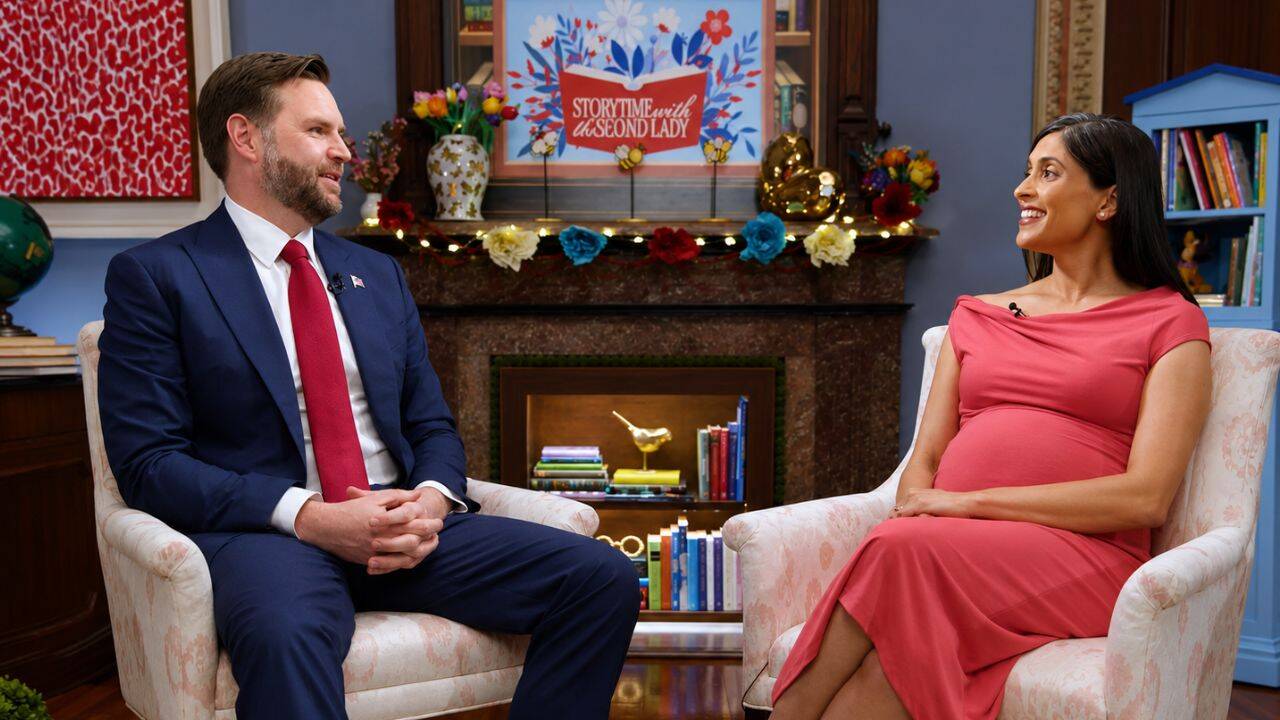
When Usha Vance shared a receipt for a bargain maternity dress, it became more than a fashion critique—it became a tactical strike in the administration’s economic messaging.
The discourse surrounding the Trump administration’s optics has taken an unlikely turn into the aisles of Old Navy. It began when a New York Times fashion column dissected the "political symbolism" of the pregnancy styles worn by Usha Vance, Karoline Leavitt, and Katie Miller. The piece argued that these women were intentionally crafting a "paradigm-shifting" image of fertility and family life within the White House. Usha Vance, however, wasn't interested in being a subject of high-fashion theory.
Taking to X, the Second Lady fired back with a photo of a receipt showing a $50 coral maternity dress snagged for just $8.75. She mockingly suggested that if the press was so invested in the political significance of her outfit, they should prepare for a deep dive into her elastic-waistband pants and compression socks next. The response was sharp, dismissive, and perfectly tuned to the current climate of online political combat.
The Budget Director Gag
JD Vance quickly amplified the moment, retweeting the receipt with a jab that did more than just support his wife. "America: meet your next director of the federal budget!" he wrote. It is a classic move from the Vance playbook: take a minor cultural grievance, inject it with a dose of "everyman" relatability, and use it to score a point on fiscal restraint.
For a voter base currently hyper-focused on inflation and household costs, the image of a high-profile political spouse shopping for steep discounts is potent. It stands in stark contrast to the traditional, polished image of Washington elites. By highlighting the $8 price tag, the Vice President is effectively signaling to his base that his household understands the pressures of the average American kitchen table.
The Manufacturing Paradox
Yet, there is a distinct irony in this viral exchange. JD Vance has built a significant portion of his political identity on the crusade for American manufacturing, frequently railing against the outsourcing of jobs and the decision to let the rest of the world produce our essential goods.
While the $8 dress serves as a brilliant bit of messaging for fiscal frugality, Old Navy—the brand in question—is a subsidiary of Gap Inc., a company that relies heavily on global supply chains. Its manufacturing hubs are primarily located in countries like Vietnam, Bangladesh, China, and India. The disconnect between Vance’s protectionist rhetoric and the reality of the globalized retail market is a detail that critics are unlikely to ignore as the administration continues its push for domestic industrial revival.
Why it matters
This incident is a masterclass in modern political theater. By leaning into the "symbolism" critique, the Vances successfully reframed a scholarly fashion column as an out-of-touch exercise by the media. It allows the administration to simultaneously project a "man of the people" image while keeping the focus on their core economic narratives. Whether this resonates as authentic or merely performative will depend on how the administration reconciles its "Buy American" platform with the global realities of the products their own household chooses to wear.
Priya Nair covers parties, elections and the business of power for PoliticalPedia.