Twin Earthquakes Ravage Venezuela as Thousands Remain Trapped in La Guaira
Venezuela quake leaves 235 dead: Thousands feared trapped as rescue efforts intensify
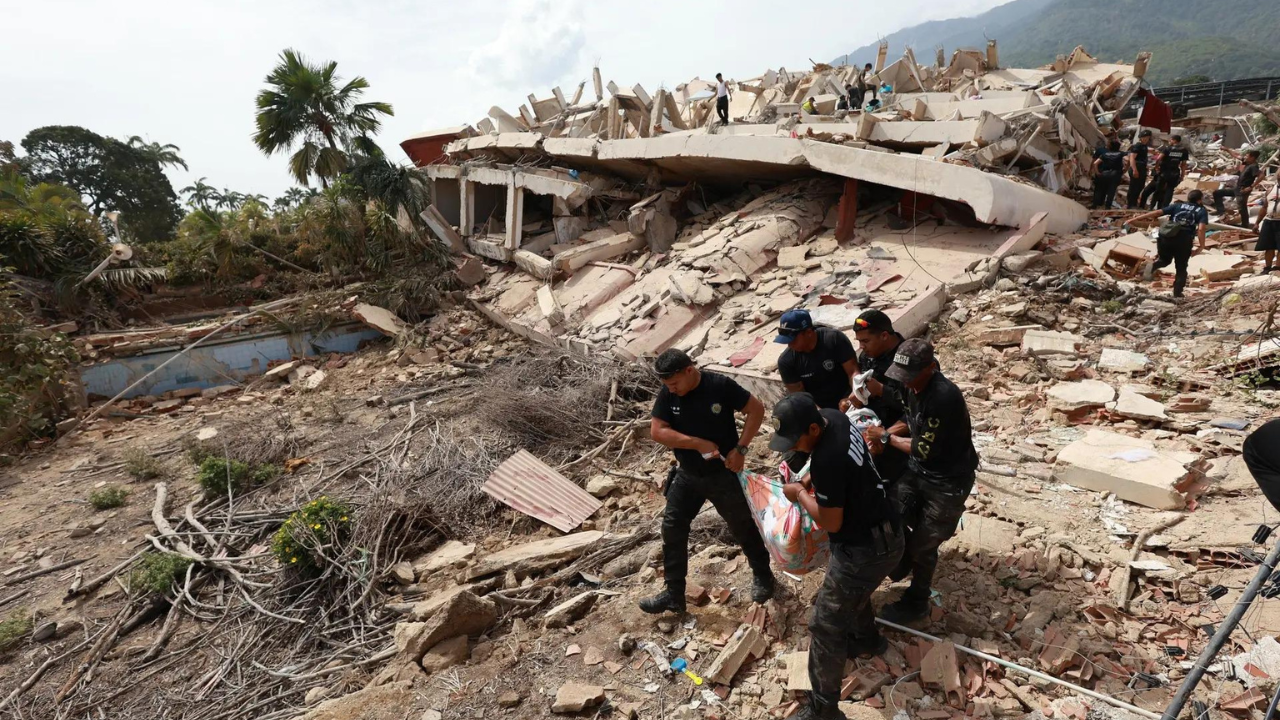
As rescue efforts intensify following two back-to-back tremors, the death toll has climbed to 235 with thousands still missing across the nation.
The ground beneath Caracas and the coastal regions of Venezuela barely had time to settle before the second blow landed. On Wednesday evening, twin earthquakes measuring 7.2 and 7.5 in magnitude struck within sixty seconds of each other, turning a bustling landscape into a scene of ruin. The shallow depth of the tremors has proven catastrophic, with at least 235 people confirmed dead and roughly 250 buildings reduced to rubble or severely damaged. For the families in La Guaira, the disaster has been visceral; mothers like Dayana Delgado are now scouring wreckage with their bare hands, desperate for any word on children who vanished when the walls fell.
A Race Against Time
The logistics of the rescue are proving to be as daunting as the disaster itself. While Acting President Delcy Rodríguez has declared La Guaira a "disaster zone" and initiated a push to secure heavy machinery from private firms, the scale of the collapse has overwhelmed local infrastructure. Power grids are failing, metro services have been suspended, and the closure of the main airport is bottlenecking the arrival of critical aid. Though a tracking database lists over 46,000 individuals as unaccounted for, officials caution that this figure is unverified, even as at least 200 people remain confirmed trapped beneath concrete.
International intervention is now shifting from a trickle to a surge. The United States has stepped in with a $150 million humanitarian assistance package, deploying urban search-and-rescue units alongside military warships and transport aircraft to bridge the gap in local capabilities. Global humanitarian agencies are moving to establish relief hubs, but for survivors across the affected region, the wait for professional equipment remains agonizingly slow.
Why it matters
The sheer intensity of these back-to-back quakes, amplified by their shallow proximity to the surface, serves as a grim reminder of how quickly urban infrastructure can fail in the face of seismic volatility. Beyond the immediate loss of life, the incident underscores the vulnerability of coastal populations in the region. With schools converted into shelters and essential services crippled, the government faces the dual challenge of immediate life-saving operations and the long-term stabilization of a nation already struggling with systemic instability. The USGS predictive modelling suggests the final human cost could escalate into the thousands, marking this as a defining crisis for the country’s current administration.
Arjun Mehta reports on government, policy and Parliament for PoliticalPedia, in English and Hindi.