Why Vishy Anand believes Gukesh can take inspiration from Pragg’s resilience
'Gukesh can take inspiration from Pragg': Anand advises world champion
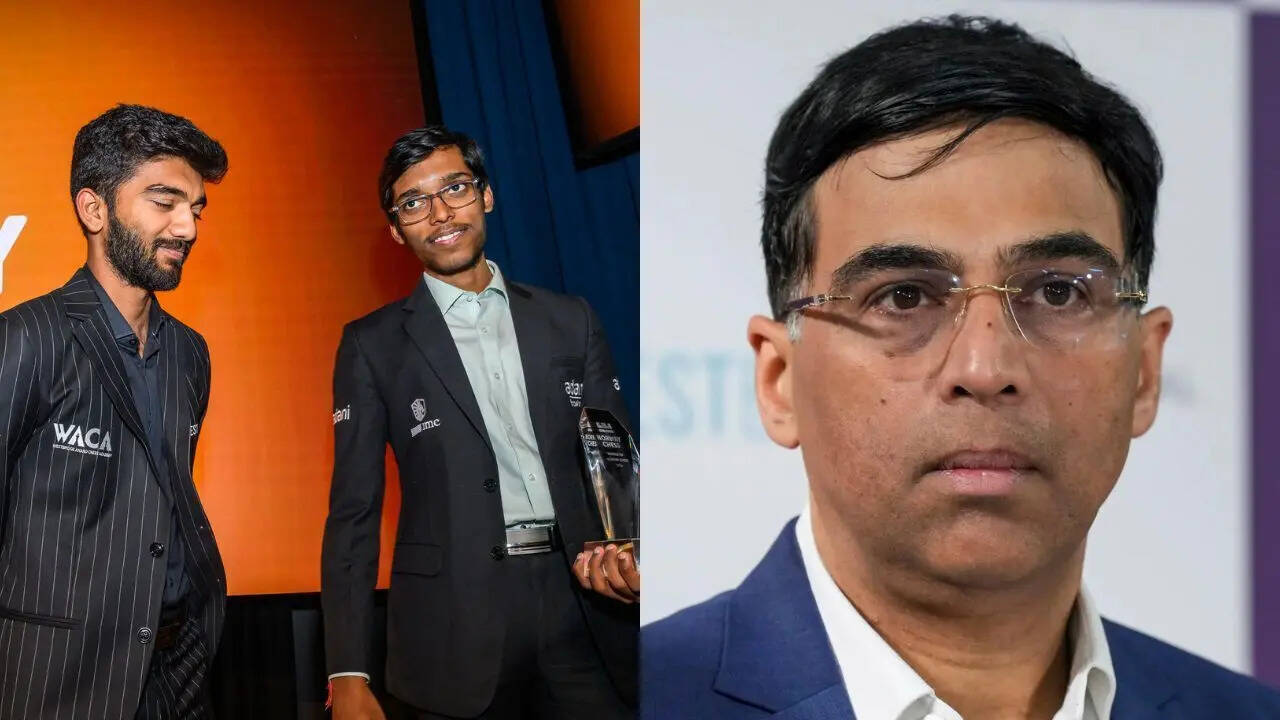
As Indian chess marks a historic rise, a legend weighs in on how the world champion can navigate a slump by mirroring a rival's grit.
The landscape of Indian chess has shifted in ways that felt like a fever dream just a decade ago. With 95 Grandmasters and a reigning world champion in the mix, the country has firmly planted itself among the top three nations in the sport. Yet, even at the peak, the pressure is unforgiving. After a disappointing sixth-place finish at the Norway Chess tournament, D Gukesh, our young world champion, finds himself in a rare moment of introspection. It is here that his mentor, the legendary Viswanathan Anand, has offered a timely piece of advice: look to R Praggnanandhaa.
Praggnanandhaa, or "Pragg" as he is affectionately known, recently etched his name into history by becoming the first Indian to win the prestigious Norway Chess title. The victory was far from a smooth cruise; it was built on a spectacular turnaround in the final four rounds. Anand, who has watched the careers of these teenagers closely, was quick to point out the stark contrast in their recent fortunes. While Praggnanandhaa’s aggressive, fight-to-the-finish attitude paid dividends, Gukesh appeared to be struggling to find his rhythm.
The power of persistence
Anand isn't one to overreact to a single tournament performance. He recognizes that the life of a modern chess player is defined by constant "form swings." In his view, Gukesh isn't necessarily playing poorly; he is simply navigating the intense, often draining, reality of life as a world champion. For a teenager, the weight of that title is immense. Anand suggests that Gukesh’s current slump is part of the learning curve, and that by observing how Pragg handles the board, he can rediscover his own momentum.
"Praggnanandhaa is playing better than Gukesh right now, but anything can change," Anand noted. He highlighted that Pragg’s approach—a willingness to take risks and an unwavering readiness to fight for every result—has remained consistent for over a year and a half. Even when the results didn't go his way early on, his philosophy remained unchanged, eventually leading to his breakthrough in Norway.
The bigger picture: A healthy rivalry
Beyond the individual struggles, the emergence of a "Big Three"—Gukesh, Praggnanandhaa, and Arjun Erigaisi—is the most significant development in Indian sports history. These players are not just winning titles; they are pushing each other to higher levels of excellence. Anand admits that this internal competition is a phenomenon India has never witnessed before.
This is not just about rankings; it’s about the evolution of the game. Anand observes that chess is changing dynamically, and the career arcs of today’s players may look very different from those of the past. The intensity of their rivalry means they are constantly evolving, forcing one another to adapt or fall behind. For Gukesh, the path back to form lies in embracing this challenge, treating his current plateau as a temporary obstacle rather than a permanent state. As he prepares for his upcoming title defence against Javokhir Sindarov, the ability to reset and draw confidence from his peer’s perseverance may well be the defining factor in his tenure as champion.
Kabir Sharma writes on culture, technology and everyday life for PoliticalPedia.