Venezuela Under Siege: Twin Earthquakes Leave Nation Bracing for Catastrophe
Twin powerful quakes of 7.2, 7.5 magnitude rock Venezuela; high casualties feared
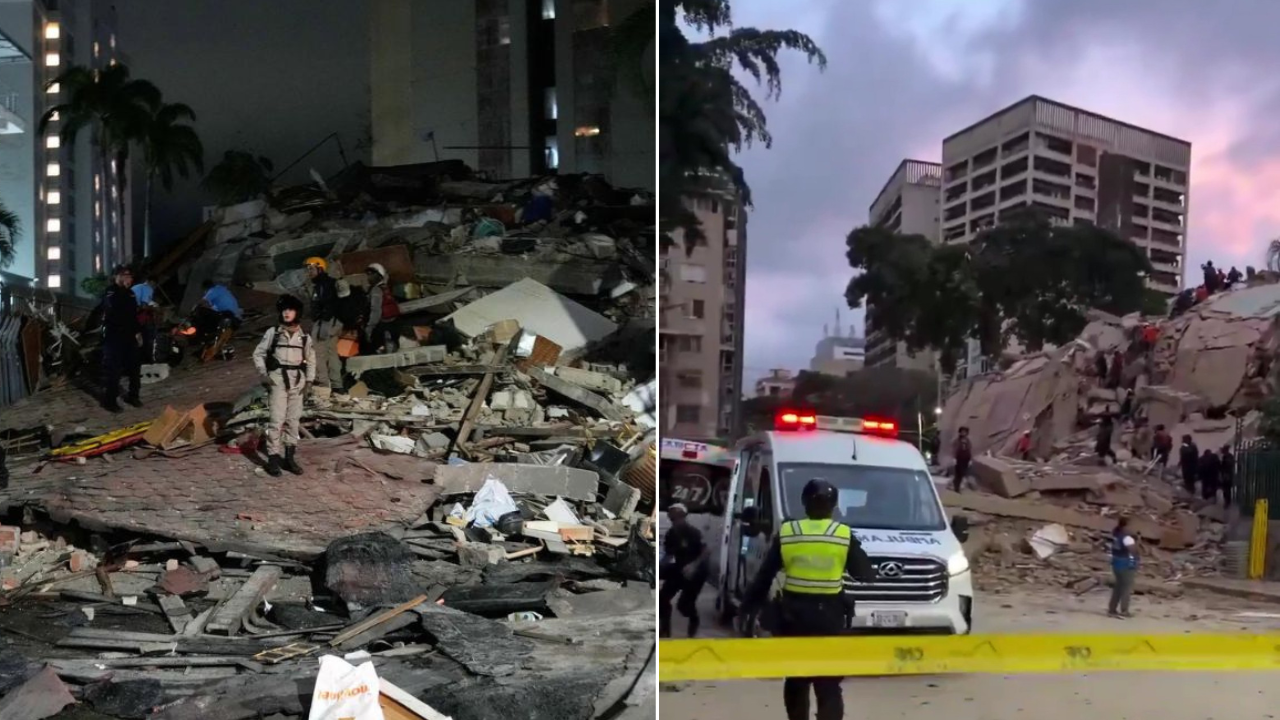
A back-to-back seismic event has devastated coastal regions and the capital, triggering urgent tsunami alerts and fears of a massive death toll.
The earth did not just shake in Venezuela on Wednesday evening; it buckled. In a terrifying span of minutes, the country was hit by two powerful earthquakes that have left buildings in ruins and a nation in a state of shock. The first tremor, a magnitude 7.2, struck near Montalbán at 18:04 local time, originating at a shallow depth of 13 km. Before the dust could even settle, a second, even more violent 7.5 magnitude quake hammered the same region near Morón.
Across Caracas, the capital, the scene was one of chaos. Residents fled swaying skyscrapers as walls crumbled into the streets, turning the city skyline into a haze of debris. Reports from Altamira describe a particularly grim situation, with homes reduced to rubble and emergency responders struggling to access areas blocked by split roads.
A race against time
The scale of the disaster is difficult to overstate. The US Geological Survey (USGS) has issued a sobering forecast, estimating that the death toll could climb into the tens of thousands. While official government figures are yet to be confirmed, Interior Minister Diosdado Cabello has urged citizens to stay outdoors, warning that aftershocks pose a lethal risk to already compromised structures.
The tremors were felt far beyond the epicentre, with witnesses in neighbouring Colombia reporting the ground shaking beneath them. The reach of the crisis is also maritime; the US Tsunami Warning System has issued alerts for Venezuela, Aruba, and Bonaire, while further advisories remain in effect for Puerto Rico and the British Virgin Islands.
Why it matters
This disaster represents a worst-case scenario for the region’s infrastructure. When two such massive quakes rock a country in such quick succession, the primary concern is not just the initial collapse, but the systemic failure of rescue logistics. In densely populated urban centres like Caracas, narrow streets and older building codes often mean that aid cannot reach victims in the "golden hour" following a disaster.
Beyond the immediate human tragedy, the event highlights the extreme vulnerability of Caribbean coastal nations to high-magnitude seismic shifts. As emergency services mobilize across the affected zones, the priority is to keep primary transit arteries clear for ambulances and heavy machinery. The next 48 hours will be critical in determining the final human cost of this tragedy.
Kabir Sharma writes on culture, technology and everyday life for PoliticalPedia.