UzChess Cup: Arjun Erigaisi and Vidit Gujrathi play out a tense Tashkent stalemate
UzChess Cup 2026: Arjun Erigaisi and Vidit Gujrathi battle to hard fought draw
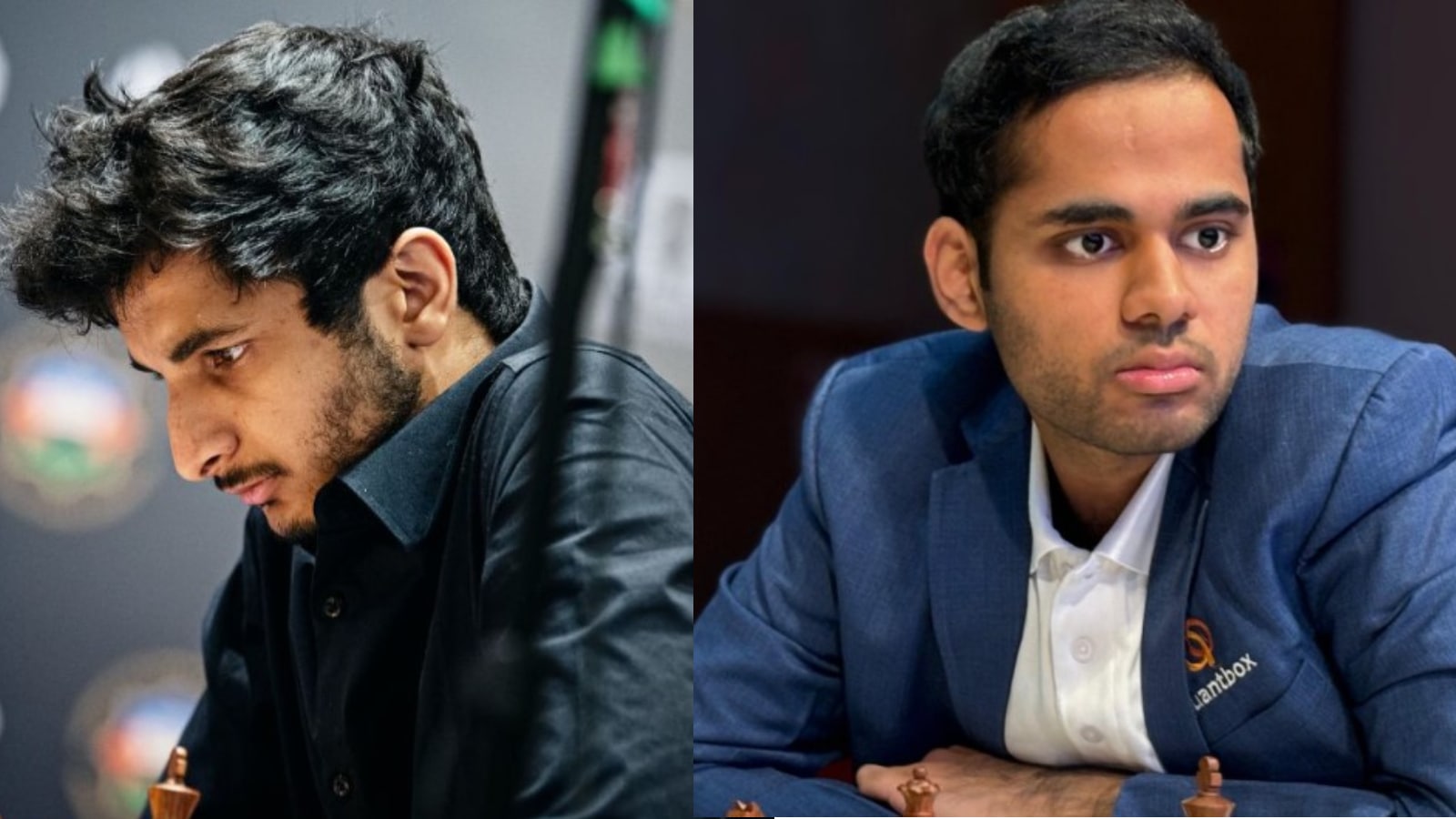
In a clash of contrasting fortunes at the UzChess Cup, India’s top-ranked Arjun Erigaisi and a gritty Vidit Gujrathi battled to a hard-fought draw in the fourth round.
The air in Tashkent was thick with familiarity as Arjun Erigaisi and Vidit Gujrathi sat across from each other in the fourth round of the UzChess Cup. Having shared countless hours in the trenches for India at the Olympiad and Asian Games, there were no secrets between them. Yet, the stakes for this specific masters encounter could not have been more different. Arjun arrived at the board joint-leading the event, riding the momentum of a steady start, while Vidit was fighting to rewrite the narrative of a campaign that had begun with back-to-back losses before a hard-won draw against Nodirbek Abdusattorov.
The Clock as an Adversary
The game—a Giuoco Piano—evolved into a psychological test, specifically regarding the time management struggles that have often haunted Vidit’s play. Arjun, meticulously prepared, moved with efficiency, banking time on his clock while his opponent burned through his reserves. By the 19th move, the gap was stark: Vidit had consumed over an hour of his initial 90 minutes, sitting with just over 26 minutes remaining, while Arjun had actually increased his time thanks to increments.
As the match progressed to the 27th move, the disparity reached a critical point. Arjun sat comfortably with a surplus of time, while Vidit was down to a precarious 11 minutes. It was here that the tension spiked; Vidit, forced into a corner by the clock, played a rook to h4—a move that engines flagged as a mistake. Yet, in the high-pressure environment of the UzChess tournament, precision often bows to the sheer will to survive. Vidit’s defensive resolve held firm, denying Arjun the opportunity to exploit his time advantage for a full point.
Why it matters
This draw is a significant barometer for both players’ current form. For Arjun, maintaining his unbeaten streak while playing white against a compatriot is a tactical necessity in a field as elite as this. For Vidit, the result is a vital psychological rebound. After a rough opening, he is proving that even when his clock management puts him in a tactical bind, his defensive tenacity remains world-class. In a tournament where every half-point is fiercely contested by international giants, these domestic battles are not just about national pride; they are about maintaining the consistency required to stay in the hunt for the title.
The round-robin format in Tashkent remains wide open. With Arjun continuing to hover near the top of the standings, the tournament is shaping up to be a defining moment for the Indian contingent. While the focus remains on the board, the consistency shown by the Indian players in Central Asia reflects their growing stature in the global chess circuit, proving that even in a struggle between friends, the intensity never wavers.
Rohan Gupta covers the economy, markets and companies for PoliticalPedia.