Turf War at Trinamool Bhavan: TMC Alleges ‘Criminal Trespass’ by Rebel Faction
'Criminal trespassers': TMC vows court battle as rival faction captures party office
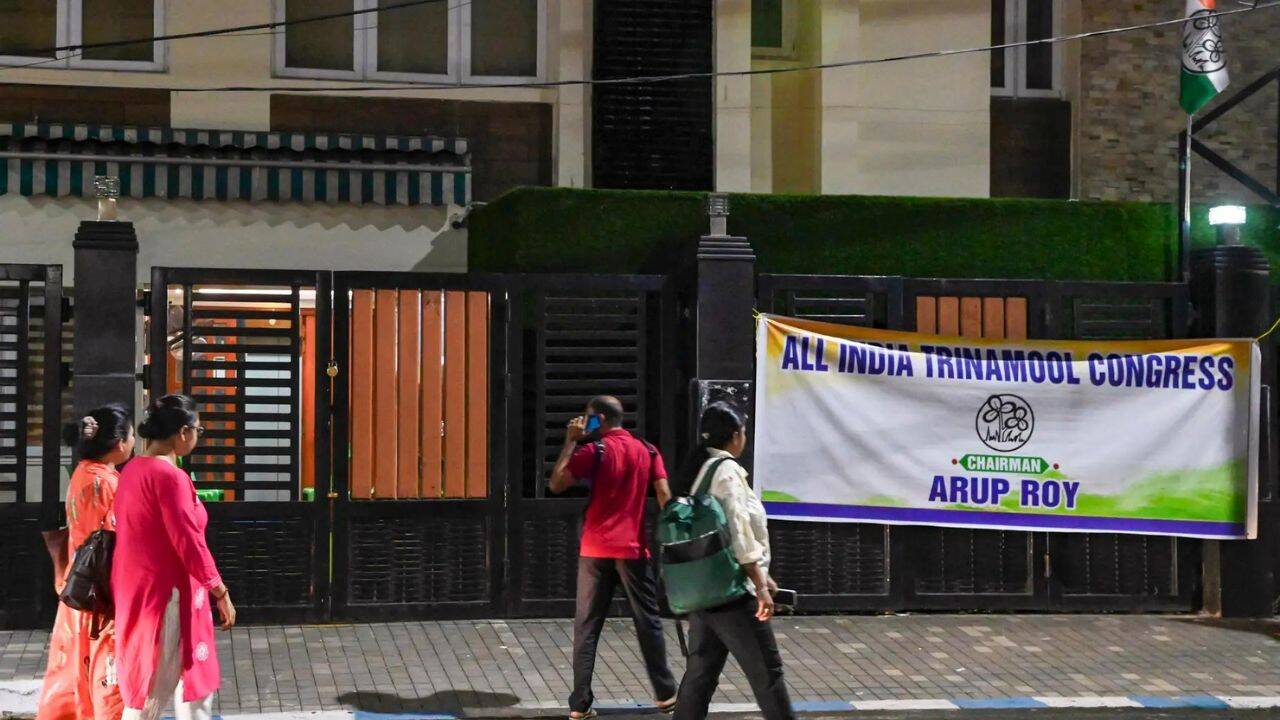
Expelled MLA Ritabrata Banerjee leads a takeover of the party headquarters in Kolkata, triggering a standoff and accusations of political collusion.
Kolkata’s political landscape saw a dramatic confrontation on Friday as a rebel faction, led by expelled MLA Ritabrata Banerjee, seized control of the Trinamool Congress (TMC) organizational headquarters. The move, which involved the locking of the premises, has prompted the TMC leadership to label the intruders as criminal trespassers, setting the stage for a protracted legal battle.
Senior TMC leaders, including MP Kalyan Banerjee and Kunal Ghosh, were quick to condemn the breach. Ghosh confirmed that a formal police complaint has been filed against those who gained unauthorized access to the office. According to the party, these members had no legal standing to enter the premises, let alone secure the gates with new locks. "We could have easily broken the lock they installed, but we refrained from any illegal or irresponsible actions," Ghosh stated, emphasizing that the party intends to pursue the matter through the judiciary.
A Standoff Under Security Watch
The situation took a politically charged turn as TMC leaders directed their ire at the security forces present at the scene. Madan Mitra, a prominent TMC voice, alleged that the presence of the Rapid Action Force (RAF) and central forces served to protect the rebel faction rather than maintain neutrality. Mitra went as far as to suggest that the group is operating as a "B-team" for the BJP, claiming that central agencies arrived within minutes to shield the occupiers.
Adding to the frustration, local TMC workers reported being barred from entering an adjoining room to which they allegedly held keys. While the police cited a need to verify ownership agreements before allowing entry, the TMC leadership viewed this as a calculated obstruction. For the party, the incident is not merely an isolated case of infighting but a symptom of a larger campaign to weaken their organizational footprint across the state.
Why it matters
This standoff at the Trinamool Bhavan highlights the volatile nature of internal party fractures ahead of broader political cycles. When internal disputes spill over into the physical seizure of party infrastructure, it signals a breakdown in traditional party discipline and the onset of a "scorched earth" strategy. For the TMC, the optics of having their headquarters locked by expelled members is a significant embarrassment; for the rebels, it is an attempt to claim legitimacy through physical presence. The reliance on police and central forces to mediate these disputes suggests that the Trinamool leadership will find it increasingly difficult to keep internal dissent contained within party forums, as these conflicts are now inviting greater scrutiny from state machinery and rival political entities.
The Legal Path Forward
As the dust settles on the immediate confrontation, the TMC has made it clear that they will not let the matter rest. By framing the takeover as a criminal act, the party is attempting to shift the narrative from a political schism to a matter of law and order. Whether the courts will view this as a trespassing case or a civil dispute over party property remains the central question. For now, the locks remain on the doors, and the battle lines are firmly drawn between the established leadership and the splinter group claiming its own space.
Arjun Mehta reports on government, policy and Parliament for PoliticalPedia, in English and Hindi.