Trump Backs Balogun As UEFA Slams FIFA Over Shock World Cup Red Card Ban Decision
Trump Backs Balogun As UEFA Slams FIFA's Shock World Cup Red Card Ban Decision
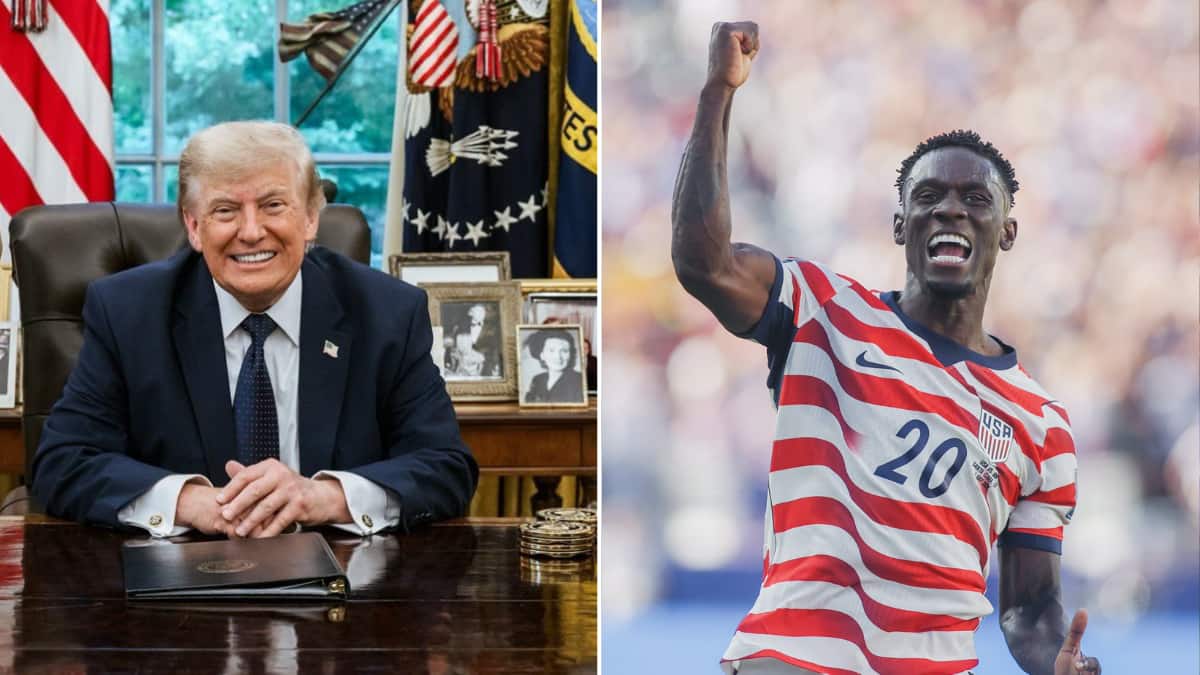
In a move that has left the footballing world reeling, FIFA has suspended Folarin Balogun’s automatic ban, triggering a furious confrontation between global governing bodies.
The image of a player walking off the pitch after a straight red card is usually the final word in a match’s disciplinary narrative. But for USMNT striker Folarin Balogun, the rules have effectively been rewritten. Following a VAR review that caught him dragging his studs down the leg of Bosnia and Herzegovina’s Tarik Muharemovic, Balogun was sent for an early shower. Under standard protocol, this would mean a mandatory one-match suspension, ruling him out of the high-stakes Round of 16 clash against Belgium. Instead, FIFA has placed him on a one-year probationary period, handing him a lifeline that has sparked a firestorm.
The Political Play
The intervention came from the highest level. Donald Trump, throwing his weight behind the US striker, confirmed he had personally appealed for a review of the disciplinary action. Calling the red card "very unfair," the former US President argued that the game would suffer a "big stain" if the tournament’s best players were sidelined by such calls. Reports suggest a direct line of communication between Trump and FIFA president Gianni Infantino, a detail that has only deepened the suspicion that this was a political—not sporting—decision. Infantino has since maintained that the process remained "independent and autonomous," though few in the football community are buying the explanation.
UEFA’s Fury and the "Red Line"
The reaction from Europe was swift and scathing. UEFA, standing firmly against FIFA’s unprecedented move, described the decision as "incomprehensible and unjustifiable." In a stinging rebuke, European football officials stated that FIFA had "crossed a red line" regarding the integrity of the tournament. The criticism wasn't limited to the boardroom; Belgium, the USA’s upcoming opponents, have been equally vocal. Several Belgian figures have publicly ridiculed the ruling, with some describing the reversal as nothing short of an "April Fools'" joke played in the middle of a World Cup.
The Bigger Picture
Why does this matter? Beyond the immediate drama of a Round of 16 knockout fixture, this incident signals a precarious shift in how football governance is perceived. When disciplinary boards—the supposed bastions of neutral rule-keeping—begin to appear malleable under pressure from global political figures, the entire framework of the sport’s fairness is called into question. If the "automatic" nature of a red card can be bartered away through backchannel lobbying, the precedent is dangerous. It transforms the World Cup from a contest of pure merit into a landscape where influence might carry as much weight as a striker’s clinical finish. Whether this was a one-off error in judgment or a sign of deeper structural rot will be debated for years to come.
Kabir Sharma writes on culture, technology and everyday life for PoliticalPedia.