Tragedy at Sea: Two Indian Sailors Dead, Chief Engineer Missing After US Attack on Commercial Ship Near Hormuz
Two Indian Sailors Dead, Chief Engineer Missing After US Attack On Commercial Ship Near Hormuz: Seamen's Union
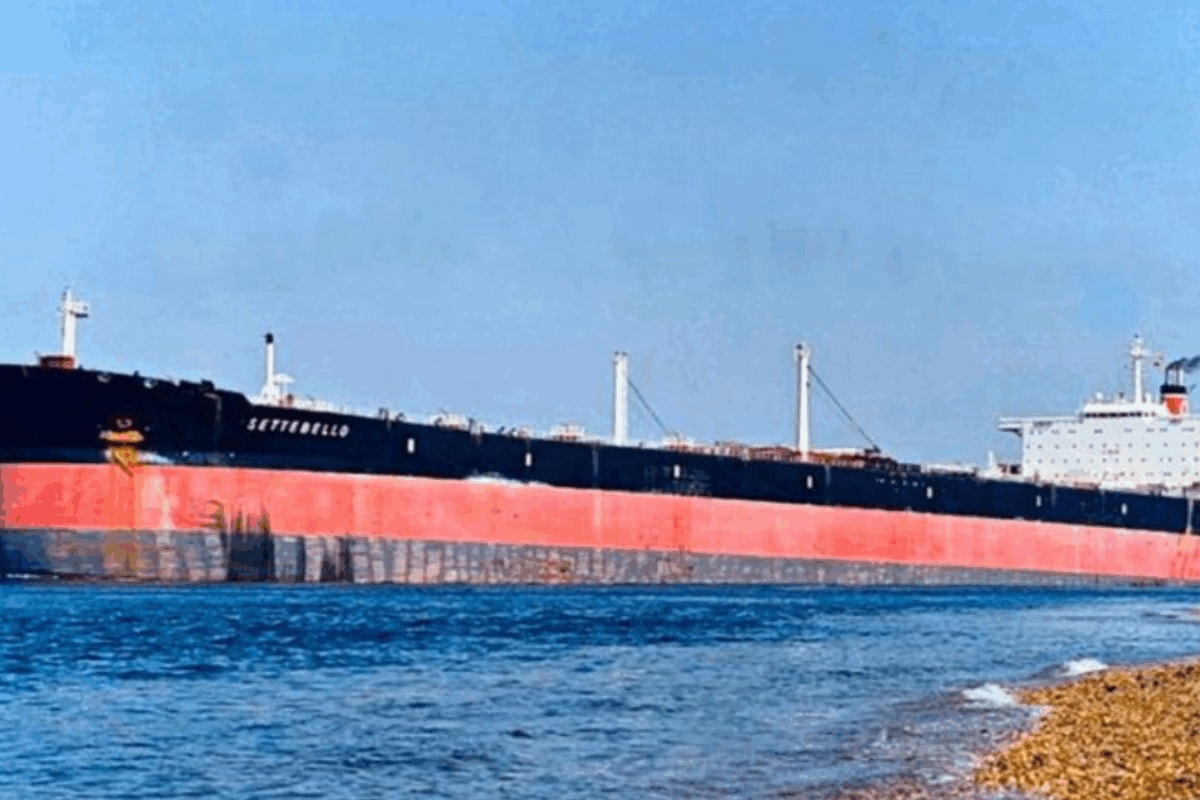
As geopolitical tensions flare in the Persian Gulf, the families of Indian crew members aboard the oil tanker Settebello face a devastating wait for answers.
The relative calm of the maritime routes near the Strait of Hormuz was shattered this week when the Palau-flagged oil tanker Settebello became the latest casualty in a volatile region. According to the Forward Seamen’s Union of India (FSUI), a missile strike by US naval forces tore through the ship's engine room, sparking a fire that has left families across India in deep distress. The human toll is stark: two Indian sailors are confirmed dead, and the vessel's chief engineer remains missing.
Of the 28 crew members aboard, 24 were Indian nationals. General Secretary Manoj Yadav of the FSUI confirmed the grim details, noting that communication with the ship remains severely disrupted, complicating rescue and identification efforts. The victims, hailing from Himachal Pradesh, Deoria in Uttar Pradesh, and Andhra Pradesh, represent a cross-section of the thousands of Indians who serve as the backbone of the global merchant navy, often working in the world’s most dangerous waters.
A Pattern of Peril
This incident is not an isolated flare-up but part of a deepening pattern of instability that has turned the Persian Gulf into a high-risk zone for global shipping. With nearly 23,000 Indian crew members estimated to be operating on vessels in or around the Strait of Hormuz and the broader Persian Gulf, the risks are no longer theoretical. The FSUI and other maritime bodies have raised alarms about the safety of seafarers caught in the crossfire of regional conflicts, where commercial vessels are increasingly being treated as collateral damage.
The diplomatic fallout was swift. New Delhi summoned a top US diplomat to register a formal demarche, signalling the gravity with which the Indian government views the loss of its citizens. While the US military presence in the region is ostensibly aimed at securing trade routes, the Settebello attack has invited intense scrutiny regarding the rules of engagement and the protection of merchant mariners who have no role in the underlying military hostilities.
Why It Matters: The Indian Perspective
For India, the crisis is twofold: a humanitarian tragedy and a strategic nightmare. Our reliance on these maritime corridors for energy security is absolute, yet it is the individual Indian seafarer who bears the brunt of the instability. Every time a vessel is hit—whether by state actors or regional factions—it sends a ripple of fear through the thousands of Indian families dependent on remittances from the sea.
The "bigger picture" suggests that the safety of the global supply chain is fraying. As tensions between major powers and regional stakeholders grind on, the merchant navy is being forced to navigate a landscape where "neutrality" offers little protection. Unless there is a concerted international effort to establish "safe corridors" for commercial shipping, we are likely to see more tragedies where innocent crew members pay the ultimate price for geopolitical posturing.
Ananya Iyer covers global affairs with an Indian lens for PoliticalPedia.