'They use religion to defame me': Punjab CM Bhagwant Mann hits back at Akal Takht sacrilege row
'They use religion to defame me': Punjab CM Bhagwant Mann rejects 'sacrilege' allegations
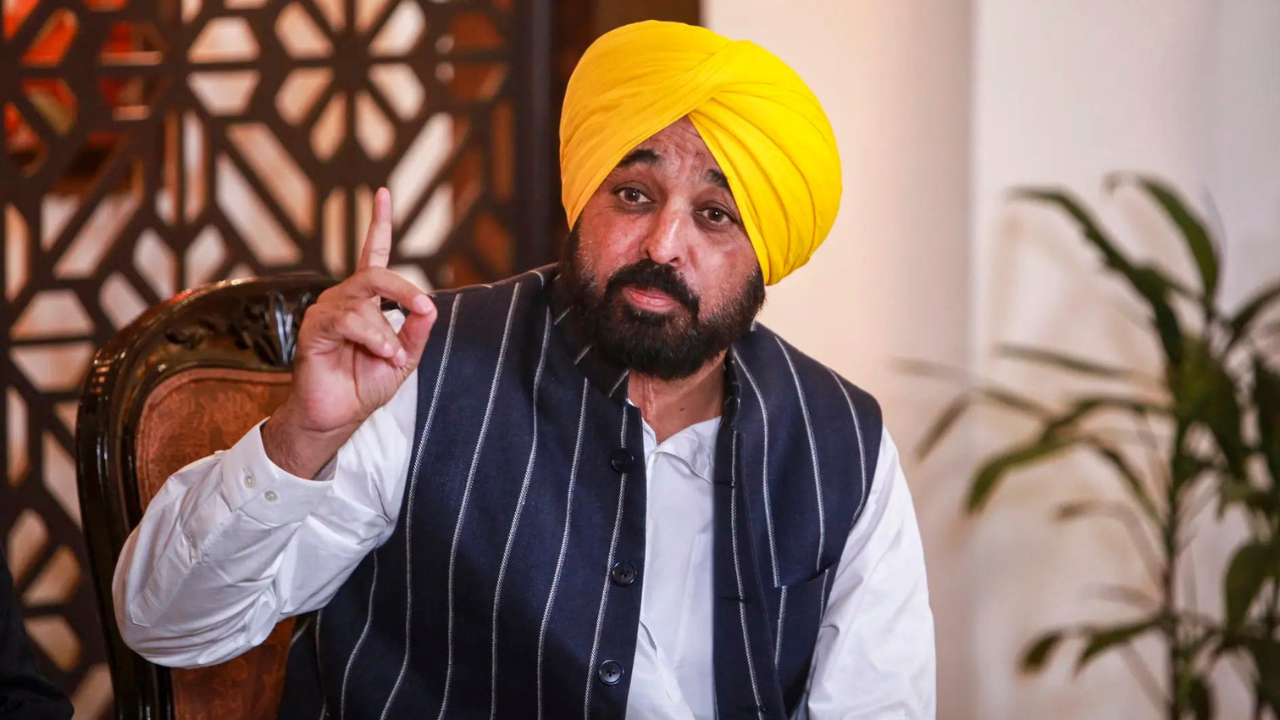
As the Akal Takht declares the Punjab CM 'Guru Dokhi', Bhagwant Mann dismisses the viral footage as a politically motivated smear campaign.
The political temperature in Punjab has reached a boiling point after the Akal Takht, the highest temporal authority for the Sikh community, declared Punjab CM Bhagwant Mann a 'Guru Dokhi' (anti-Guru) and 'Khalsa Panth Virodhi' (anti-Khalsa Panth). The edict follows a viral video that purportedly shows a man resembling the Chief Minister consuming alcohol and splashing it on photographs of Sikh Gurus. Mann has vehemently rejected the authenticity of the clip, terming it "false propaganda" orchestrated by opposition forces.
Speaking in a video message, Mann challenged the findings of the religious body, asserting that his physical appearance, including his height and stature, does not match the individual in the footage. "When they have nothing else to control, they use religion to defame me," he said. The Chief Minister alleged that a nexus between the BJP, Congress, and the Shiromani Akali Dal is behind the campaign, claiming these parties are desperate to derail his government’s recent legislative push, specifically the Jaagat Jot Sri Guru Granth Sahib Satkar Amendment Act-2026.
The Forensic Battle
The controversy has spiralled into a complex legal dispute. While the Akal Takht Jathedar, Giani Kuldeep Singh Gargajj, insists that two forensic laboratories have verified the video as authentic and not a product of digital manipulation, Mann has countered these claims. The Chief Minister accused his opponents of coercing laboratory owners through threats and FIRs to influence the reports. He suggested that the "real" forensic testing exonerates him, leaving the public to decide whose version holds weight.
The opposition has seized on the indictment, with the Congress and BJP calling for Mann’s resignation. Partap Singh Bajwa, the Leader of the Opposition, argued that the issue transcends routine politics, touching upon deep-seated sentiments of faith. Meanwhile, BJP leader Tarun Chugh asserted that after such a grave indictment by the highest religious authority, the CM has lost the moral legitimacy to continue in his office.
Why it matters
This stand-off signifies a deepening rift between the AAP-led state government and traditional religious institutions, a dynamic that has historically shaped Punjab’s electoral landscape. By framing the attack as a coordinated effort to stop his pro-people policies—such as reforms in education, healthcare, and water rights—Mann is attempting to shift the narrative from religious sacrilege to political persecution. However, the summons issued to all Sikh MLAs and the Cabinet to appear before the Akal Takht on June 29 suggests the clergy is unwilling to let the matter rest, setting the stage for a protracted institutional crisis.
The conflict reflects a recurring pattern in the state where religious sentiment and political governance frequently collide. For the AAP, the challenge lies in balancing its modern, secular governance agenda against the immense cultural authority of the Akal Takht. As the standoff intensifies, the primary casualty remains the stability of the state's political discourse, with both sides entrenched in a battle for narrative supremacy.
Arjun Mehta reports on government, policy and Parliament for PoliticalPedia, in English and Hindi.