The Unravelling: How Mamata Banerjee is Losing Her Grip on the Trinamool Congress
How one of India's most successful female politicians is losing her party
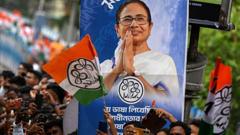
Once the architect of a historic political shift, the TMC founder now faces a fierce internal mutiny that threatens the very survival of her regional stronghold.
The corridors of power in Kolkata, usually buzzing with the calculated confidence of the Trinamool Congress (TMC), have fallen into a state of nervous disarray. Just a month after the Bharatiya Janata Party (BJP) swept to power in West Bengal, ending a 15-year reign, the political machinery that once seemed invincible is showing deep, jagged fractures. Mamata Banerjee, arguably one of the most successful female politicians in contemporary India, is finding that losing an election is far less dangerous than losing her own party.
The figures suggest a party that remains a formidable electoral force, even in defeat. With 26 million votes—only three million shy of the BJP’s tally—and a 40% popular vote share, the TMC retains 80 legislators and 28 MPs. By any conventional playbook, this should be a period of regrouping. Instead, the party is witnessing a high-stakes exodus.
A Mutiny in the Ranks
The revolt began within the state legislature with clinical speed. Within weeks of the loss, roughly three-quarters of the TMC’s legislators pivoted against both Banerjee and her nephew, Abhishek, who was positioned as the party’s heir apparent. These rebels have effectively seized control of the legislative wing, appointing their own opposition leader and lobbing serious allegations at the leadership regarding the forgery of official documents.
The contagion has now crossed state lines into Delhi. Reports indicate that at least 20 of the party's 28 MPs have petitioned the speaker of parliament, signalling a desire to break away from the TMC’s parliamentary group and align with the BJP-led ruling alliance. If this shift is formalised, it would represent a catastrophic blow to the TMC’s identity as a national opposition powerhouse.
Why it Matters: The Bigger Picture
This crisis underscores a recurring, brutal reality in Indian politics: parties often survive electoral defeat, but they rarely survive the sudden, vacuum-like loss of state patronage. The TMC, built on the singular, firebrand personality of Banerjee—who famously ended 34 years of Communist rule in 2011—is now grappling with a crisis of authority.
When the "hegemonic power" of a ruling party evaporates, internal loyalties tend to realign with the new centre of gravity. For the BJP, this development is a strategic windfall, confirming its growing influence in eastern India. For the TMC, the risk is not just losing a seat at the table, but total systemic fragmentation. Whether Banerjee can arrest this collapse or if her party is destined to fade into a historical footnote remains the most pressing question in the state today.
Rohan Gupta covers the economy, markets and companies for PoliticalPedia.