The Siraj Workload Paradox: Why India’s Most Relentless Pacer Finally Needs a Break
The Siraj workload question: How India created cricket's busiest fast bowler
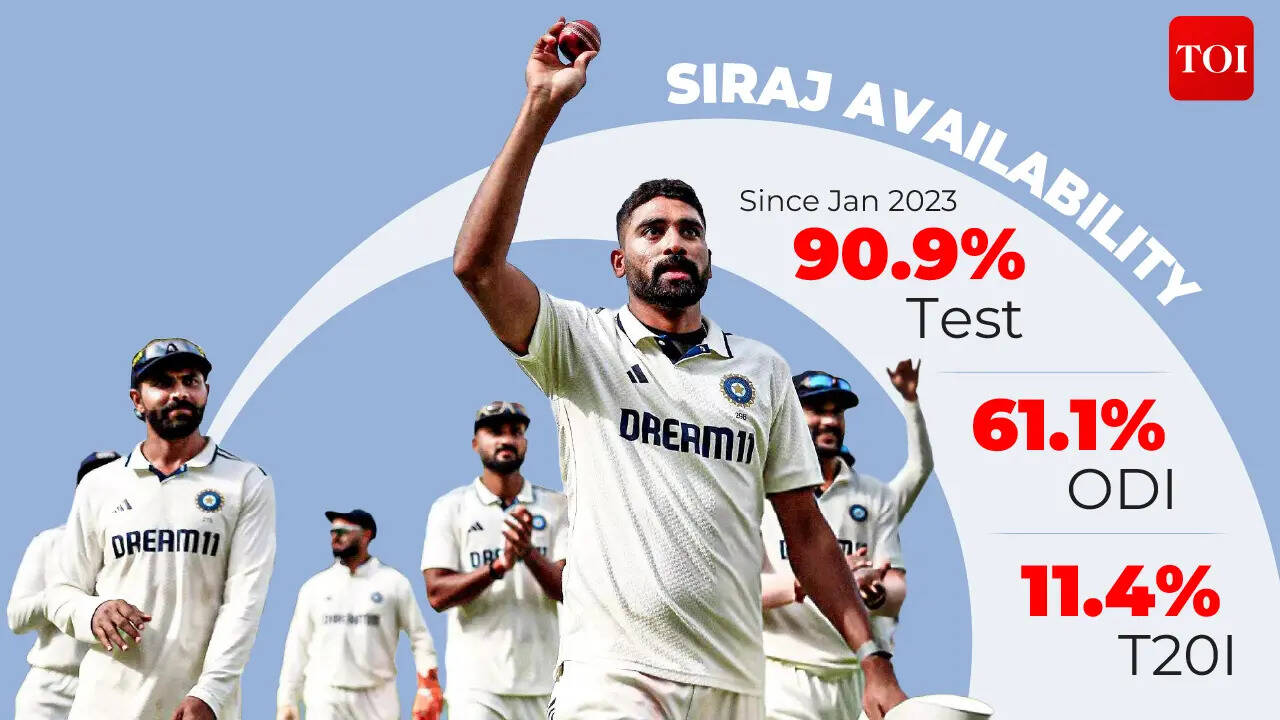
While white-ball opportunities dry up, Mohammed Siraj has quietly become the backbone of India’s Test attack, raising urgent questions about his mounting physical toll.
The sight of Mohammed Siraj’s name on a T20I squad list for the upcoming England and Ireland series felt like a glitch in the system. For a bowler who had effectively drifted to the fringes of India’s limited-overs plans—hardly featuring in the 2026 T20 World Cup and missing the Champions Trophy squad—his inclusion seemed like a tactical placeholder. When he was withdrawn just days later, replaced by Prasidh Krishna under a mandatory "workload management" tag, the confusion was palpable. How does a bowler who barely plays T20s suddenly require a rest?
The Test Match Workhorse
The answer lies in the one format India refuses to navigate without him. While Jasprit Bumrah is often the focus of the intense workload debate, Siraj has become the silent, ever-present engine of India’s Test cricket. Over the last three years, when others were rotated, rested, or recovering from injury, Siraj was the constant. He has shouldered the responsibility of being the "default" fast bowler, filling the gaps in a way that has quietly turned him into one of the busiest quicks in the world game.
The contrast with Bumrah is stark. The team management has meticulously curated Bumrah’s appearances to preserve his longevity, a philosophy that has drawn both praise and intense scrutiny. Because Bumrah is managed with such precision, the burden of the long-form calendar falls disproportionately on those left standing. Siraj has become that man, consistently bowling through the grind of extended home seasons and away tours alike.
Why it matters
This situation highlights a growing rift in how the BCCI manages its marquee assets versus its operational workhorses. The "workload" label applied to Siraj isn't a reaction to his T20 output; it is a belated recognition of the massive cumulative fatigue he has gathered in Test cricket. If India continues to rely on a small, hyper-specialized pool of fast bowlers, the current "resting" cycle will become a permanent feature of squad announcements. The challenge for the selectors now is preventing burnout before it ends a career, rather than reacting to it once the player is already running on fumes.
A New Philosophy of Pace
The era of the "enduring" pacer—who simply played every game because there were no alternatives—is supposed to be over. Yet, as the calendar becomes increasingly congested, the struggle to balance performance with preservation remains the biggest hurdle for the team. With rumors swirling about his availability for the upcoming Afghanistan Test and Gurnoor Brar waiting in the wings, the message from the top is clear: the era of the "all-format workhorse" is being phased out. For Siraj, the break from the Ireland and England tour is not about the T20 game; it is a necessary cooling-off period for the most overworked bowler in the country.
Priya Nair covers parties, elections and the business of power for PoliticalPedia.