The Shadow Striker: How Mikel Merino Ended Portugal’s Euro Dreams
From the shadows pounced Mikel Merino: Spain’s unlikely hero knocks out Portugal
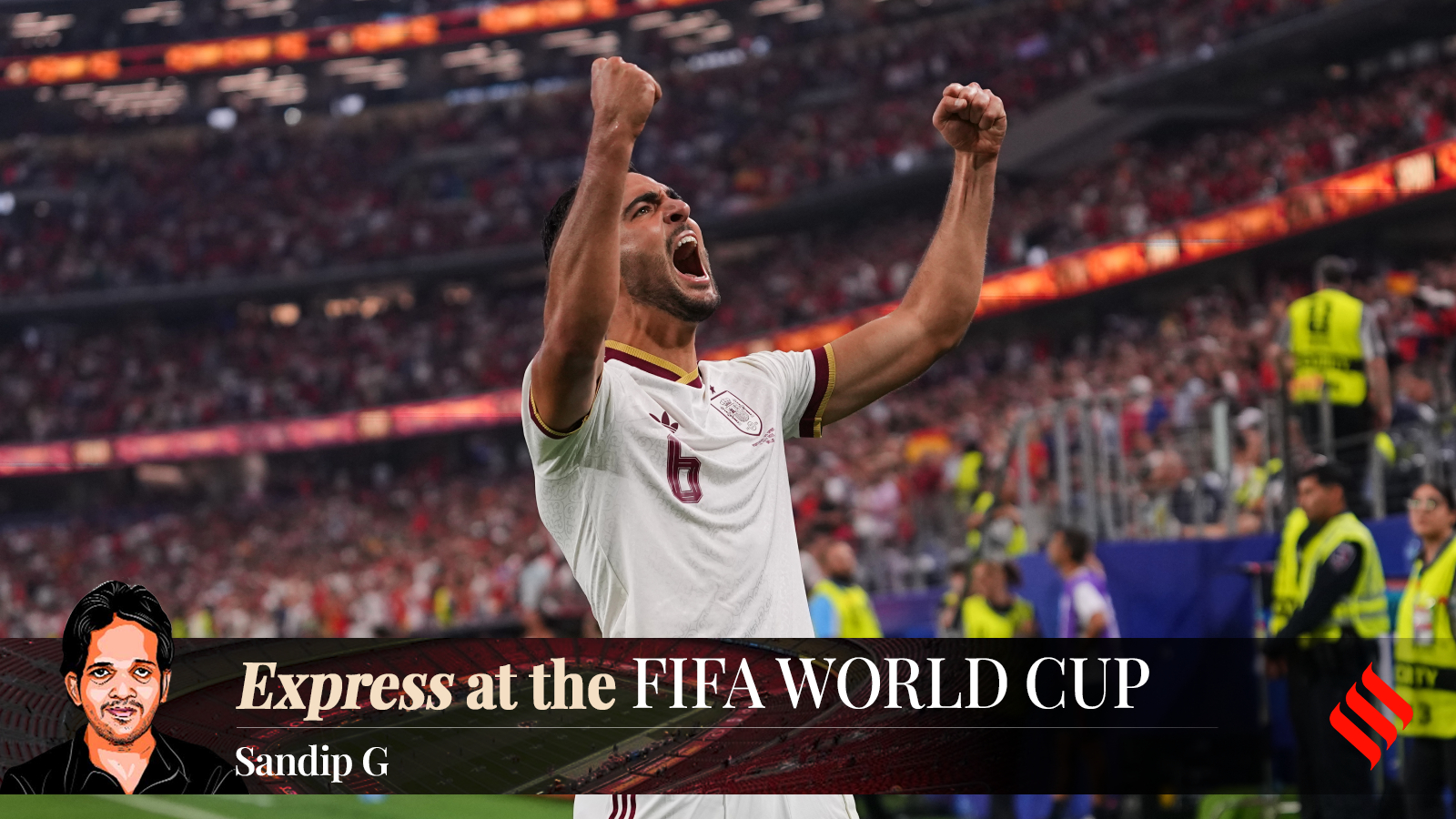
In a contest defined by tactical gridlock, Spain’s unlikely hero emerged from the fringes to seal a decisive victory and break Portuguese hearts.
The Dallas afternoon was drifting toward a weary stalemate, a match that seemed destined to dissolve into the lethargy of extra time. For 90 minutes, the marquee names on the pitch—the celebrated forwards and wingers—had circled each other with caution, failing to carve out a definitive path to the net. Then, from the periphery of the action, Mikel Merino made his move.
The play itself was a study in patience. Fabian Ruiz, standing 20 yards out, recycled a free kick back to Rodri. While the Portuguese defense remained preoccupied with the established stars, Merino was already in motion. He drifted behind the defensive line, a ghost in the half-space, tracking a trajectory that seemed entirely invisible to the weary opposition. When Ferran Torres slipped a perfectly weighted ball through the needle-eye gap of the defense, Merino was waiting. With the composure of a seasoned striker, he guided the ball past Diogo Costa to secure the goal that finally broke the deadlock.
The Art of the Invisible Run
Merino is rarely the player who dominates the pre-game newsprint. He lacks the flash of a global icon, yet he has carved out a career defined by these precise, utilitarian interventions. His Arsenal teammate Gabriel Martinelli has even cheekily dubbed him "R9," a nod to the legendary Ronaldo Nazario for his knack for finding space in high-stakes moments. This wasn't a fluke; it was a continuation of a pattern that saw him deliver a critical goal against Germany earlier in this tournament.
As the stadium erupted, the midfielder bypassed the traditional fanfare. He headed straight to the corner flag, circling it three times—a quiet, poignant tribute to his father, Miguel Merino, who played for various Spanish clubs in the 90s. It was a moment of grace for a player who prefers to operate in the shadows until the exact second his team needs him most.
Why it matters
This result serves as a stark reminder that in elite football, the outcome is often determined not by the loudest stars, but by the discipline of the supporting cast. Spain’s progression highlights a shift in tactical reliance; while teams focus on stifling the primary threats, they leave gaps that players like Merino are perfectly primed to exploit. For Portugal, the exit marks a bitter end to a tournament that has been anything but kind to their veteran talisman, Cristiano Ronaldo. The reliance on established reputation often masks the danger of the "invisible" player—a lesson the Portuguese defense learned far too late in Dallas.
Looking ahead, Spain’s ability to find different sources for their goals makes them a dangerous proposition for the remainder of the competition. They are no longer dependent on a single channel of attack, which forces opponents to defend the entire pitch rather than focusing on a specific individual. Merino’s contribution has effectively balanced the scales, proving that in a game of inches, the most effective weapon is often the one you forget to track.
Priya Nair covers parties, elections and the business of power for PoliticalPedia.