The quiet geometry of an empty home: Life after the kids move out
The empty room upstairs: What happens when children leave home
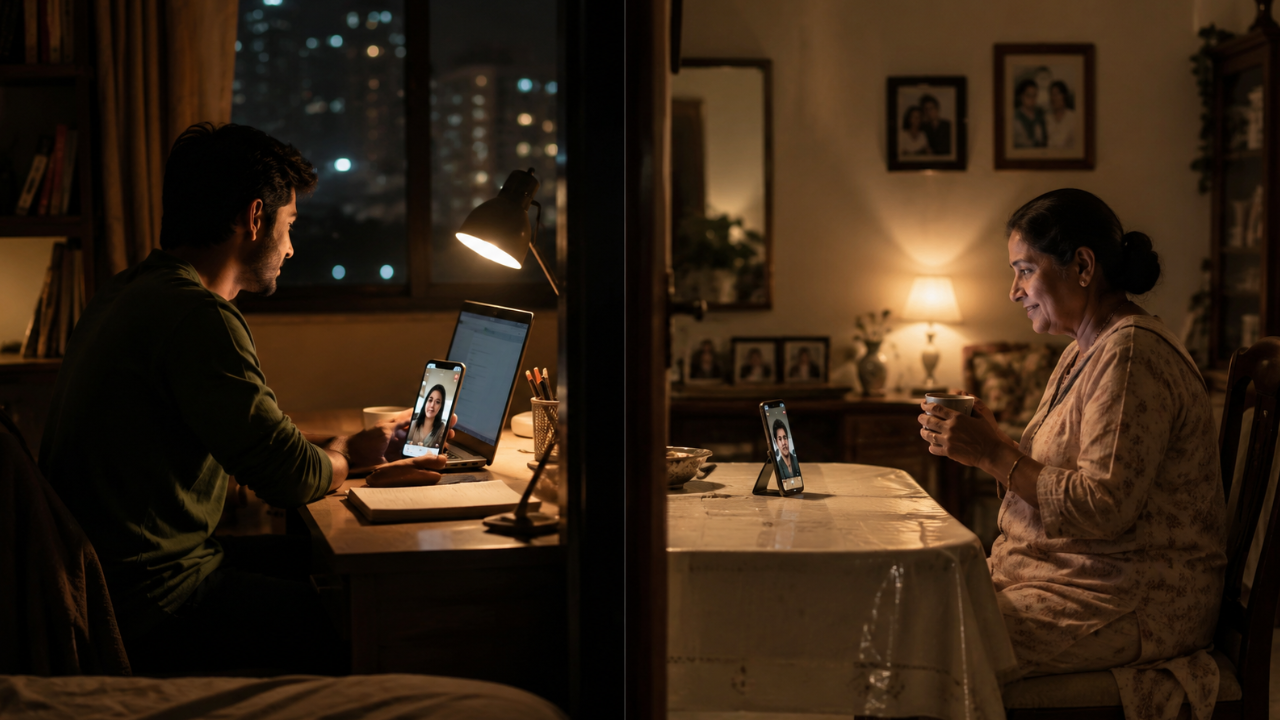
As adult children carve out lives in new cities, Indian households are grappling with a silent, structural shift in what it means to be a family.
The kitchen still holds the same familiar scents, yet the rhythm of the house has fundamentally stuttered. For many Indian parents, the transition is marked by the small, haunting residue of a life lived by three or more: a pot that never empties fast enough, a second teacup pulled from the cupboard by muscle memory, and the persistent, unbidden habit of dimming the dining room light at 9 p.m. to signal the day’s end. As children move out for careers, marriages, or the modern pursuit of autonomy, the house remains, but the domestic script has been abruptly discarded.
A new domestic vocabulary
This isn’t the dramatic migration to care homes often portrayed in media. It is a quiet, disorienting unlearning of a lifetime. The joint family ideal, which once promised a revolving door of occupants, is fading. In its place, families are forced to invent a new grammar for closeness. Whether it’s a fixed-time video call where a mother angles her phone to show a simmering dal, or a sporadic voice note sent at odd hours, these digital threads have become the modern perimeter of the home.
For the children on the other side, the independence they craved is often shadowed by a quiet guilt. They are living on their own terms, yet they remain tethered to the knowledge of an empty room back home—a space that once teemed with life and now serves as a silent monument to their absence. Parents, meanwhile, are learning to navigate the surplus of space. Some treat the change as a chance to reclaim their own autonomy, while others find the newfound silence a challenge that requires significant emotional recalibration.
Why it matters
The broader shift here suggests that we are moving away from the traditional, physical definition of a household. For generations, Indian domesticity was measured by shared walls and common meals. Today, the household has become fluid; it exists in the space between a WhatsApp ping and a scheduled weekend call. This trend towards smaller, decentralized living units isn't just a lifestyle choice—it is a structural change in the social fabric. As homes become less about keeping the clan under one roof and more about maintaining a connection across distances, society must adapt to support an aging demographic that is increasingly living alone, not by necessity, but by a modern evolution of the family unit.
Redefining the space
The house itself has become a blank canvas for this new reality. Where once every square foot was utilized by multiple generations, many are now choosing to close off empty rooms to manage energy costs or repurposing them into personal study spaces. It is a practical reaction to a changing landscape. While the psychological adjustment to the "empty nest" is rarely spoken of in scripts, it is a universal experience. Learning to spread one's wings—both as the child leaving and the parent staying—is the quiet, messy work of modern life. It’s an evolution that requires a new kind of resilience: the ability to feel close to someone, even when they are miles away, and the grace to let a house evolve from a bustling hub into a quiet sanctuary.
Kabir Sharma writes on culture, technology and everyday life for PoliticalPedia.