The hostel mess that sparked a fire: How a Gujarat food bill pushed India to the brink
Inside the Emergency: The ‘mess’ that triggered India’s darkest hours
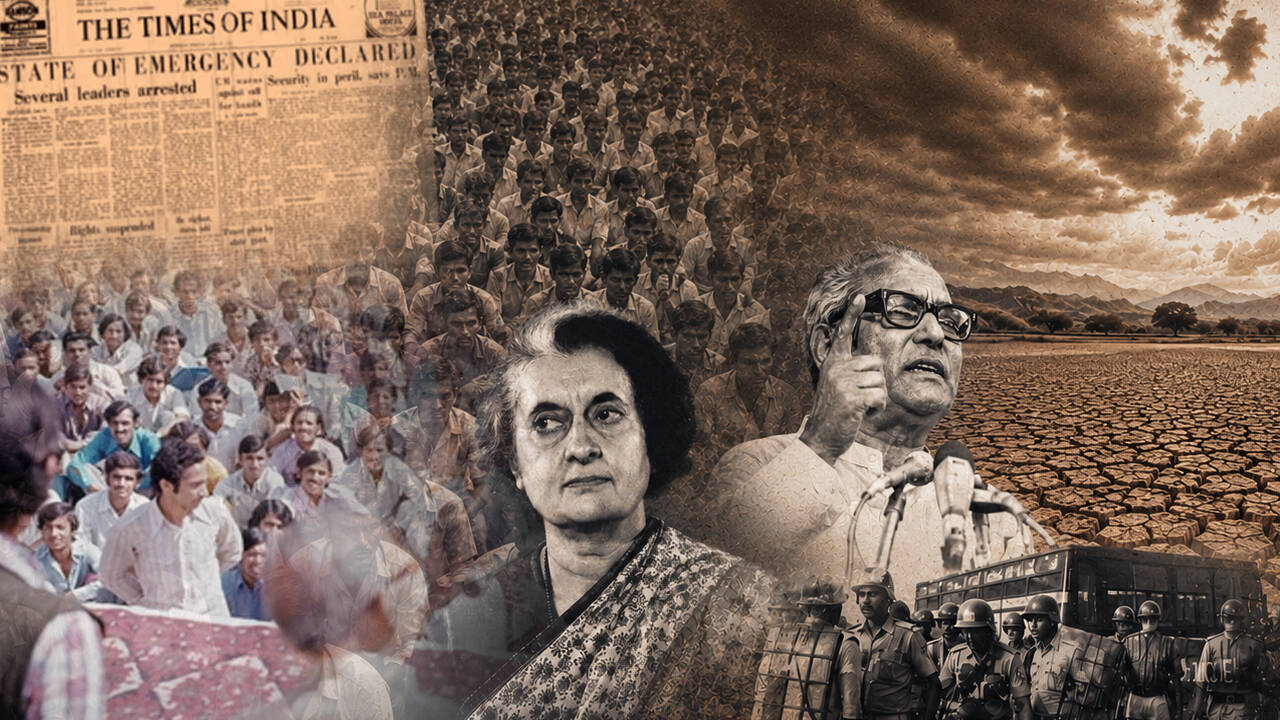
Long before the 1975 clampdown, the Emergency had its roots in an Ahmedabad canteen where soaring inflation broke the student spirit.
In December 1973, the atmosphere inside the Lalbhai Dalpatbhai College of Engineering in Ahmedabad wasn't just cold; it was combustible. Students were staring at a 20-40% hike in their monthly mess bills, a figure that felt less like an accounting adjustment and more like an existential threat. For a student body already stretched thin, this wasn't an isolated grievance. It was the boiling point of a systemic breakdown. As political scientist Ghanshyam Shah observed at the time, roughly half the students simply couldn't afford to pay. The canteen, once a place for routine meals, had become a site of protest where lunch was frequently boycotted in a desperate bid to be heard.
The anatomy of a crisis
The numbers tell a story of a state losing its grip. Between late 1973 and early 1974, prices for essentials—ghee, edible oil, vegetables, and even meat—had spiked by as much as 100%. Commodities like kerosene and baby food had vanished from the open market entirely. In Surat, the supply of wheat to ration shops plummeted from 6,900 tonnes in May 1973 to a mere 1,100 tonnes by December. A ration cardholder was lucky to get a single kilogram of wheat per month. Historian Bipan Chandra later noted that this wasn't just bad luck; it was a lethal cocktail of successive crop failures and a massive 60% cut in central food grain allocations to a state already gasping for supply.
The chaos in Gujarat was, in truth, an echo of a global seismic shift. While students in Ahmedabad argued over mess bills, the geopolitical map was being redrawn 8,000 kilometres away. When the Yom Kippur War broke out in October 1973, the subsequent Arab oil embargo sent shockwaves through the global economy. By the time the dust settled, the price of a barrel of oil had quadrupled, jumping from $2.90 to unprecedented heights. This wasn't just a crisis of energy; it was an inflationary contagion that turned local shortages into a national emergency.
Why it matters
The trajectory from a canteen protest to the declaration of the Emergency two years later serves as a chilling reminder of how quickly economic misery can curdle into political instability. When the state fails to provide the basic requirements of life—food, fuel, and stability—the social contract frays. The Gujarat agitation demonstrated that when the "mess" becomes an issue of national survival, the public’s threshold for political patience evaporates. It wasn't just about the price of dal or wheat; it was about a government that appeared increasingly detached from the mounting helplessness of its citizens.
For the modern observer, this period remains a masterclass in how policy paralysis at the centre can amplify local shocks. The failure to manage food security in the wake of global oil price hikes turned a manageable economic downturn into a full-scale constitutional crisis. It highlights a recurring pattern in Indian history: when the kitchen pantry runs dry, the echoes are felt directly in Parliament. The Emergency didn't begin with a decree; it began with the realization that the system had stopped working for the people it was meant to serve.
Arjun Mehta reports on government, policy and Parliament for PoliticalPedia, in English and Hindi.