The Anand Blueprint: Why Pragg’s Norway Win Is A Lesson For Gukesh
'Gukesh can take inspiration from Pragg': Anand advises world champion
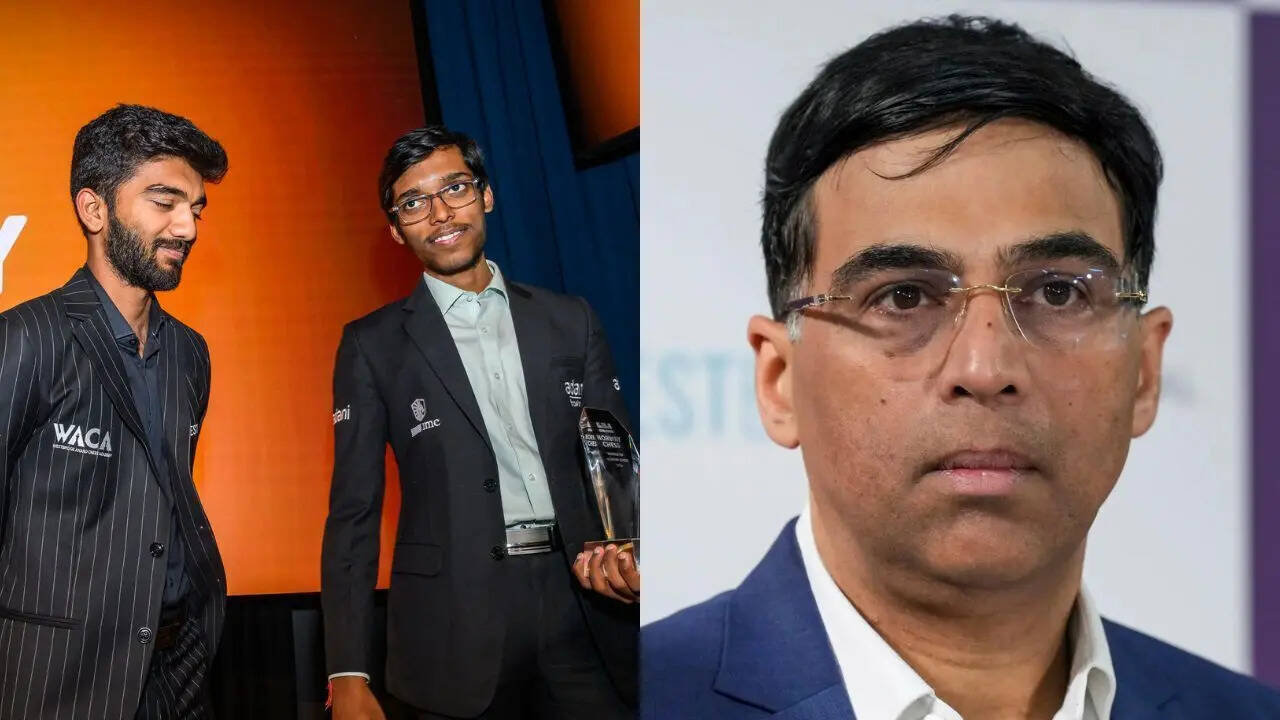
As D Gukesh navigates a mid-season slump, the legendary Viswanathan Anand suggests looking toward R Praggnanandhaa’s gritty resilience for a path back to the top.
The chessboard is rarely a place for sentiment, but even in the cold, calculated world of grandmaster play, momentum is everything. Right now, the spotlight has shifted. While D Gukesh—the teenage world champion—is grappling with a dip in form following a challenging sixth-place finish at Norway Chess, his contemporary R Praggnanandhaa, or 'Pragg' as he is affectionately known, is riding a wave of tactical brilliance. After becoming the first Indian to clinch the Norway Chess title, Pragg’s ability to orchestrate a late-tournament comeback has caught the eye of the man who put Indian chess on the map: Viswanathan Anand.
Anand isn't one to ring alarm bells. In recent discussions, including those hosted on platforms like ChessBase, he has framed the current disparity in performance as a natural, if difficult, rhythm of the sport. He notes that while Pragg is currently playing with a level of aggressive, risk-taking consistency that has defined his game for the last eighteen months, Gukesh appears temporarily "stuck." For a player preparing for the immense pressure of defending his world title, this "stuck" phase is a familiar hurdle that requires a shift in perspective rather than a complete overhaul of his craft.
The Power of the Pivot
The core of Anand’s advice is simple: perseverance. He points to Pragg’s spectacular turnaround in the final four rounds of the Norway tournament as the ultimate template for recovery. It is a reminder that in the elite circuit, form is rarely a straight line. It swings, dips, and climbs, often within the span of a single event. Anand’s message to Gukesh is that persistence in hard work is the only reliable bridge across a dry spell. By observing how Pragg handled his own challenges to secure a win, Gukesh has a living, breathing case study in how to sharpen his resolve before his upcoming showdown against Javokhir Sindarov.
Why it Matters: The Golden Generation
Beyond the individual rivalry, what we are witnessing is an unprecedented era for Indian chess. With 95 Grandmasters and a healthy, high-stakes competition between stars like Gukesh, Pragg, and Arjun Erigaisi, the landscape has transformed. It is the first time in history that India has three players pushing each other at such an elite level, creating a cycle of improvement that feeds the national pool.
This isn't just about one tournament or one player's slump. It is about a structural shift. India is now firmly entrenched among the world’s top three chess nations, and the fact that an icon like Anand is actively shaping these talents through initiatives like WACA (Westbridge Anand Chess Academy) ensures that the "form swings" are treated as growth spurts rather than failures. Gukesh and Pragg aren't just competitors; they are the gears of a machine that is rapidly redefining the global hierarchy of the game. For the fans, this rivalry is the best thing to happen to the sport in decades.
Kabir Sharma writes on culture, technology and everyday life for PoliticalPedia.