The 1951 Bargain: How the First Amendment Still Defines India
First Amendment at 75: The bargain that still shapes India’s rights
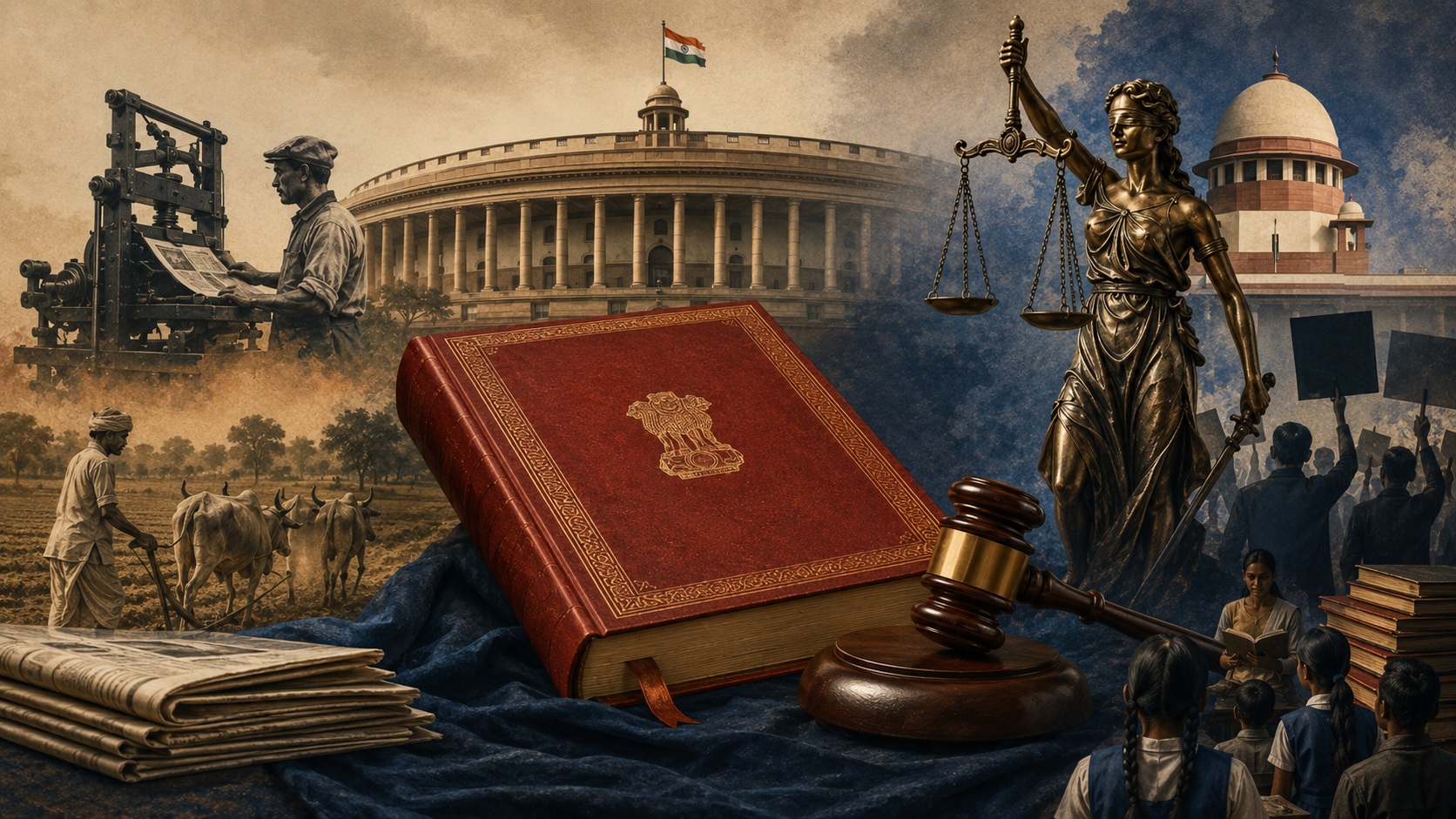
Seventy-five years ago, a pivotal constitutional change redefined the boundaries between citizen freedoms and state power, setting a precedent that continues to echo through our courts and Parliament today.
On June 18, 1951, barely 16 months after the Constitution was adopted, India’s fledgling democracy underwent a profound transformation. The First Amendment was not just a legal technicality; it was a deliberate, rapid recalibration of the Republic’s DNA. Before the country had even faced its first general election, the government fundamentally altered the landscape of free speech, property rights, and equality, creating a constitutional mechanism that allowed the state to insulate specific laws from judicial scrutiny.
When the Courts Pushed Back
The amendment was born from a direct collision between the judiciary and a young state eager to implement social reforms. In landmark cases like Romesh Thappar v. State of Madras and Brij Bhushan v. State of Delhi, the Supreme Court had signaled that the state could not easily curtail press freedom or impose prior censorship in the name of public order. The court’s insistence on a strict reading of Article 19(1)(a) forced the hand of the administration.
To bypass these judicial constraints, the government introduced the First Amendment, which significantly expanded the grounds for restricting free speech under Article 19(2). By adding terms like "public order" and "friendly relations with foreign states," the amendment provided a legal shield that allowed the executive to navigate the turbulence of a newly independent nation.
Remaking the Rulebook
Beyond speech, the amendment reshaped the economic and social fabric of India. It introduced Article 15(4), empowering the state to create special provisions for socially and educationally backward classes—a move that remains the bedrock of modern affirmative action policies. Simultaneously, the creation of the Ninth Schedule and Articles 31A and 31B served as a "safety valve" for land reform laws. By shielding these measures from challenges based on fundamental rights, the state effectively created a sanctuary where legislative priorities could trump individual property claims.
Why it matters
The 1951 changes established the defining tension of Indian constitutional life: the perpetual trade-off between individual liberty and the state’s developmental imperatives. For supporters, the amendment was a pragmatic necessity, a tool for nation-building that allowed the government to deliver on its promise of equality and social justice. For critics, however, it set a dangerous precedent, narrowing the liberal promise of the original document and creating a blueprint for future expansions of state authority.
Today, as we see debates over the reach of Parliament, the limits of judicial review, and the evolving nature of public order, the footprint of 1951 is unmistakable. The First Amendment reminds us that India’s democratic journey has never been static; it has always been a calculated negotiation between the rights of the individual and the vision of the state.
Ananya Iyer covers global affairs with an Indian lens for PoliticalPedia.