Silence in the Mountain: Why India’s Bullet Train Tunnels Are Getting a Tech Upgrade
Bullet train project: India installs tunnel hoods - how they keep your journey smooth
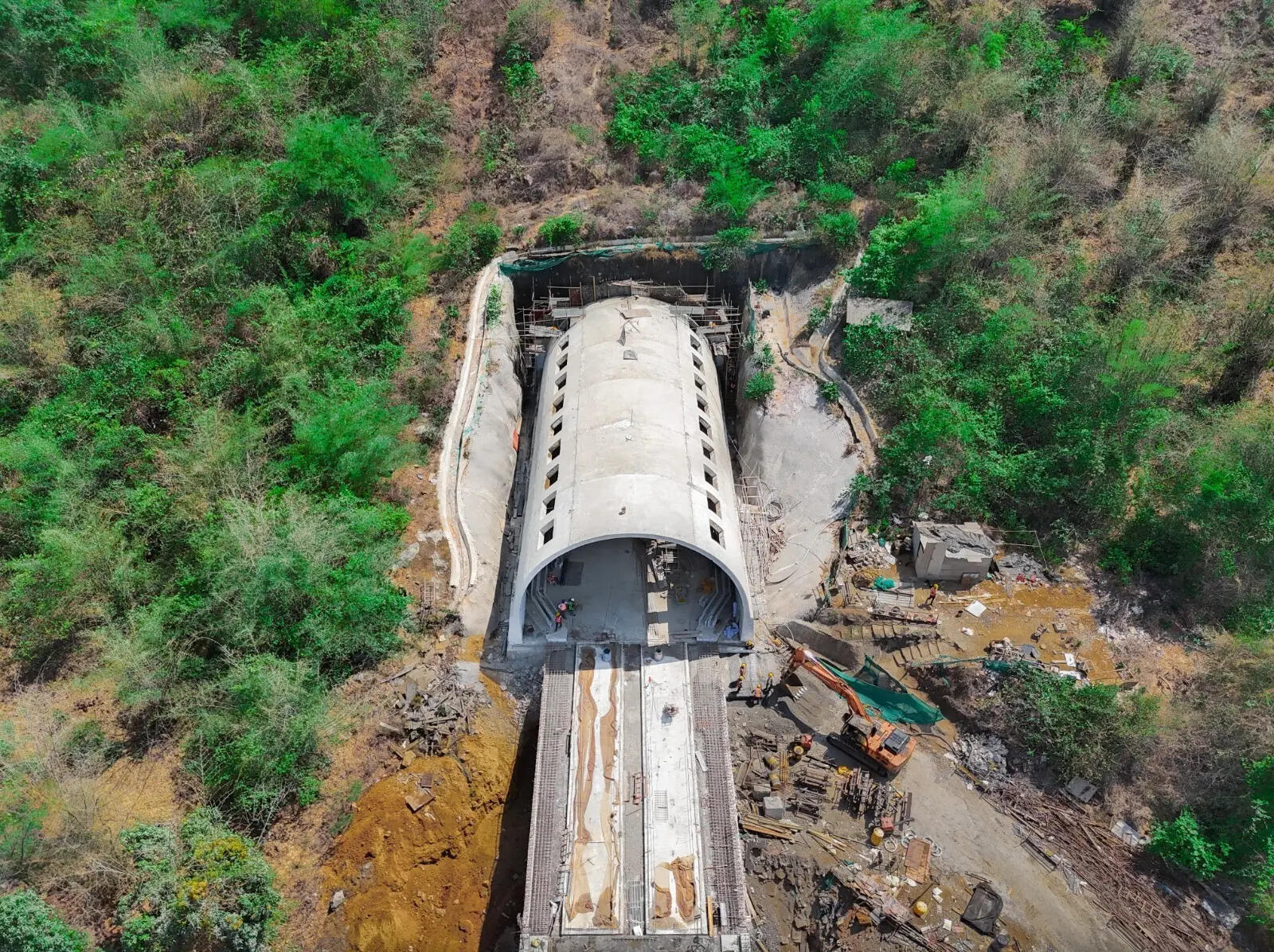
Engineers are installing specialized tunnel hoods along the Mumbai-Ahmedabad bullet train route to manage air pressure and ensure a quieter ride.
Anyone who has stood near a fast-moving train knows the sudden, violent gust of wind that follows. Now, imagine that force amplified a hundredfold inside the confined space of a mountain tunnel. As India gears up for its first high-speed rail experience, the Mumbai-Ahmedabad bullet train project is introducing a piece of civil engineering that looks more like a grand architectural entrance than a functional tool: the tunnel hood.
These structures are being placed at the mouths of tunnels across the project’s rugged mountain sections—seven in Maharashtra and one in Gujarat. While they might look like simple extensions of the tunnel itself, their primary job is to act as a buffer. When a high-speed train enters a tunnel, it behaves much like a piston in a cylinder, pushing a massive volume of air ahead of it. Without intervention, this creates intense pressure waves that can result in a thunderous sonic boom upon exit.
Mastering Aerodynamics
The technology works by creating a transition zone between the open air and the enclosed mountain passage. Instead of a sharp, sudden change in environment, the hoods allow air to move in and out more gradually. By smoothing out these pressure spikes, the project aims to stabilize the aerodynamic performance of the train, preventing the jarring noise and vibration that would otherwise plague passengers and those living near the tunnel exits.
This is a significant engineering first for India. Integrating this technology is a deliberate move to ensure that the high-speed rail experience isn't just about velocity, but about comfort and acoustic control. It’s a nuanced approach to building infrastructure that respects the surrounding environment while pushing the limits of transportation.
The Bigger Picture
Why does this matter? Beyond the immediate technical fix, the deployment of tunnel hoods signals a maturing approach to large-scale infrastructure in India. We are moving past the era of simply laying tracks; the focus is now shifting toward the complex, invisible physics of high-speed travel.
If this project is the blueprint for future high-speed corridors across the country, these hoods are just the beginning of a broader set of standards designed to manage the environmental impact of modern transit. The success of the Mumbai-Ahmedabad link will likely set the benchmark for how we design tunnels through difficult terrain, proving that high-speed connectivity doesn't have to come at the cost of peace and quiet.
Kabir Sharma writes on culture, technology and everyday life for PoliticalPedia.