Referee’s Whistle or Warning Shot? The Three Red Cards That Shook the World Cup Opener
Three red cards on opening night: Is the 2026 FIFA World Cup about to get brutal?
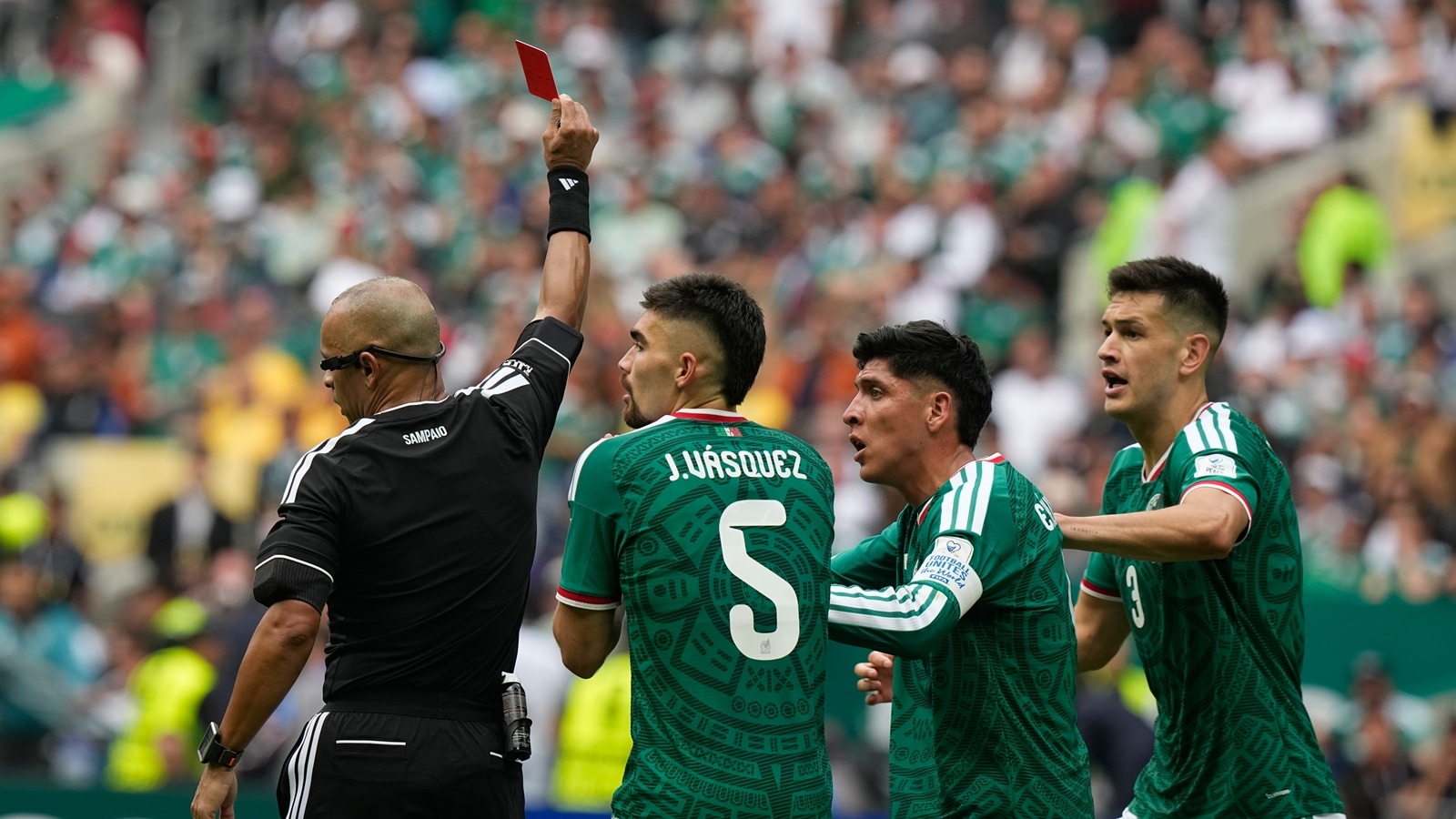
A chaotic start at the Azteca sees Mexico triumph over South Africa, but the real story lies in the controversial new rules changing the beautiful game.
The roar at the Azteca Stadium was deafening, but it wasn’t just the goals that had the crowd on edge. As Mexico sealed a 2-0 victory against South Africa in the opening match of the FIFA World Cup, the scoreboard told one story, but the referee’s pocket told another. With three red cards brandished in a single evening, this wasn’t just a rough night at the office; it was a loud, aggressive signal that the 2026 tournament is operating under a brand-new playbook.
To put the intensity in perspective, the 2022 tournament saw only four dismissals across the entire competition. Thursday night nearly matched that tally in 90 minutes. While Sphephelo Sithole’s early exit for denying a clear goalscoring opportunity was a straightforward application of the laws, the subsequent dismissals felt like a different beast.
The New Law of the Land
These aren't the officiating standards of yesteryear. The 2026 World Cup serves as the grand stage for IFAB’s landmark regulations, heavily influenced by Pierluigi Collina, the former titan of officiating. Collina, once known for his reluctance to reach for his pocket during his own legendary career, now oversees a system designed to "clean" the game by any means necessary.
Players are now under the microscope for everything from covering their mouths during arguments to failing to adhere to strict five-second countdowns for throw-ins and goal-kicks. The VAR’s reach has also expanded significantly. It can now intervene in cases of mistaken identity, incorrect corner-kick awards, and even upgrade yellow cards to reds if the initial decision was deemed an error.
Why it matters
The dismissal of South Africa’s Themba Zwane highlights the shift. After a VAR review for an off-the-ball tussle, Zwane was sent off for violent conduct. The footage was ambiguous—an open hand rather than a closed fist—yet the technology enabled a reversal that changed the match's complexion.
The bigger picture here is clear: FIFA is attempting to sanitize the game, removing the grey areas that have defined footballing rivalries for decades. If the opening match is anything to go by, we are entering an era of unprecedented surveillance. By broadening the scope of VAR and targeting off-the-ball conduct, officials are no longer just referees; they are enforcement officers of a rigid new code. Whether this makes the sport fairer or simply turns the Mexico vs South Africa times into a series of stop-start interruptions remains the central debate of this tournament.
Fans across the globe are left wondering if this is a one-off display of discipline or the new normal for a tournament that seems increasingly determined to trade fluidity for absolute compliance. As the FIFA circus moves forward, expect every gesture, every whisper behind a hand, and every aggressive movement to be under the lens.
Priya Nair covers parties, elections and the business of power for PoliticalPedia.