Open Rebellion: Kalyan Banerjee Accuses Rebel TMC MPs of Aligning with BJP
Rebel TMC MPs siding with BJP, says Kalyan Banerjee
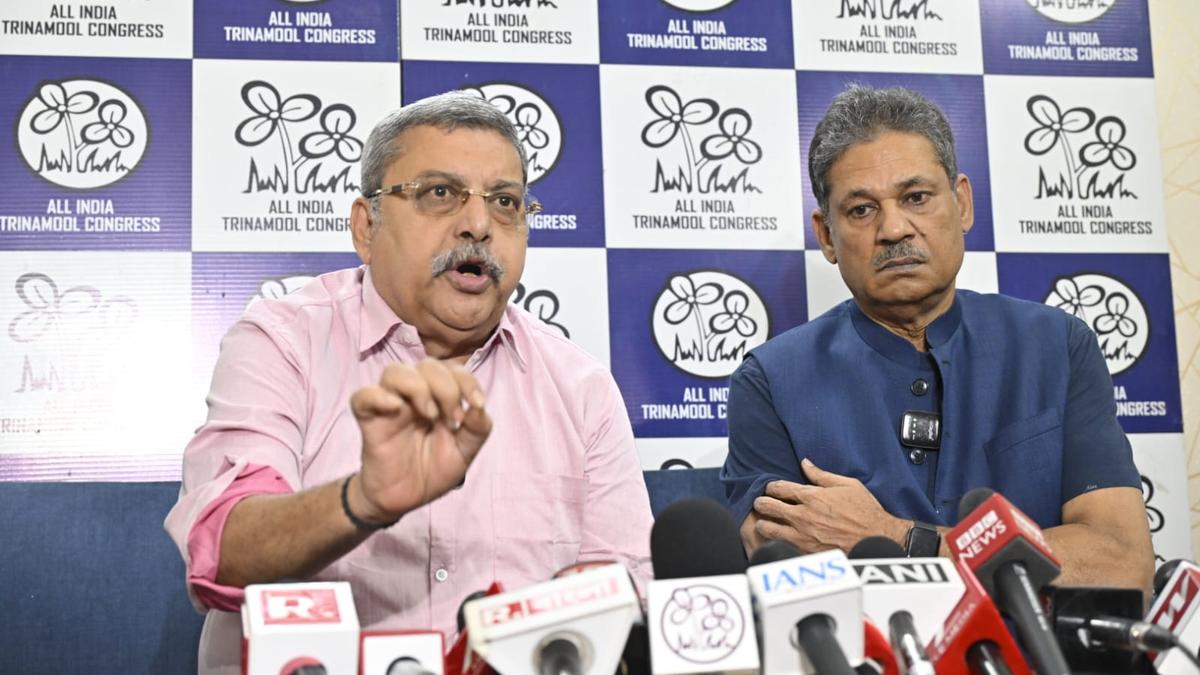
As a mutiny brews in the Trinamool Congress, 20 parliamentarians reportedly prepare to form a separate bloc, signaling a potential shift in power within the Lok Sabha.
The cracks in the Trinamool Congress (TMC) have widened into a chasm. On Tuesday, June 9, 2026, the party’s Chief Whip in the Lok Sabha, Kalyan Banerjee, dropped a political bombshell during a press conference in New Delhi. Flanked by MP Kirti Azad, the senior leader didn't mince words, accusing a splinter group of his own party of defecting to the Bharatiya Janata Party (BJP). "Today their leader is Narendra Modi. They have become BJP," Banerjee stated, calling for the rebels to stop using the TMC label.
The friction follows a clandestine meeting held on Monday at the residence of Union Minister Bhupendra Yadav, the BJP’s observer for West Bengal. Reports suggest that as many as 20 Trinamool MPs are now coalescing into a separate bloc, aiming to extend their support to the BJP-led National Democratic Alliance (NDA) government. The rebellion appears to be gathering steam under the leadership of Barasat MP Kakoli Ghosh Dastidar, whom Kalyan Banerjee has openly accused of leveraging state and central security to target loyalist party workers.
A Party in Flux
The timing of this internal revolt is particularly precarious for the TMC leadership. With Mamata Banerjee and Abhishek Banerjee currently in Delhi to manage the fallout, the party is struggling to contain a multi-front crisis. While the rebel MPs cite a lack of confidence in the party’s current hierarchy, the loyalist camp is pointing to a deeper, more coordinated effort by the BJP to erode the Trinamool’s parliamentary strength.
Tensions have escalated beyond just verbal sparring. In West Bengal, the arrest of Trinamool leader Sabyasachi Dutta on Tuesday morning on charges of extortion and criminal intimidation has added fuel to the fire, with party insiders suggesting that state machinery is being used to settle political scores. For his part, Kalyan Banerjee has challenged the defectors’ commitment to the party’s grassroots, asking why these leaders failed to stand by the families of affected party workers following the recent election results.
Why it matters
This is more than just a case of floor-crossing; it represents a fundamental shift in the power dynamics of the Trinamool Congress. If 20 of the party’s 28 Lok Sabha MPs successfully form a breakaway bloc, it effectively cripples the TMC’s national influence and forces the leadership into a defensive crouch.
The bigger picture suggests a calculated attempt to reorganize the opposition space in West Bengal. While the state BJP has publicly signaled hesitation about embracing the defectors—vowing to prevent "Trinamoolisation" of their own ranks—the tactical advantage of a split opposition is too significant to ignore. For the TMC, the immediate challenge is not just winning back the rebels, but preventing a total collapse of party discipline that could see their remaining cadre drift toward the NDA. As the standoff continues, the party's future in the Lok Sabha looks increasingly uncertain.
Politics Desk at PoliticalPedia covers parties & elections for an Indian audience in English and Hindi.