Nomination Rejection: Major Setback for Congress as Meenakshi Natarajan’s Rajya Sabha Bid Fails
Setback for Congress: Meenakshi Natarajan's Rajya Sabha nomination rejected
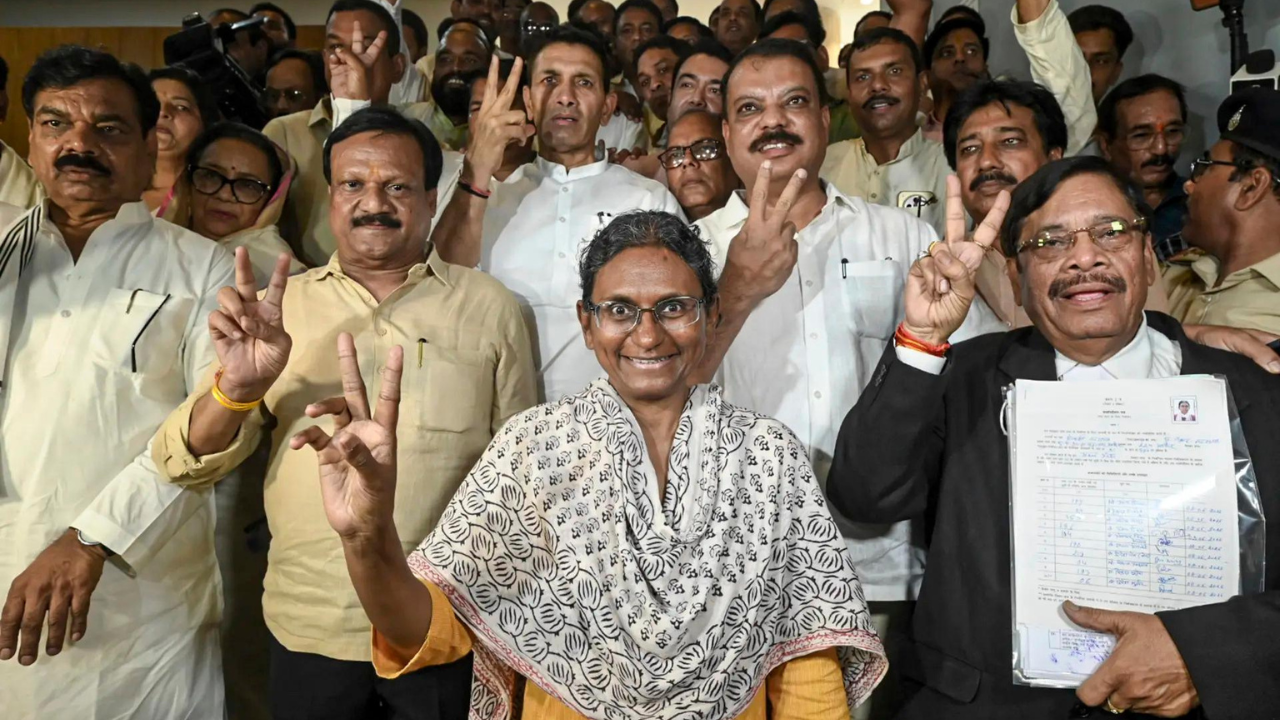
The Returning Officer in Bhopal has rejected the nomination papers of the Congress candidate for the Rajya Sabha, citing the omission of a pending legal case in her affidavit.
The corridors of the Madhya Pradesh Assembly turned into a theatre of political high-drama on Tuesday. What began as a strategic move by the Congress to insulate its MLAs by shifting them to a resort in Bengaluru ended in a crushing administrative blow. The nomination of Meenakshi Natarajan, the party’s lone Rajya Sabha candidate from the state, was formally rejected by the Returning Officer, leaving the opposition camp in disarray.
The rejection followed a pointed objection raised by BJP candidate Mahesh Kewat. Represented by advocate Sanket Gupta, the BJP alleged that Natarajan deliberately suppressed information regarding a criminal case pending against her in a Telangana court. According to the complaint, this was a clear violation of Supreme Court guidelines, which mandate that all pending criminal matters must be disclosed in the nomination affidavit.
The specific legal controversy traces back to a petition filed by former corporate executive A. Srilatha before the Fourth Additional Chief Metropolitan Magistrate’s court in Telangana. The petition alleges that Natarajan provided political patronage to Kumbham Shivakumar Reddy, a man accused of serious charges including molestation and issuing death threats.
Congress leadership in Madhya Pradesh has vehemently pushed back against the ruling. Harish Chaudhary, the party’s state in-charge, termed the move a politically motivated harassment tactic. "There is no formal case registered against Natarajan," Chaudhary argued, maintaining that she had only received a show-cause notice from the court. The party’s stance remains that Election Commission norms require disclosure only when a case is formally registered, not upon the receipt of a notice. Senior leader Umang Singhar echoed this sentiment, framing the incident as an attempt to "intimidate a Gandhian woman" through legal technicalities.
Why it matters: The bigger picture
This episode highlights the growing importance of "affidavit warfare" in Indian elections. Beyond the immediate numerical disadvantage for the Congress in the upcoming Rajya Sabha polls, the incident underscores how legal scrutiny of candidate disclosures has become a potent tactical weapon. For the BJP, successfully challenging the nomination is a major win that limits the opposition's footprint in the Upper House. For the Congress, it signals a deeper vulnerability in its vetting processes, as the party struggles to maintain its footing in a state where it currently lacks the legislative numbers to bypass such hurdles. With the assembly’s effective strength at 229, the margin for error was already razor-thin; today’s events ensure that the battle for the third seat will be fought on ground heavily tilted in favor of the ruling party.
As political tensions simmered in Bhopal, reports emerged of heated exchanges at the airport, where Congress leaders were prevented from moving their flock to Karnataka. With the electoral college math now fundamentally altered, the party is left scrambling to devise a new strategy to salvage its presence in the Upper House, while the BJP celebrates what state minister Kailash Vijayvargiya has described as a "victory of justice."
Arjun Mehta reports on government, policy and Parliament for PoliticalPedia, in English and Hindi.