Iran blames United States for latest exchanges of fire with Israel
Iran blames U.S. for latest exchanges of fire with Israel
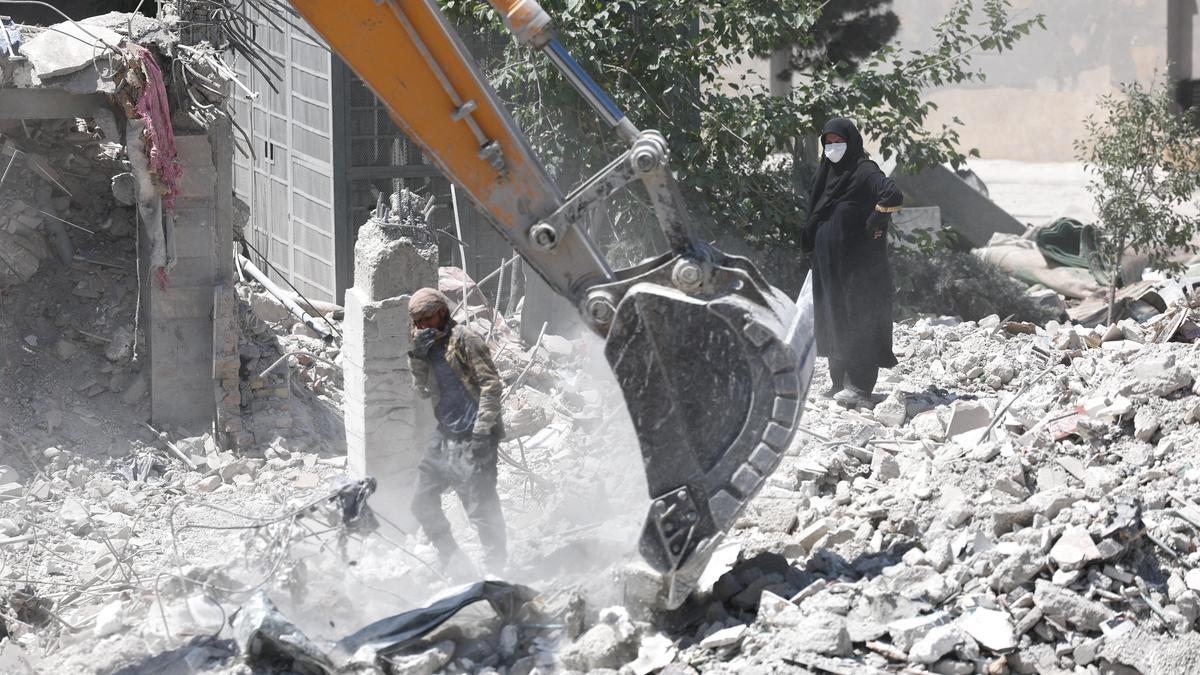
Tehran claims Washington shares direct responsibility for the collapse of a two-month-old ceasefire, even as backchannel diplomacy continues via intermediaries.
The fragile calm that had settled over the Middle East following the April 8 ceasefire has been shattered, with Iran and Israel locked in a fresh, volatile round of military strikes. On Monday, Tehran officials issued a stern warning, explicitly blaming the United States for the latest exchanges of fire. Esmaei Baghaei, the spokesperson for the Iranian Foreign Ministry, stated that the ongoing military operations—including Israeli strikes in Lebanon and against a petrochemical facility in southwestern Iran—are inseparable from U.S. regional strategy.
Tehran’s position remains firm: it does not believe Israel acts in a vacuum. “No one believes that the Zionist regime would carry out any action without prior coordination and cooperation with the United States,” Baghaei said during a press conference. From the perspective of the Iranian leadership, Washington, as a primary architect of the April truce, bears direct accountability for every violation of regional peace, effectively turning an already “chaotic diplomatic process” into an atmosphere of extreme suspicion.
Escalating Tensions on Multiple Fronts
The recent violence marks the most significant breach of the ceasefire since it was implemented two months ago. The skirmishes have been intense; Israel targeted Iranian infrastructure, while the Islamic Revolutionary Guard Corps (IRGC) retaliated with missile strikes aimed at the Nevatim and Tel Nof air bases. Simultaneously, the conflict has widened, with Yemen’s Houthi movement launching its first missile attack against Israel in months and declaring a total blockade on Israeli shipping in the Red Sea.
Despite the rhetoric, the diplomatic lines have not gone entirely cold. Tehran confirmed that it is still exchanging messages with Washington, utilizing intermediaries—including a recent visit by Pakistan’s interior minister—to keep a tenuous dialogue alive. However, this communication is hampered by deep-seated distrust, particularly as Iran prepares to confront a looming resolution against it at the U.N. nuclear watchdog’s Board of Governors. Baghaei dismissed the watchdog’s chief, Rafael Grossi, as biased, signaling that the diplomatic battleground is now as critical as the military one.
Why it matters: The Bigger Picture
This cycle of violence serves as a stark reminder of how quickly regional stability can unravel when the "shadow war" turns into direct confrontation. For the global economy and India specifically, the stakes are rising. With the conflict threatening to spill over from the Persian Gulf to the Red Sea, the volatility poses a direct risk to energy prices and maritime trade routes essential to Indian interests. The Indian government has already advised its citizens to avoid non-essential travel to Iran and has requested those currently in Tehran to consider departing, reflecting a growing concern that the current "stop-start" nature of these strikes could escalate into a broader, uncontrollable regional theatre.
The immediate challenge for global powers is to prevent these exchanges from spiraling into a full-scale war. While U.S. President Donald Trump and other global leaders have called for immediate restraint, the lack of a durable enforcement mechanism for the April ceasefire leaves both Iran and Israel with enough strategic room to keep probing each other's red lines. Until a more substantive diplomatic framework is established, the region remains trapped in a high-stakes game of brinkmanship where a single miscalculation could have lasting consequences for global energy markets and security.
Rohan Gupta covers the economy, markets and companies for PoliticalPedia.