Infrastructure vs. Ownership: Karnataka High Court Backs BWSSB’s Right to Lay Sewer Lines on Private Land
Karnataka High Court upholds law allowing BWSSB to lay sewer through private properties without acquisition of land
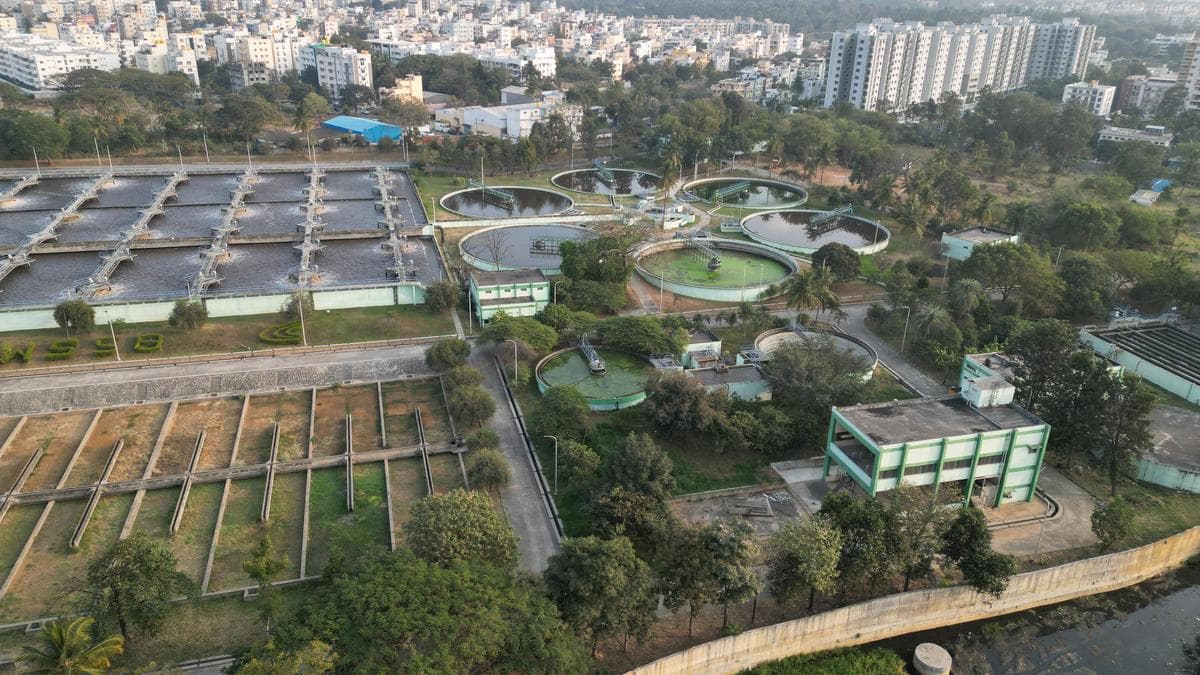
The ruling clarifies that Bengaluru’s water utility can access private property for essential infrastructure without triggering mandatory, high-cost land acquisition proceedings.
For property owners in Bengaluru, the sight of civic workers digging up land for drainage pipes has long been a source of anxiety and legal friction. This tension recently reached the Karnataka High Court, where a bench led by Justice Suraj Govindaraj addressed a fundamental question: can a public body like the Bangalore Water Supply and Sewerage Board (BWSSB) bypass land acquisition laws when laying essential sewer lines through private plots?
The court’s verdict is a definitive "yes," provided the board adheres to strict statutory safeguards. In a judgment that impacts ongoing and future urban development, the court upheld the constitutional validity of Sections 39, 76, and 77 of the BWSSB Act, 1964. These provisions empower the utility to lay and maintain sewers under or across private property without formal acquisition of the land itself.
A Limited Right, Not a Land Grab
The court was clear: the BWSSB’s power is a "limited statutory right of user," not a transfer of ownership. Petitioners, including landowners who had challenged the laying of pipes across their properties in Hennur and Nagawara, had argued that such actions should trigger the Right to Fair Compensation and Transparency in Land Acquisition, Rehabilitation and Resettlement Act, 2013.
Justice Govindaraj rejected this, noting that requiring full land acquisition every time a sewer line crosses a private boundary would lead to "fragmentation of infrastructure projects." Instead, the court mandated that the BWSSB must act with minimal damage to the property. Where damage does occur—whether temporary or permanent—the board is legally obligated to assess and pay compensation that is "real and responsive" to the actual prejudice suffered by the owner.
Why It Matters: The Urban Trade-off
This judgment is a pivotal moment for a city struggling to keep its infrastructure in sync with its population. Bengaluru is a sprawl of rapidly developing peripheral areas where the absence of a proper underground utility network leads to severe environmental degradation. When sewage overflows into lakes and drains, the public health costs are shared by all, yet the legal burden of connecting these networks often falls on individual landowners.
By validating the BWSSB’s statutory authority, the court has effectively smoothed the path for the city's essential services. However, the ruling also serves as a warning to civic authorities: the right to enter private land is not a blank cheque. By explicitly linking the board’s powers to the requirement for fair, evidence-based compensation, the judiciary has ensured that "public interest" cannot be used as an excuse to ignore the individual's right to the enjoyment of their property.
For the average resident, the message is twofold: your land remains yours, but it is also part of a larger urban ecosystem where basic sanitation infrastructure must, by necessity, traverse private boundaries.
Features Desk at PoliticalPedia covers culture, tech & life for an Indian audience in English and Hindi.