If Not Passport Or Aadhaar, What Is The Real Proof Of Indian Citizenship? The Answer May Surprise You
If Not Passport Or Aadhaar, What Is The Real Proof Of Indian Citizenship? The Answer May Surprise You
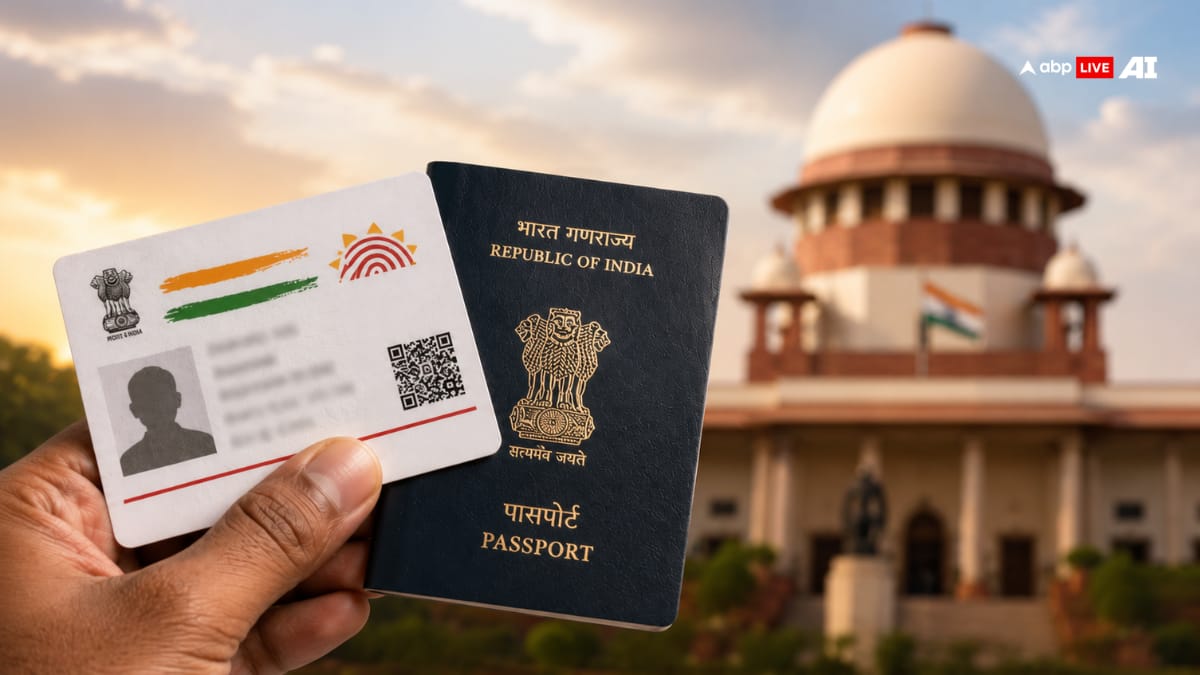
Recent government clarifications have sparked a fresh debate over which documents actually establish your status as a legal Indian national.
For millions of Indians, the navy-blue passport kept in the locker or the Aadhaar card tucked into a wallet feels like the ultimate stamp of belonging. It is the document we reach for when opening a bank account, boarding a flight, or verifying our identity. Yet, a series of recent statements from the Ministry of External Affairs (MEA) and observations by the Supreme Court have punctured this assumption, leaving many to ask: if not passport or Aadhaar, what is the real proof of Indian citizenship? The answer, it turns out, is far more granular than a single plastic card or booklet.
The confusion reached a fever pitch during the 14th Passport Seva Divas, where MEA officials clarified that while a passport is issued only to citizens, its primary function is to facilitate international travel and establish identity abroad. It is not, legally speaking, a standalone certificate of citizenship. This echoes the Supreme Court’s stance on Aadhaar, which has been repeatedly characterized as a document for identity and residence, not a proof of nationality. Even a voter ID, often used to assert one’s stake in the democratic process, is viewed by authorities as a tool for electoral eligibility rather than a final legal determinant of citizenship.
The Legal Reality
Under the Citizenship Act of 1955, citizenship is acquired through birth, descent, registration, or naturalization. Because India lacks a single, universal citizenship certificate, the legal burden often falls on a matrix of ancestral records. For most, a birth certificate remains the foundational document, but its validity is tied to the timeline of birth. If you were born between 1950 and 1987, the birth certificate is generally absolute. For those born after 1987, however, the certificate must often be supplemented with proof of parental citizenship to meet the evolving requirements of the law.
For those who have acquired citizenship through legal processes, the most definitive proofs are the Certificate of Naturalisation or the Certificate of Registration issued by the Ministry of Home Affairs. These are the gold standards of citizenship documentation, though they apply only to a specific subset of the population. For the vast majority, citizenship is a collection of proofs—a mosaic of documents that together satisfy the state’s evidentiary standards when challenged.
The Bigger Picture
Why does this matter? The current discourse highlights a widening gap between how citizens perceive their identity documents and how the law categorizes them. As India continues to digitize its governance and refine electoral rolls, the evidentiary weight of these documents is being scrutinized more closely than ever. The pattern here is clear: the state is moving toward a more rigid, document-centric verification system, where "identity" (who you are) is increasingly being separated from "citizenship" (your legal relationship with the state).
The lack of a single, omnibus document creates a grey area that can lead to administrative hurdles for ordinary citizens. While it is unlikely that the government will demand a "citizenship test" for everyday tasks, the clarification serves as a reminder that in the eyes of the law, identity documents are functional tools rather than all-encompassing proofs. For now, the safest path is maintaining a consistent paper trail—birth records, parental documents, and official certificates—that track back to the foundational requirements of the Citizenship Act.
Kabir Sharma writes on culture, technology and everyday life for PoliticalPedia.