HP Unveils ZGX Fury GB300: Bringing Data Centre AI Power to the Desktop
HP introduces ZGX Fury GB300, an AI workstation for large-scale models
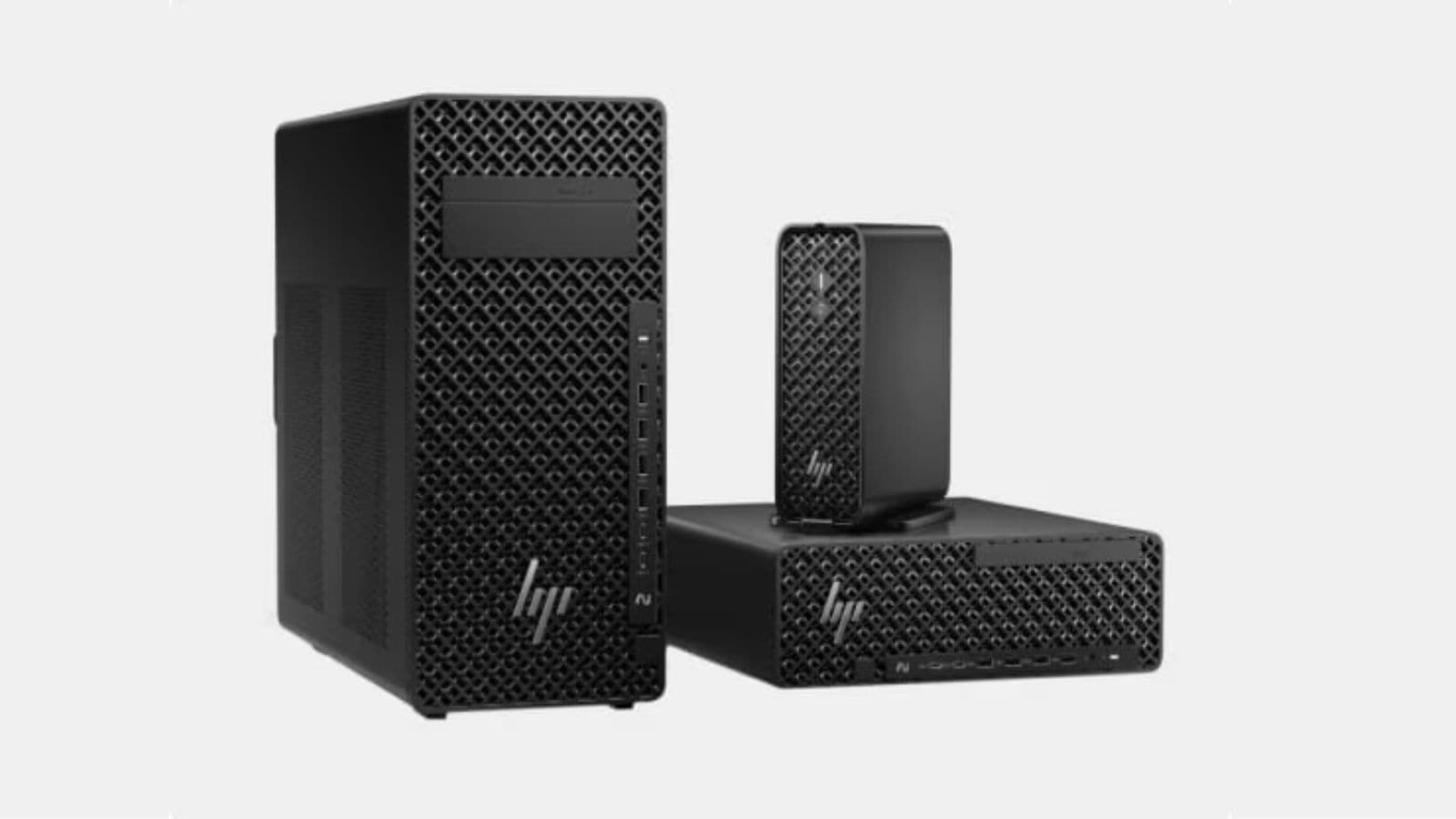
The new workstation leverages Nvidia’s Grace Blackwell Ultra technology to allow enterprises to run massive, trillion-parameter models locally.
The landscape of professional computing shifted at Computex 2026 as HP unveiled the ZGX Fury GB300, a formidable workstation engineered to shrink the footprint of data centre-class AI. By integrating Nvidia’s GB300 Grace Blackwell Ultra Desktop Superchip, HP is offering enterprises the ability to train and fine-tune large-scale models locally, a task that has historically demanded massive cloud-based server infrastructure.
Bridging the Gap Between Desktop and Data Centre
At the core of the ZGX Fury GB300 is a focus on massive compute density. The workstation functions as a desk-side supercomputer, capable of managing AI models with up to one trillion parameters. Built upon Nvidia’s DGX Station platform, the system delivers up to 20 petaflops of FP4 AI performance. This represents a significant shift for developers and researchers who previously had to balance the latency and security concerns of remote cloud services against the physical limitations of local hardware.
The standout feature of this new platform is its memory architecture. With the ability to configure up to 784GB of unified memory, the machine allows complex datasets to be processed without the bottleneck of external storage. By keeping the entire workflow on-premises, organisations can ensure that sensitive data remains within their controlled infrastructure, addressing one of the primary hurdles for corporations hesitant to adopt public cloud AI solutions.
Enterprise Integration and Workflow
HP’s decision to base the ZGX Fury GB300 on the Windows environment is a strategic move to capture the existing enterprise market. As the vast majority of corporate infrastructure is already built on Microsoft’s ecosystem, this workstation allows IT departments to integrate advanced AI capabilities into current workflows without forcing a total overhaul of their operating environment. This "plug-and-play" approach for AI research is expected to be a primary driver for adoption among large firms.
While pricing remains unconfirmed, industry analysts tracking the DGX Station platform estimate that configurations could range between $100,000 and $200,000. Such a premium price point makes it clear that the target audience is strictly enterprise-level, rather than individual consumers. Alongside the high-end ZGX Fury, HP is also expanding its broader Z workstation lineup, including the ZBook Fury G1i and Z2 Tower G1i, signalling a wider push to provide AI-ready hardware across all tiers of professional work.
The emergence of the ZGX Fury GB300 highlights a growing trend of "personal supercomputing." As the global demand for AI agents and local inference grows, the industry is increasingly moving away from a cloud-only model. By providing the raw power of a data centre in a form factor that fits under an office desk, HP, alongside competitors like Dell, is attempting to redefine the boundaries of what a workstation can achieve in the modern enterprise.
The PoliticalPedia Editorial Desk brings verified, sourced political news and analysis from across India.