How an Italian Legend Left a Quiet Mark on a World Cup Without Italy
How an Italian legend has left a mark on a World Cup without Italy
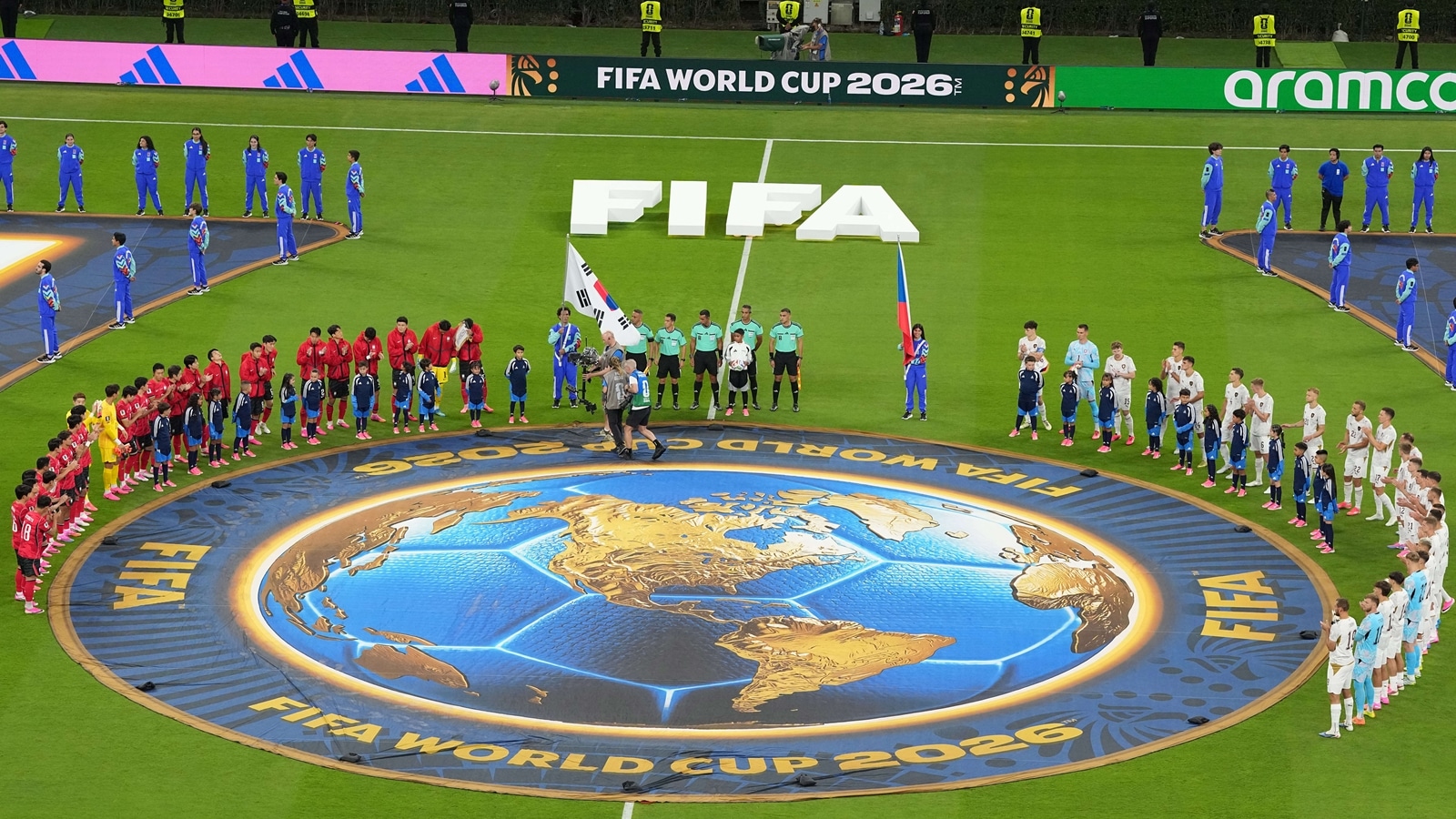
While the Azzurri remain absent from the biggest stage in football for the third time running, a vision from Alessandro Del Piero has subtly reshaped the pre-match ritual for every team.
The absence of Italy from a men’s World Cup is a haunting, almost surreal reality for the global game. For a nation that sits as the joint second-most successful team in history, missing out on three consecutive tournaments is an existential crisis that few fans have managed to process. Yet, as the 2026 FIFA World Cup unfolds, there is a distinct Italian signature etched into the opening moments of every match—a change in how the beautiful game presents itself to the world.
If you caught the opening clash between Mexico and South Africa, or the following meeting between South Korea and Czechia, the shift was impossible to miss. Instead of the traditional, staggered formation where starting lineups and officials stand shoulder-to-shoulder facing the grandstands, every player in the squad—starters and substitutes alike—now gathers in the centre circle to face one another during the national anthems. It is a visual celebration of the collective, a small but significant departure from the rigidity of international football’s past.
The Del Piero Connection
The architect of this change is none other than Alessandro Del Piero. FIFA president Gianni Infantino revealed that the idea took root in a casual conversation with the 2006 World Cup winner. Del Piero’s logic was disarmingly simple: "Why don’t you let all the players come out on the pitch for the anthem? We’re all part of the same team."
Infantino admitted that the proposal was met with immediate enthusiasm from coaches and players. In an era where match-day squads are deeper than ever—with five or six substitutions now the standard—the move acknowledges that the "team" is no longer just the eleven men who kick off. It is an inclusive shift that allows every squad member to stand on the grass as the world watches, rather than being relegated to the technical area or the bench during the most emotional minutes of the match.
Why it matters
This change is more than just a camera-angle adjustment; it reflects a broader desire within FIFA to modernise the tournament experience amidst ongoing scrutiny regarding the sport's direction. While Infantino noted that the initiative was not a business move, it serves as a subtle attempt to humanise the tournament.
For Italian fans, the irony is thick. The country that gave the world footballing legends like Del Piero and Fabio Cannavaro is currently a ghost at the feast. While global headlines are often filled with debates over squad selections or the rise of new stars, Italy’s failure to qualify remains a glaring void. By embedding a piece of Italian philosophy into the ceremony, football is acknowledging that the legacy of the four-time champions persists, even when the Azzurri are not there to defend it.
Ultimately, the sight of full squads huddled in the centre circle is a reminder that football is constantly searching for ways to feel more communal. Whether this becomes a permanent fixture of senior football remains to be seen, but for now, it is a touching, albeit quiet, nod to one of the game's greatest tacticians. Even in a world cup that feels incomplete without Italy’s kit, the spirit of their footballing culture has found a way to take the field.
Kabir Sharma writes on culture, technology and everyday life for PoliticalPedia.