Grounded by a Gust: Three Air India Aircraft Damaged at Delhi Airport as Storm Takes Toll
3 Air India Aircraft Damaged At Delhi Airport As Ground Equipment Breaks Loose In Sudden Storm
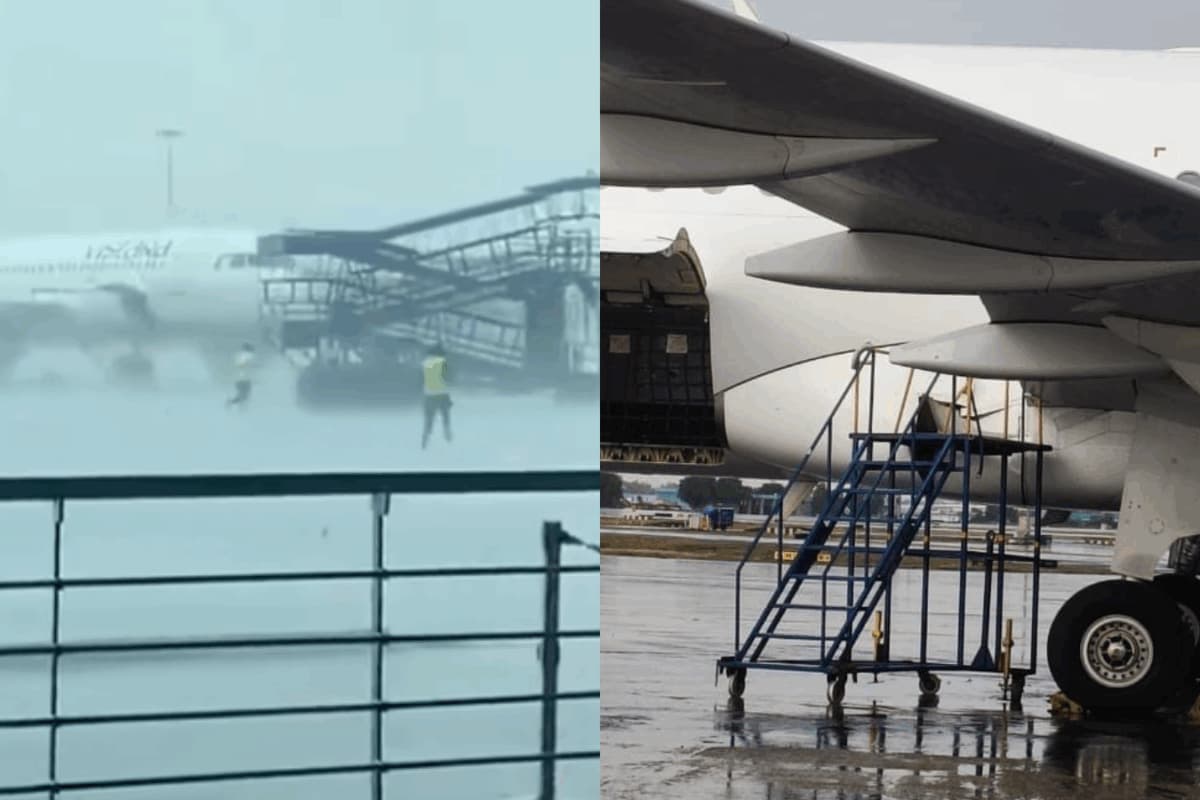
A sudden, unforecasted storm at Delhi’s Indira Gandhi International Airport has left three Air India A320s grounded after runaway ground equipment collided with the parked fleet.
The tarmac at Delhi’s Terminal 2 turned into a scene of chaos on Sunday evening when a sudden, fierce storm caught ground operations completely off guard. Around 4:40 pm, powerful wind gusts and heavy rain swept through the parking bays, turning routine support gear into dangerous projectiles. A step ladder and several trestles, used by ground handling and engineering teams, broke loose from their moorings and slammed into the parked Air India A320s.
The impact was severe enough that all three affected aircraft were immediately pulled from their schedules for urgent inspections. While airline officials hope to return two of the jets to service within the coming days, one of the planes sustained substantial structural damage. Aviation sources suggest the impact near the stairwell area was particularly heavy, likely necessitating a more extensive and time-consuming repair process.
A Systemic Failure of Warning?
Perhaps the most concerning aspect of the incident is the revelation from airport operator DIAL that no weather warning was issued by Air Traffic Control (ATC) prior to the event. Typically, such alerts are the industry standard, providing airlines and ground handling teams the necessary lead time to secure heavy equipment, lock down staircases, and ensure that parked aircraft are not vulnerable to shifting debris.
The lack of a pre-emptive alert meant that the equipment remained unsecured on the apron when the squall hit. The incident has already sparked questions regarding the communication protocols between weather monitoring services and ground operations at one of India's busiest aviation hubs.
The Bigger Picture
This incident highlights the precarious nature of ground operations in an era of increasingly unpredictable weather patterns. While airports are designed to withstand significant stress, the "human factor"—the reliance on timely data to secure the tarmac—remains a critical point of failure. When an air-side event damages three narrowbody jets simultaneously, the ripple effect on flight schedules is immediate, causing inconvenience for thousands of passengers.
For the aviation sector, this serves as a sharp reminder that safety protocols must be as dynamic as the weather. As Delhi continues to experience erratic monsoon-like squalls, the reliance on real-time, hyper-local weather forecasting for the airport precinct is no longer just a luxury; it is a necessity to prevent such costly and dangerous ground-side mishaps.
World Desk at PoliticalPedia covers global affairs for an Indian audience in English and Hindi.