Global Oil Prices Fall After US-Iran Peace Deal: Will Your Fuel Bill Finally Shrink?
Oil Prices Fall After US-Iran Peace Deal. Check Petrol Prices Today In Delhi, Mumbai And Other Cities
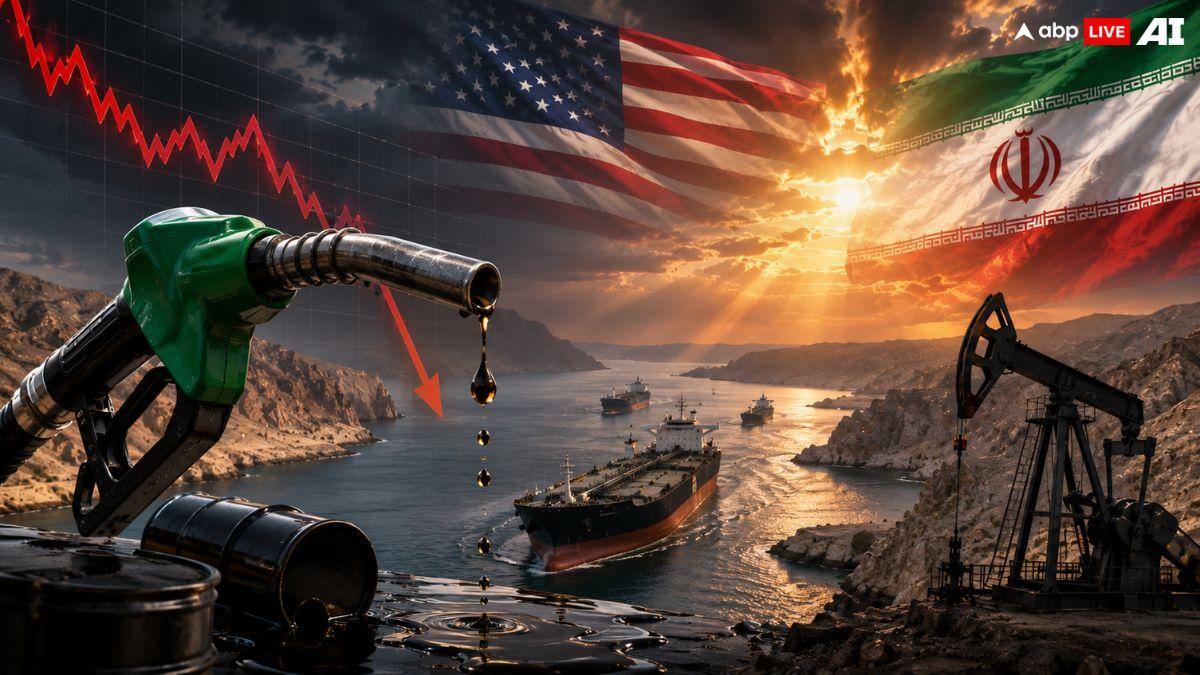
While international crude markets react to the landmark Hormuz agreement, Indian motorists continue to pay the same rates at the pump.
The Strait of Hormuz, that narrow, volatile artery through which a fifth of the world’s oil flows, looks set for a period of calm. Following a surprise announcement from US President Donald Trump confirming a breakthrough peace agreement between Washington and Tehran, global energy markets have reacted sharply. Brent crude has tumbled nearly 5% to approximately $83 per barrel, while the US benchmark WTI has dipped past the $80 mark. For a country like India, which remains heavily dependent on energy imports, this cooling of tensions in West Asia is typically a signal of relief.
However, if you head to your local petrol pump in Delhi, Mumbai, or other cities today, you won’t see that volatility reflected on the price board. Despite the global dip, domestic retail rates have remained frozen since the last revision in May, when prices saw a hike of Rs 3 per litre.
Why the disconnect?
The stability we see at the pump is a deliberate state of affairs. While international benchmarks fluctuate based on real-time geopolitical news—such as the potential reopening of the Strait of Hormuz and the easing of supply disruption fears—domestic fuel retailers maintain a buffer. This serves to insulate the common consumer from the daily whipsaw of global energy markets.
Currently, the government’s policy to restrict bulk fuel purchases from retail stations, combined with the pricing strategy of state-run oil marketing companies, means that international price drops do not automatically trigger a price cut at the local station. For the average commuter, this leaves a lingering question: when will the global savings reach the Indian consumer?
The bigger picture
This peace deal is undoubtedly a positive development for India’s macroeconomic stability. Reduced tensions in West Asia lower the risk of supply-side shocks, which have historically pressured our import bill and inflation metrics. When energy prices stay high, the ripple effect is felt across logistics, manufacturing, and transport costs.
However, we must be realistic about the timeline. Markets take time to price in the full impact of such diplomatic shifts. While stakeholders on Dalal Street anticipate a rally on the back of this geopolitical stability, the transmission of these lower crude costs to retail petrol and diesel prices is rarely instantaneous. For now, motorists should keep an eye on official updates, as the current price stagnation is likely a temporary holding pattern rather than a permanent fixture.
Ananya Iyer covers global affairs with an Indian lens for PoliticalPedia.