General Dhiraj Seth’s 'VIJAY' Blueprint: A Tech-Driven Roadmap for the Indian Army
Army chief Dhiraj Seth unveils 'VIJAY' vision for future-ready Indian Army
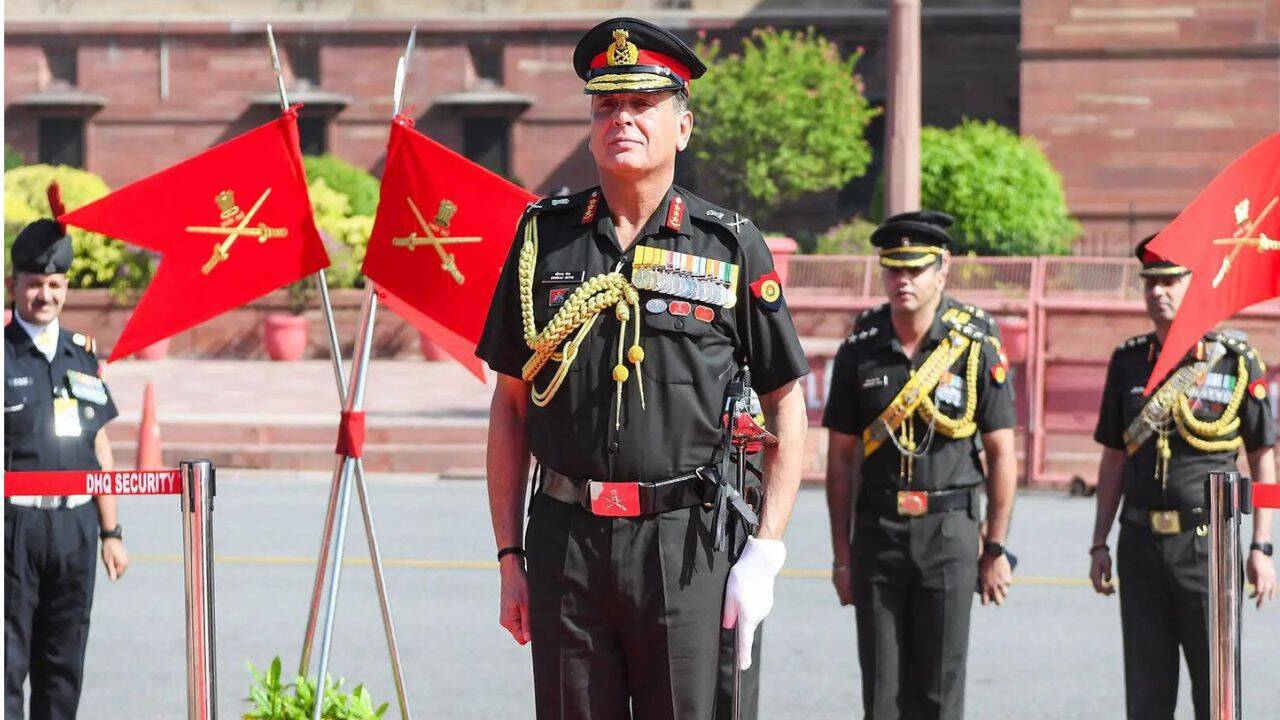
As the 31st Chief of Army Staff takes the helm, his new strategic vision signals a definitive shift toward a modernised, indigenous, and joint-service future.
The transition at South Block was marked by a blend of tradition and forward-looking intent this Wednesday. As General Dhiraj Seth stepped into his role as the 31st Chief of the Army Staff, succeeding General Upendra Dwivedi, he did not just inherit a legacy—he immediately outlined a roadmap. Standing before the press after receiving a formal guard of honour, the General bypassed routine bureaucratic messaging to unveil his 'VIJAY' vision, a strategic framework designed to ensure the Indian Army remains a dominant, future-ready force in an increasingly volatile global security landscape.
The 'VIJAY' Doctrine
General Seth’s vision is built on five pillars condensed into the acronym 'VIJAY': Vigilance, Innovation, Jointness and integration, Aatmanirbharata, and 'Yodha' first. For the new Chief, these are not merely abstract concepts but operational imperatives. The emphasis on 'Aatmanirbharata'—self-reliance in defence manufacturing—aligns squarely with the broader national push to reduce import dependency, while the prioritisation of 'Yodha' (soldier) first acknowledges that even in a high-tech future, the boots on the ground remain the force's most critical asset.
The General, an alumnus of the National Defence Academy, described the force he now leads as a "battle-hardened" entity. However, he was quick to temper that pride with a clear-eyed assessment of the future. "To meet the challenges of a changing security environment, we must take forward the modernisation of the army with new vigour," he stated. His objective is to pivot the Indian Army toward a multi-domain capability, ensuring it can operate with equal lethality across land, air, cyber, and space environments.
Why it matters
This is more than a change in leadership; it is a tactical alignment with the 'Decade of Transformation' (2023-2032) roadmap championed by Defence Minister Rajnath Singh. The focus on 'Jointness and integration' is particularly significant. As modern conflicts move away from single-service operations toward integrated warfare, the Army’s ability to synchronise with the Navy and Air Force will define its strategic effectiveness. By codifying these priorities early, General Seth is signalling to both the rank-and-file and our adversaries that the focus is shifting from incremental improvements to a rapid, technology-enabled restructuring.
The appointment of General Seth comes at a time when the security challenges along India's borders remain persistent and complex. The expectation from the new Chief is to maintain high operational readiness while simultaneously overseeing the massive logistical and technological upgrades required to keep the force relevant in the 21st century. As he takes charge, the message is clear: the transition is not just about holding the post, but about actively engineering a force that can adapt to the unpredictable nature of future battlefields.
Ananya Iyer covers global affairs with an Indian lens for PoliticalPedia.