Gaja Vesh 2026: The Sacred Reason Why Lord Jagannath Takes The Elephant Form On Snan Purnima
Jagannath Rath Yatra 2026: Why Does Lord Jagannath Take The Elephant Form On Snan Purnima? Know The Sacred Reason
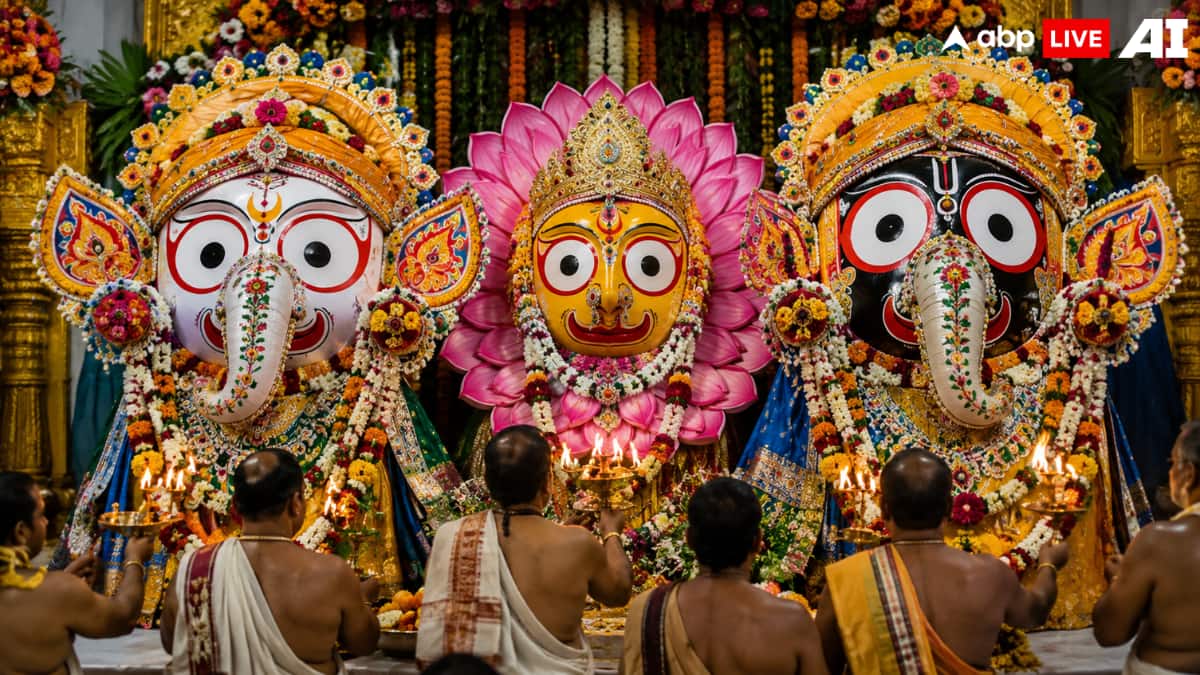
As Puri prepares for the grand spectacle of the Jagannath Rath Yatra, the ritual of Gaja Vesh on Snana Purnima serves as a powerful bridge between centuries-old tradition and the personal faith of devotees.
The narrow lanes of Puri are already humming with anticipation. As the city gears up for the 2026 Jagannath Rath Yatra, all eyes are currently on the Snana Purnima—a day when the Holy Trinity emerges from the sanctum sanctorum to be bathed in the public eye. Among the various rituals, none captivates the imagination quite like the Gaja Vesh, or Hathi Vesh. On this day, the deities are brought to the Snana Mandap and bathed with water from 108 sacred urns, but it is the aftermath of this cleansing that draws lakhs of pilgrims.
The Legend of Ganapati Bhatt
The story of why Lord Jagannath chooses to take the elephant form on this specific Purnima is rooted in the 15th century. Legend has it that a devout scholar named Ganapati Bhatt, a staunch worshipper of Lord Ganesha, traveled all the way to Puri seeking a glimpse of his beloved deity within the Lord of the Universe. During the Snana Yatra, he felt a profound sense of disappointment, unable to reconcile the absence of Ganesha’s elephant-faced form in the appearance of Jagannath.
Moved by the scholar's unwavering devotion, the Lord chose to manifest in a way that would shatter the boundaries of form. In a miraculous turn, Ganapati Bhatt witnessed Lord Jagannath adorned in a majestic black elephant-faced appearance, while Lord Balabhadra appeared in a radiant white elephant form, and Goddess Subhadra took the form of a lotus. It is this moment that solidified the Gaja Vesh as a permanent fixture of the temple calendar.
Why It Matters
Beyond the theology, the Gaja Vesh represents the inclusive philosophy of Sanatan Dharma. It is a striking reminder that the Supreme Divine is not confined by rigid structures but is, instead, Bhaktavatsal—responsive to the pure, heartfelt desires of the devotee. In an era where ritualistic tradition often faces the scrutiny of modern skepticism, the enduring popularity of this event highlights the resilience of faith.
The economic and social impact of these rituals is immense. The influx of devotees from across India and abroad turns Puri into a hub of activity, creating a massive ripple effect in the local tourism and services economy. This isn't just a religious ceremony; it is the heartbeat of Odisha’s cultural and economic identity. As the temple administration manages the logistical tightrope of the upcoming Yatra, the Gaja Vesh stands as a moment of pause, forcing us to look at how ancient traditions continue to anchor modern lives.
While some might turn to their horoscope today to find meaning in the alignment of stars, for the thousands standing on the Snana Mandap, the meaning is found in the physical transformation of the deity. It is a ritual that strips away the complexity of scripture and replaces it with a simple, visual affirmation of divine compassion.
Rohan Gupta covers the economy, markets and companies for PoliticalPedia.