From the Pitch to the Stars: Why NASA is Testing the 2026 World Cup Ball in Microgravity
Watch: Out of This World! NASA Studies 2026 World Cup Ball 'Trionda' Aboard ISS
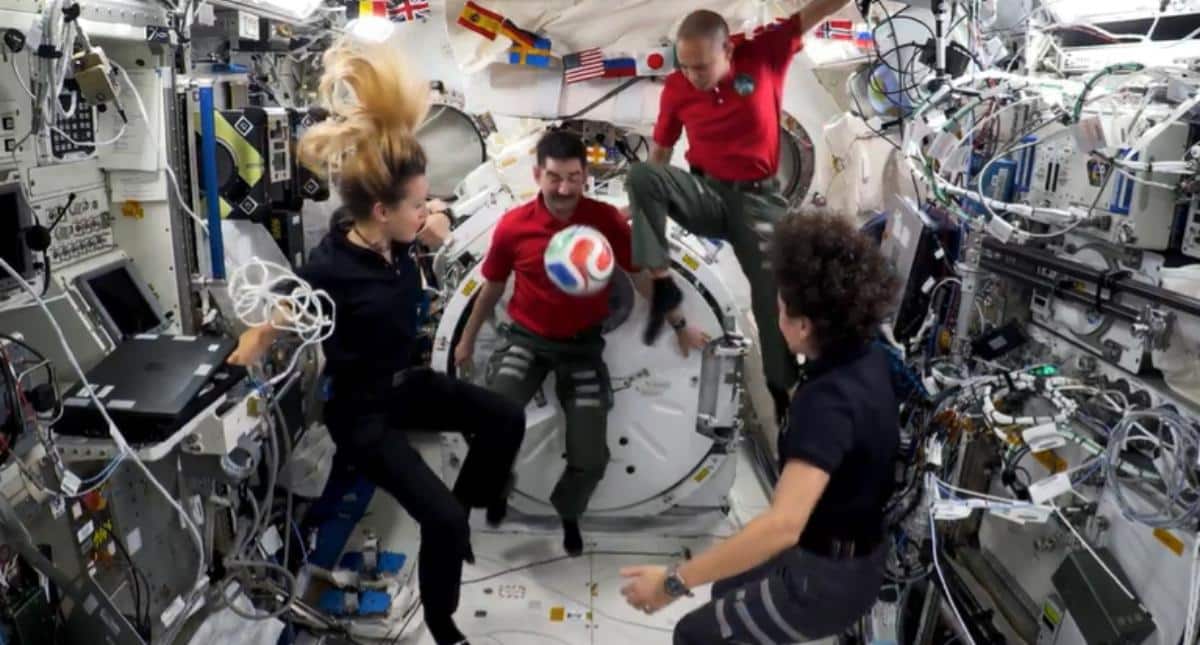
The official match ball for the 2026 FIFA World Cup has left Earth’s atmosphere, with astronauts aboard the International Space Station putting its high-tech engineering to the ultimate test.
It isn’t every day that a piece of sporting equipment finds itself in the weightless environment of low Earth orbit. Yet, as the world gears up for the 2026 FIFA World Cup, the official match ball—dubbed "Trionda"—has been sent aboard the International Space Station (ISS) for a series of rigorous scientific trials. This isn't just a publicity stunt; it’s a sophisticated exercise in aerodynamics, as NASA studies the ball to understand how modern technology holds up against the unforgiving physics of space.
The Science of the "Three Waves"
The name Trionda, which translates to "three waves," serves as a nod to the joint hosting duties of Canada, Mexico, and the United States. But beneath the branding lies a complex piece of hardware. The ball is embedded with a 500Hz motion sensor chip developed in tandem with Kinexon, designed to transmit real-time telemetry to the Video Assistant Referee (VAR) system.
By taking the ball to the ISS, researchers are recreating a landmark 2019 sports-engineering study. The goal is to see how this localized, internal hardware affects the ball's center of mass. In a sport where a fraction of a gram can dictate whether a free-kick curves perfectly into the top corner or suffers from unpredictable "knuckling," understanding how these internal sensors impact balance is vital for the integrity of the game.
Bridging Space and Sport
The collaboration between NASA and sports engineers highlights a growing trend: using orbital mechanics to refine the tools we use on the ground. By assessing how the ball behaves in microgravity, engineers can gain cleaner data on drag and rotational stability, free from the interference of atmospheric friction. The ISS crew is effectively proving that the same physics governing a satellite’s orbit are the ones that decide the trajectory of a match-winning strike on the pitch.
Why it Matters
This mission is more than just a curiosity for football fans. It represents a shift in how professional sports integrate data-driven reliability into their core equipment. As VAR systems become more reliant on internal ball sensors for offside and touch-recognition decisions, the "predictability" of the ball becomes a legal necessity for the sport. If the hardware inside the ball causes even the slightest aerodynamic imbalance, it could compromise the fairness of the tournament. NASA’s involvement ensures that as we push for more "connected" football, we aren't sacrificing the fundamental physics that make the sport beautiful.
(Note: While celebrity fitness and wellness trends like the recent discourse surrounding Rakul Preet Singh and Akshar Yoga often dominate social media feeds, this scientific mission represents a more technical side of global innovation, far removed from those lifestyle headlines.)
Ananya Iyer covers global affairs with an Indian lens for PoliticalPedia.