From Refugee to Record-Breaker: How Ante Budimir is Defining Croatia’s World Cup Campaign
Ante Budimir: Croatia’s saviour this World Cup, who once fled Bosnia with family
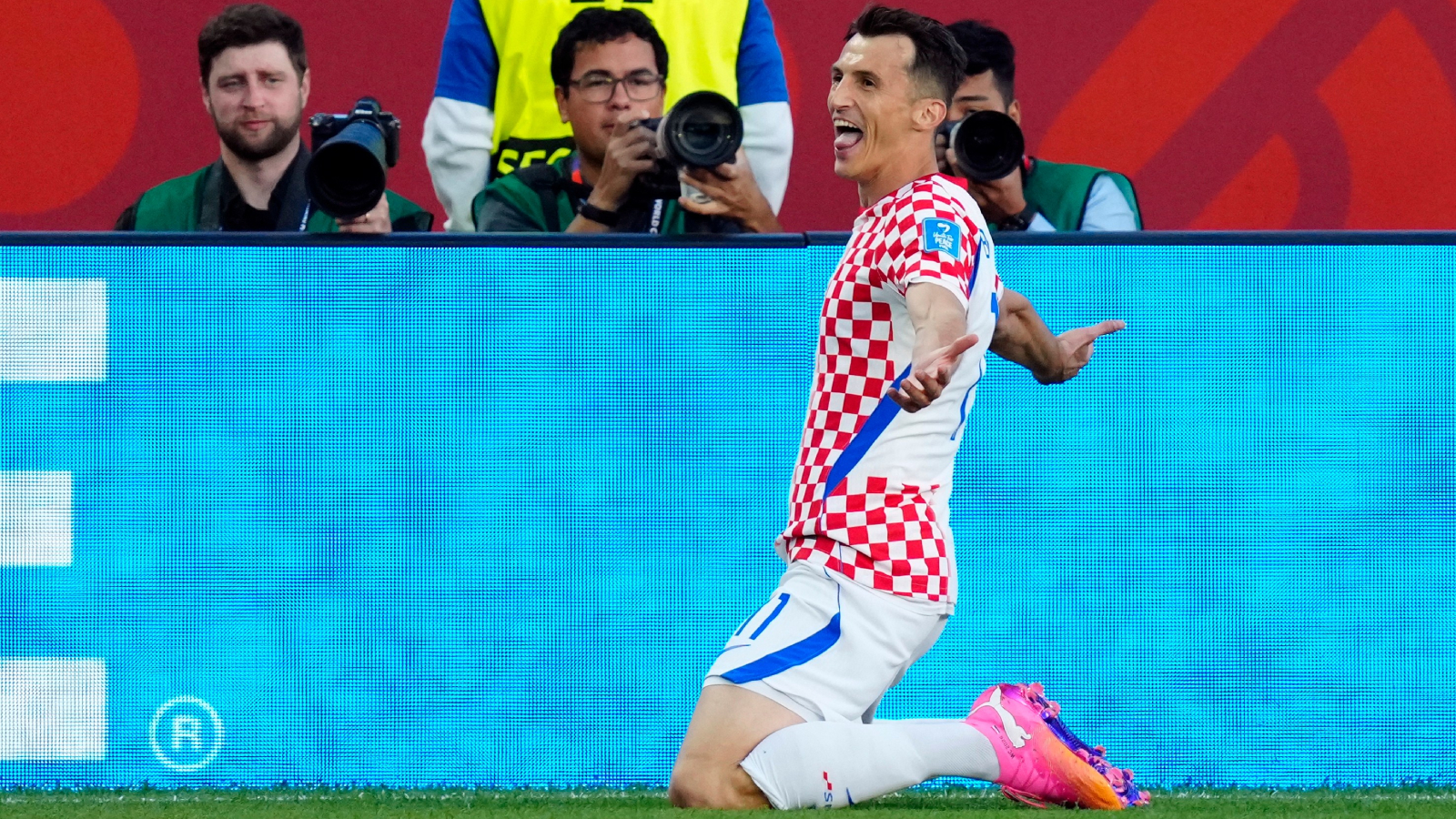
At 34, Ante Budimir has etched his name into history, scoring the goal that keeps Croatia’s campaign alive while mirroring the resilience of a life shaped by the fallout of war.
The 54th minute against Panama was a moment of pure, clinical instinct. As Ante Budimir found the back of the net, he didn't just seal a vital victory for his side; he officially became Croatia’s oldest goalscorer in the history of the tournament. At 34 years and 337 days, he surpassed the long-standing record held by Ivica Olić, a feat that marks the current high point of a career defined by persistence. As fans obsess over the shifting fifa world cup 2026 standings, Budimir’s individual milestone serves as a grounding reminder of the human stories that underpin these high-stakes matches.
For Budimir, the journey to the world stage began in the shadow of conflict. Born in Zenica, Bosnia, he was barely six months old when the Croat-Bosniak war forced his family to flee their home in the village of Ozimica. They eventually found safety in Velika Gorica, a town near Zagreb. While he has lived in Croatia for almost his entire life, the scars of that era remain a part of his personal history. He recalls returning to his birthplace only after the war concluded, finding a landscape where, as he puts it, "time had stopped."
From the Streets of Velika to the Global Stage
The striker’s connection to the game is inseparable from his upbringing in Velika Gorica. The Radnik stadium, located just 500 meters from his childhood home, served as his early classroom. It was there, at age seven, that he persuaded his mother to let him train, setting off a trajectory that took him through the ranks of HNK Gorica, Inter Zaprešić, and Lokomotiva Zagreb.
His rise through the Prva HNL was the grit-and-grind education that prepared him for the demands of international football. Having played across Croatia’s top tier between 2011 and 2015, Budimir developed a tactical maturity that allows him to remain effective even as his peers begin to retire. He often speaks of maintaining the same raw passion he felt as a child playing on the streets, an attitude that has clearly served him well in this high-pressure environment.
Why it matters: The Bigger Picture
Budimir’s emergence as a record-breaker in this cycle is more than just a footnote in sports statistics. In an era where modern football is increasingly dominated by youth academies and early-career hype, the success of a 34-year-old forward highlights the immense value of tactical experience and late-career refinement. His story reflects the broader Croatian football narrative: a nation that, despite its relatively small population and turbulent history, consistently punches above its weight by nurturing players who possess deep national loyalty and resilience.
As Croatia pushes forward in the tournament, the focus will inevitably shift back to the fifa world cup 2026 standings. However, the world cup is often defined by players like Budimir—individuals whose professional peak coincides with their ability to handle the psychological weight of the biggest stage. Whether this goal serves as the catalyst for a deeper run remains to be seen, but for now, the veteran has ensured his place in the annals of his country’s sporting heritage.
Arjun Mehta reports on government, policy and Parliament for PoliticalPedia, in English and Hindi.