From Pail to Pipe: The Quiet Transformation of Uttar Pradesh’s Rural Landscape
Tap water reaches 1.2 crore rural homes in UP as Jal Jeevan Mission nears completion
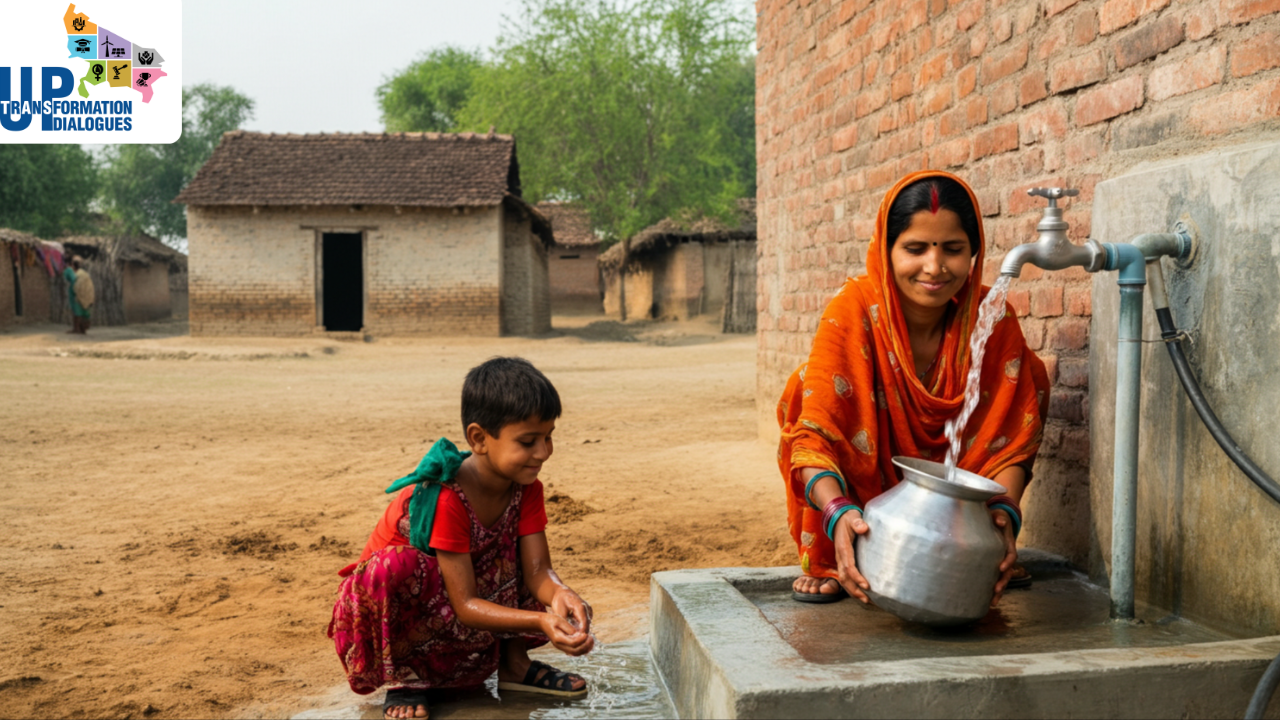
With over 1.2 crore households now connected, the Jal Jeevan Mission is fundamentally altering the daily rhythm of life in UP's villages.
For decades, the image of a rural woman in Uttar Pradesh walking miles with a brass pot balanced on her head was the defining, if exhausting, motif of village life. That daily ritual is now being rewritten. Data from the Ministry of Jal Shakti confirms that over 1.2 crore rural households across the state now have functional household tap connections. As the Jal Jeevan Mission (JJM) edges toward its 2024 "Har Ghar Jal" deadline, the scale of this infrastructure rollout—covering 822 blocks and 59,000 Gram Panchayats—marks one of the most significant logistical exercises in the state’s recent history.
The mechanics of the mission
Launched in August 2019, the mission is a massive shift from the old model of shared standposts to individual supply. With a combined central and state outlay exceeding Rs 3.6 lakh crore, the implementation has relied on complex multi-village water supply schemes. These units, which link clusters of villages to shared pumping and treatment facilities, have been particularly effective in expanding access across the Terai region and eastern UP.
Beyond the engineering, the scheme attempts to decentralize management. Each village now hosts a 'Paani Samiti', a committee tasked with overseeing maintenance and collecting user charges. To ensure the water remains potable, a 'Jal Sahiyya'—often a woman from the village—is responsible for quarterly testing. This monitoring is designed to keep water quality in line with Bureau of Indian Standards and WHO benchmarks, a critical safeguard for rural health.
Why it matters: The bigger picture
The implications of this shift go far beyond plumbing. Development researchers have long pointed to the "water tax" on women’s time, where hours spent fetching water serve as a barrier to education and formal employment. By bringing the tap to the household, the mission aims to reclaim that time. Whether this change translates into higher school attendance for girls or increased participation in the rural workforce will be the real metric of success in the coming years.
The state’s progress is part of a broader national push for water security. As seen in the Prime Minister’s recent emphasis on water infrastructure in regions like North Karnataka, there is a clear strategic move to position basic utility access as a pillar of 21st-century development. In Uttar Pradesh, the sheer scale of the 1.2 crore connection milestone makes it a primary indicator of administrative efficiency. However, the true test will lie in long-term sustainability: whether the Paani Samitis can manage the infrastructure and keep the water flowing long after the initial rollout phase is complete.
Priya Nair covers parties, elections and the business of power for PoliticalPedia.