From Mussel-Snacking Oracles to Data: How the FIFA World Cup Prediction Game Evolved
FIFA 2026 World Cup: From mussel-munching octopus Paul to AI prompts
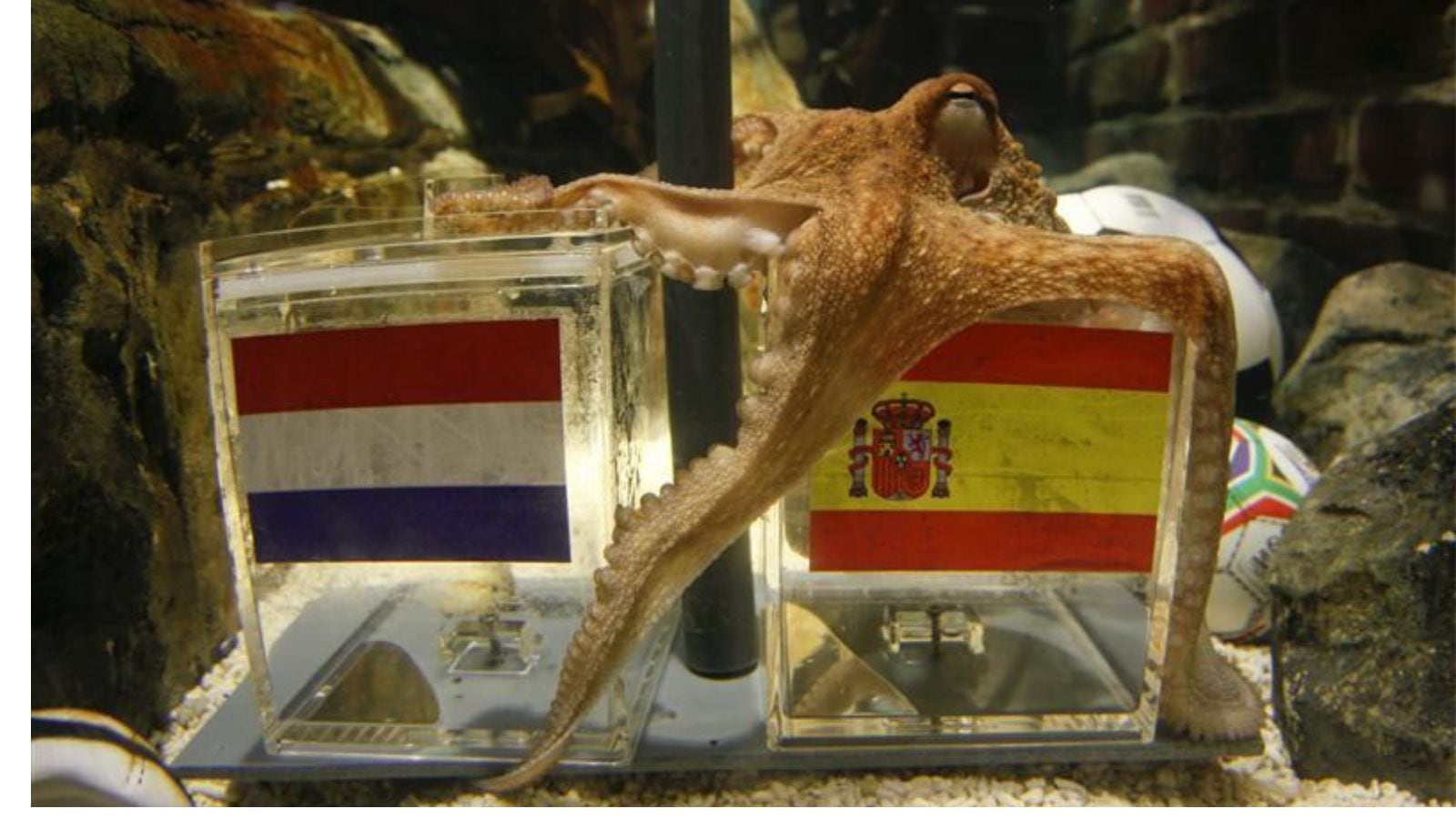
As the 2026 World Cup approaches, we look at the strange evolution of match-day forecasting, from a captive octopus in Germany to the cold precision of predictive algorithms.
Before the algorithms took over the betting apps, the world’s most trusted football pundit lived in a tank at a Sea Life Centre in Oberhausen, Germany. Paul, a common octopus hatched in England, became an unlikely global phenomenon during the 2010 FIFA World Cup. His method was charmingly low-tech: keepers would lower two boxes marked with national flags, each containing a mussel. The box Paul approached first was his pick. With an 85.7% success rate, including correctly backing Spain for the title, he turned a simple game of mollusk-feeding into a viral spectacle.
For many, Paul represented a moment of collective whimsy in the sports world. He wasn't just predicting scores; he was capturing the chaos of a tournament that had already seen the erratic Jabulani ball terrorize goalkeepers and the French squad descend into mutiny. Yet, even then, the ethics of his confinement sparked debate. PETA argued that octopuses are highly intelligent creatures, ill-suited for the life of a sideshow attraction. His keepers, however, maintained that a captive-bred octopus, unaccustomed to hunting, would never survive in the wild.
The Shift to Digital Oracles
Fast-forward to 2026, and the "psychic octopus" has returned in various viral forms, yet the landscape has shifted underneath it. We have traded mussel-munching for data-driven modeling. Today, the intrigue surrounding tournament winners is dominated by sophisticated betting platforms and complex probability engines. While casual fans might still get a kick out of a new "oracle" predicting the world cup winner on social media, the serious money—often tracked via platforms like fifa world cup betting betmgm—relies on deep-learning models that factor in everything from player fatigue to tactical nuances.
The Bigger Picture: Why It Matters
This evolution reflects a broader transformation in how we consume sport. Whether it is the tactical shift we see in Indian badminton—where the traditional emphasis on finesse is giving way to the power-based "Hulk" physicality of players like Ayush Shetty—or the way we analyze a football match, the shift is toward quantifiable precision. We are moving away from the "gut feeling" of an octopus and toward the biomechanical and statistical analysis that defines modern professional training. The charm of Paul the Octopus was that he made the unpredictable feel human; the modern reliance on data is an attempt to strip the uncertainty out of the game entirely.
Ultimately, the spectacle of the animal oracle remains a cultural touchstone because it highlights our desperate need to find patterns in the chaos of sport. Whether it is a player’s tactical tweak under a new coach or an octopus choosing a flag, we look for narratives to justify the outcome. As the 2026 tournament looms, fans will inevitably toggle between the fun of the viral prediction and the calculated risk of the betting markets, proving that while our tools for forecasting have changed, our obsession with knowing the future remains constant.
Priya Nair covers parties, elections and the business of power for PoliticalPedia.