From Metro Rides to Apple Tosses: The Dual Public Image of DK Shivakumar
DK Shivakumar Takes Bite From Apples, Tosses Them Into Crowd; Video Goes Viral
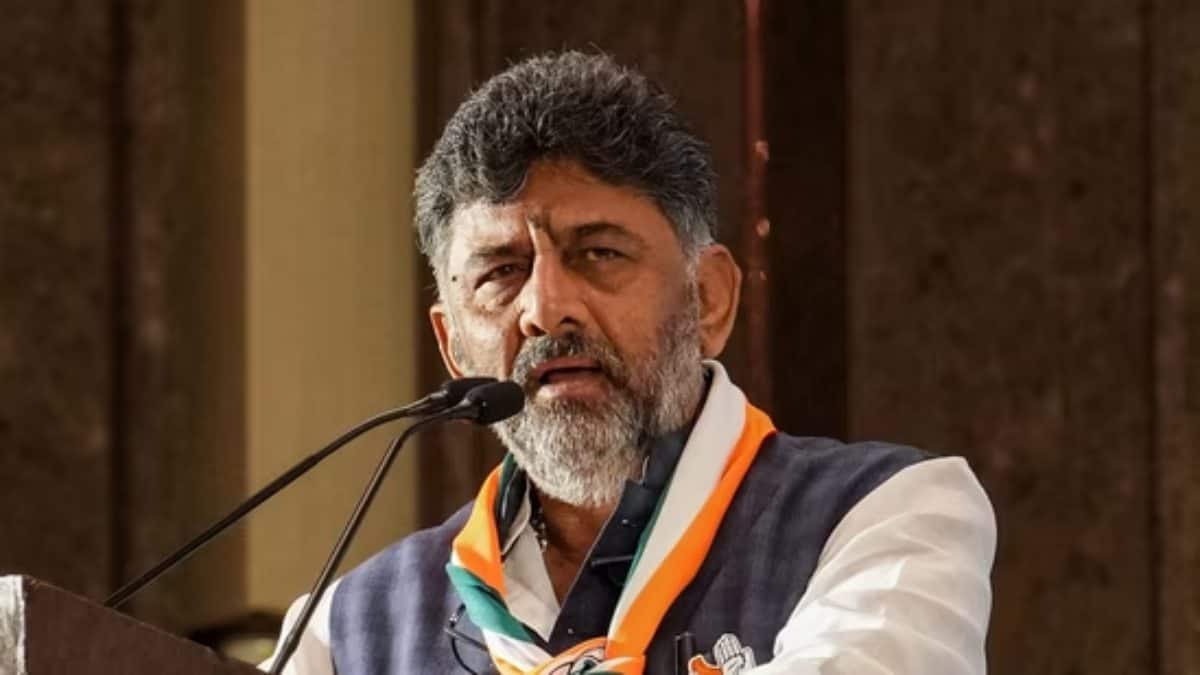
Karnataka’s Deputy Chief Minister finds himself at the centre of an online debate after a viral clip captures him distributing fruit from his own garland to supporters in Kanakapura.
The optics of political outreach in Karnataka took a bizarre turn this week. During a visit to Horahalli in his constituency of Kanakapura, Deputy Chief Minister DK Shivakumar was presented with a "Gajamala"—a massive, oversized garland constructed entirely of fresh apples and flowers. As the crowd surged to get a glimpse of the leader, a video went viral showing Shivakumar plucking an apple from the arrangement, taking a deliberate bite, and then tossing the remaining fruit into the cheering crowd.
The footage, which has since circulated widely on social media, shows supporters scrambling to catch the pieces of fruit as they were thrown into the air. While his immediate circle of followers responded with enthusiasm, the gesture has sparked a flurry of mixed reactions online. Critics have questioned the hygiene and decorum of tossing partially consumed food items into a crowd, while supporters argue it was an impromptu, informal display of rapport with his base.
A Tale of Two Appearances
The incident in Kanakapura came on the heels of a carefully curated public relations exercise earlier in the same day. In a bid to project an image of accessibility, Shivakumar had travelled on the Bengaluru Metro from Vidhana Soudha to the Silk Institute. His office described the commute as a genuine effort to experience public transport like a regular citizen, noting that he switched lines at the busy Majestic station and spent the journey interacting with commuters, reading newspapers, and handing out chocolates to children.
The contrast between the metro journey—a move intended to signal a departure from "zero-traffic" VVIP culture—and the apple-tossing event in Horahalli is stark. Where one sought to humanise the leader through shared civic experiences, the other leaned into traditional, high-energy political patronage that often characterises local rallies in the state.
Why it matters
This incident highlights the ongoing challenge for high-profile politicians in balancing modern, urban-friendly optics with the rugged, grassroots style of campaigning that remains essential in rural pockets. For a leader like Shivakumar, who holds significant influence in Kanakapura, the "Gajamala" incident is a reminder of how quickly informal interactions can become fodder for digital scrutiny.
The bigger picture here is the increasing vulnerability of political gestures in the age of omnipresent smartphone cameras. Actions that might have gone unnoticed in a pre-digital era are now subjected to intense public post-mortem. Whether these moments define a politician's brand as "approachable" or "unfiltered" often depends entirely on the viewer's political lens, leaving the leader to navigate the fallout of a viral moment that was likely intended as a simple gesture of connection.
National Affairs Desk at PoliticalPedia covers government & policy for an Indian audience in English and Hindi.