From Kolkata to the High Seas: India’s Triple Naval Push Signals a New Strategic Era
Modi commissions 3 indigenous frontline naval ships, says ‘strong maritime capability deciding factor for country's eco, strategic influence’
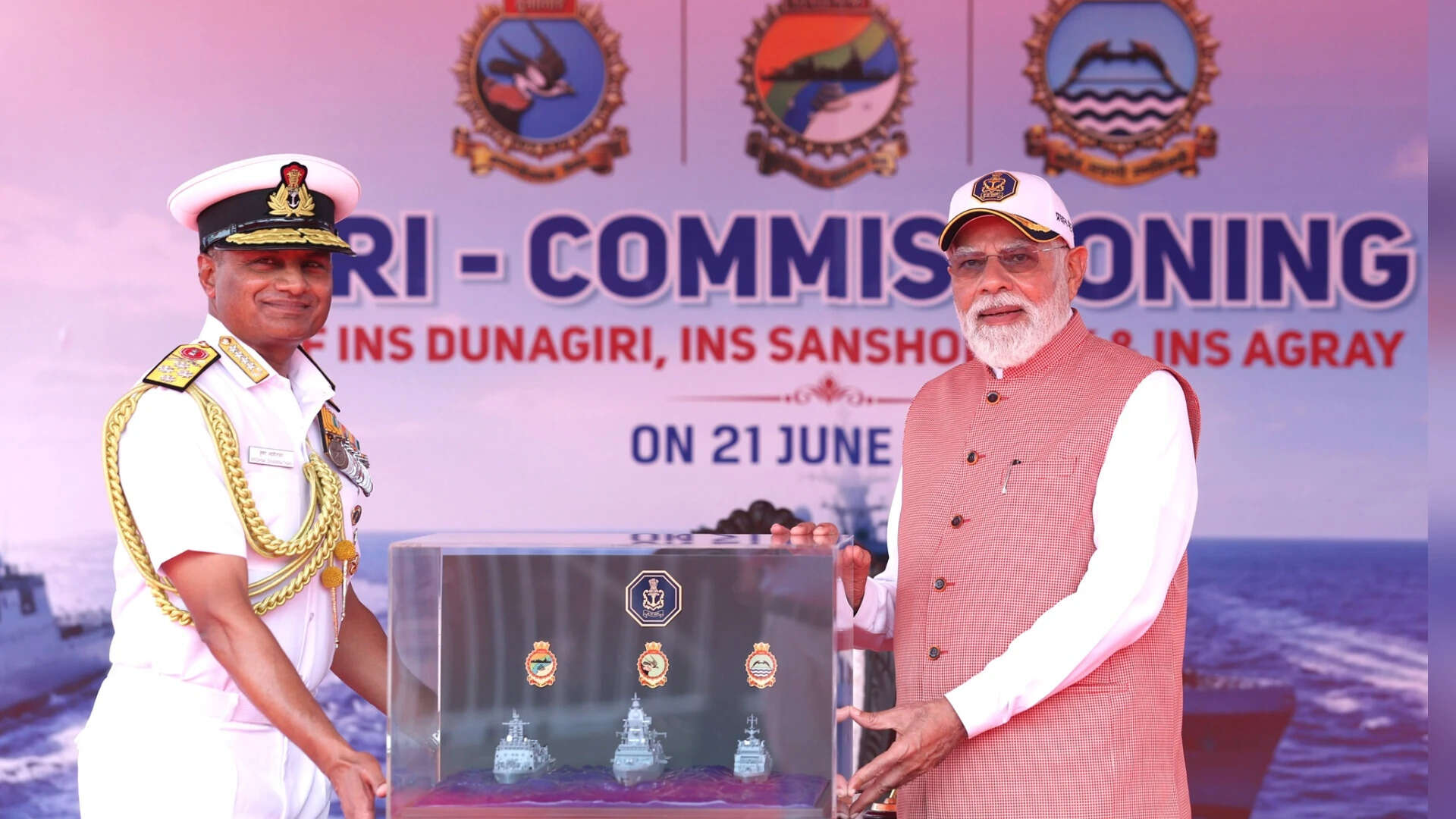
In a significant boost to its maritime security, India commissioned three indigenously built naval platforms in Kolkata, underscoring the nation's shift from a buyer to a global naval manufacturer.
The Hooghly River, which for centuries connected India to the global trade map, witnessed a modern milestone this Sunday as Prime Minister Narendra Modi commissioned three frontline naval vessels at the Syama Prasad Mookerjee Port in Kolkata. The induction of the advanced stealth frigate INS Dunagiri, the large survey vessel INS Sanshodhak, and the anti-submarine warfare shallow-water craft INS Agray represents a decisive leap in the nation’s "Aatmanirbhar Bharat" (self-reliant India) initiative in defence manufacturing.
Constructed by the Kolkata-based Garden Reach Shipbuilders & Engineers (GRSE), these vessels were designed by the Indian Navy’s Warship Design Bureau. With indigenous content exceeding 75 percent and support from over 200 MSMEs, the project highlights a shift in how India approaches military procurement—moving away from imports toward building a localized industrial ecosystem.
A Strategic Pivot
Addressing the gathering, Prime Minister Narendra Modi stressed that a nation’s economic and strategic influence is now inseparable from its maritime strength. As global trade increasingly flows through sea lanes and vital data networks operate beneath the surface, the Prime Minister noted that control over these domains will define future power dynamics. "No nation can emerge as a major power without strong maritime capabilities," he said, framing the commissioning not just as a military upgrade, but as a prerequisite for India’s development.
The event, which coincided with World Hydrography Day and the International Day of Yoga, serves as a symbolic marker for the Indian Navy’s accelerated expansion. With over 40 "Made in India" warships commissioned in recent years and 45 more currently under construction, the Navy is adding new strength to its fleet with a frequency that signals a fundamental change in industrial pace.
Why it matters
The "tri-commissioning" model—where multiple vessels from a single builder are inducted simultaneously—has become the new norm for the Indian defence establishment, mirroring a similar event held in Mumbai last year. For the broader region, this is more than just hardware; it is a signal of intent. By mastering the design and construction of complex platforms like stealth frigates and specialized anti-submarine craft, India is positioning itself as a net security provider in the Indian Ocean Region.
The focus on the "blue economy" and deep-sea resources suggests that New Delhi is viewing maritime policy through a long-term lens. The shift from being a mere consumer of defence equipment to becoming a "creator" suggests that India is preparing to secure its trade interests against evolving geopolitical threats while creating a sustainable employment engine in its shipbuilding sector. As the Navy continues to integrate these platforms, the focus will now shift to how quickly these ships can be operationalized to secure India’s growing economic footprint across the seas.
Ananya Iyer covers global affairs with an Indian lens for PoliticalPedia.