From Courtroom Battles to Media Ostracization: Kangana Ranaut Claims She Was the ‘First’ to be Banned
‘They tried to put me in jail’: Kangana Ranaut claims she was banned like Ranveer Singh
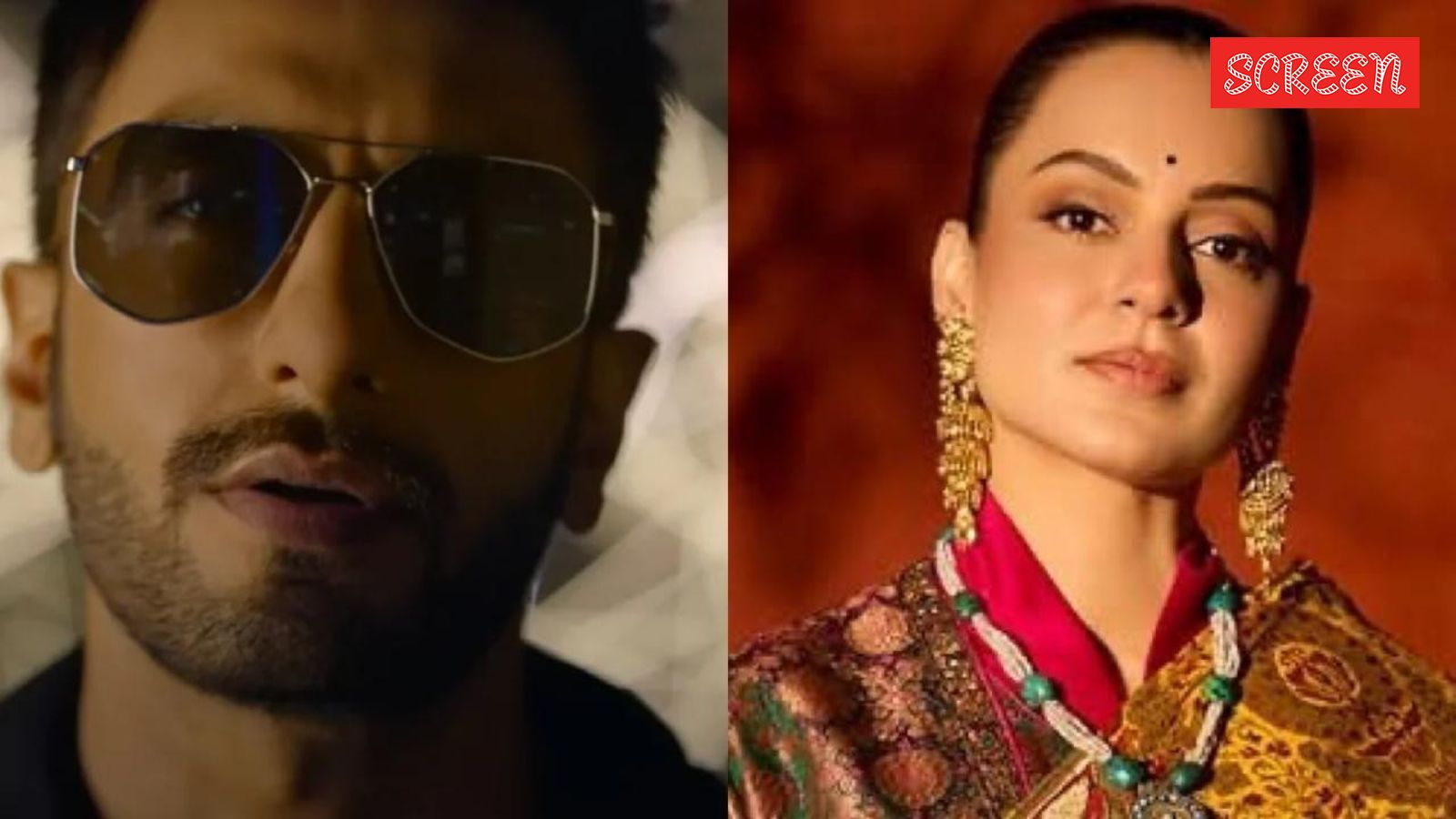
The actor draws parallels between her past legal struggles and the recent controversy surrounding Ranveer Singh, branding industry pushback as a rite of passage for stars.
The power corridors of Bollywood are currently witnessing a peculiar convergence of professional upheaval and victimhood narratives. As the industry grapples with the fallout of Ranveer Singh’s reported exit from the Don 3 project—an incident that briefly triggered a non-cooperation directive from the Federation of Western India Cine Employees (FWICE)—one voice has emerged with a familiar refrain. Kangana Ranaut, no stranger to public friction, has stepped forward to frame Singh’s current predicament as a predictable side effect of scaling the heights of stardom.
For Ranaut, the recent industry noise feels like a recurring script. In a candid interaction on Fever FM, she claimed she was the first celebrity to be "banned" by the media, describing a period of intense professional isolation that was compounded by relentless legal fire-fighting. "They tried to put me in jail," she remarked, recalling a time when her life felt like a cycle of endless peshiyan (court hearings). To the actor, the current backlash against Singh is merely "child’s play" compared to the sustained resistance she alleges she faced at the peak of her career.
A Pattern of Professional Friction
The parallels being drawn are not purely incidental. While Ranveer Singh has enjoyed the gargantuan success of the two-part Dhurandhar franchise—a project that cemented his status as a box-office titan—his professional trajectory has recently been marred by external pressures. Beyond the FWICE directive, which was eventually revoked, he has faced threats from external groups, highlighting a volatile ecosystem where high-profile actors are increasingly targeted by both institutional bodies and fringe elements.
Ranaut’s stance is one of seasoned resilience. At the trailer launch for her film Bharat Bhagya Vidhata, she dismissed the significance of these professional boycotts. Instead, she offered a view that suggests enemies are a byproduct of achievement. According to her, when an actor reaches the status that Singh currently holds, obstacles are inevitable. She maintains that despite the media bans and legal attempts to frame her, her career remained unaffected, suggesting that for the industry’s elite, these controversies are less about professional failure and more about the tax one pays for fame.
Why it matters: The politics of the industry ‘ban’
The discourse surrounding these "bans" reveals a deeper instability in the Hindi film industry’s self-regulation. When industry bodies like the FWICE issue non-cooperation directives, it signals a breakdown in the informal, collaborative culture that once defined Bollywood. This is no longer just about creative differences or contract disputes; it is about the exercise of power over individual agency.
By positioning these conflicts as a badge of honor, figures like Ranaut are redefining the narrative of "being cancelled." It transforms the victim of an industry ban into an untouchable heavyweight whose success is so threatening that it invites systemic sabotage. Whether this is a legitimate critique of a hostile work environment or a convenient way to build a brand around defiance, the pattern is clear: in the modern film industry, the court of public and institutional opinion has become as influential as the box office itself.
Priya Nair covers parties, elections and the business of power for PoliticalPedia.