Forced Labour Probe: Why the US Tariff Threat Puts India’s Trade Ambitions in a Bind
US Forced Labour Hearings: Trump's next tariff threat looms over 60 countries, including India
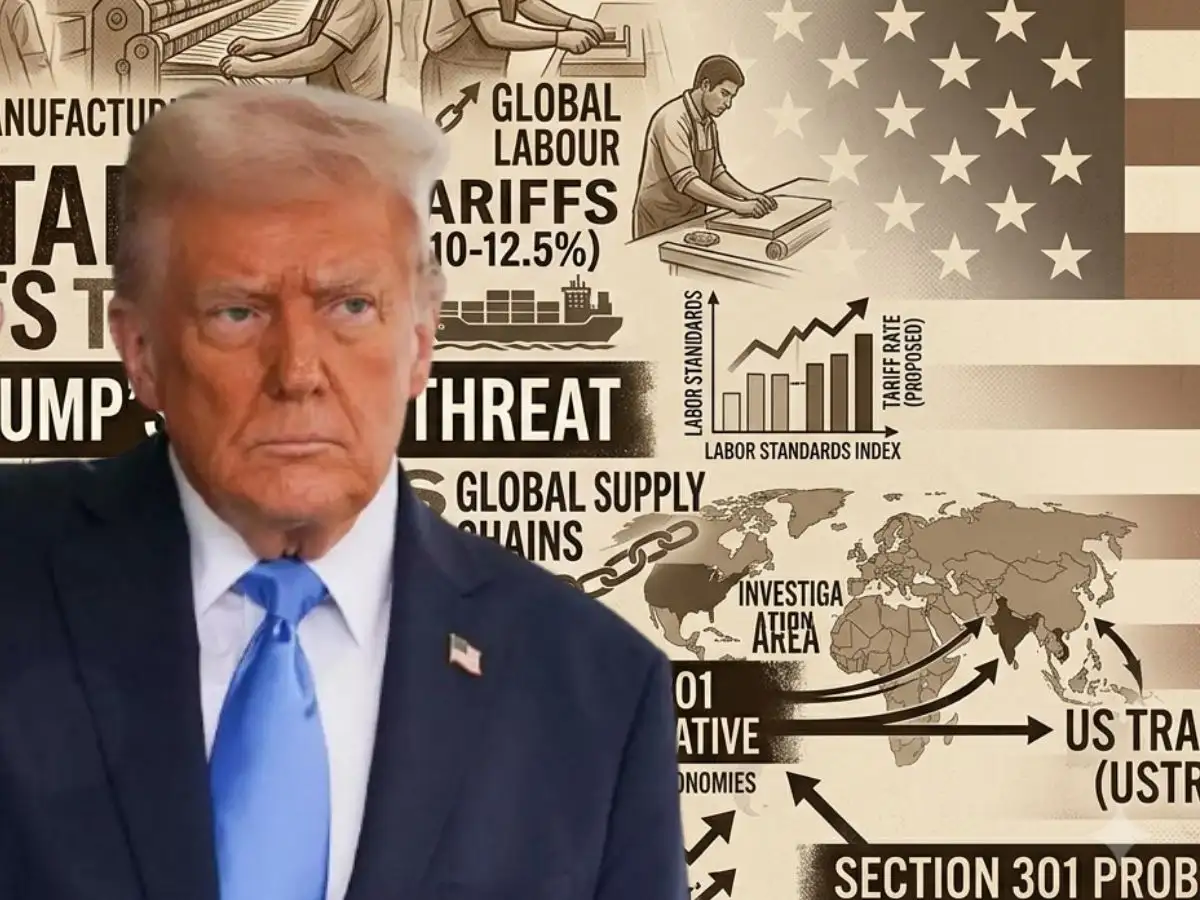
Washington’s latest Section 301 investigation puts a 10-12.5% duty on the table for 60 nations, casting a long shadow over India-US trade talks.
The corridors of North Block are once again abuzz with anxiety as Washington turns up the heat on global supply chains. A wide-ranging probe into forced labour practices has morphed into a concrete threat: the United States Trade Representative (USTR) is now weighing additional tariffs of up to 12.5% on goods imported from 60 countries, including India. For New Delhi, which has been working to iron out a bilateral trade deal with the US, this investigation under Section 301 is being viewed less as a humanitarian crusade and more as a high-stakes lever of trade diplomacy.
A Question of Compliance
The investigation, which began in March 2026, focuses on two specific areas: the direct use of forced labour in manufacturing and the failure of partner countries to effectively block the entry of such goods into their own domestic markets before they are exported to the US. Ambassador Jamieson Greer has been blunt, arguing that the status quo creates an "unlevel playing field" for American workers.
India has pushed back hard. In formal submissions to the USTR, New Delhi has challenged the legal basis of the probe, arguing that it fails to meet the threshold for a Section 301 action. The government’s stance is clear: it wants a negative determination to shut down the proceedings entirely. Yet, as industry groups prepare to present their arguments in upcoming US hearings, the mood in Indian boardrooms remains cautious. There is a palpable fear that these tariffs could stall the momentum of ongoing trade negotiations just as they near a critical juncture.
The Trump Tariff Playbook
What makes this development particularly ominous is its timing and the rhetoric surrounding it. White House officials have reportedly signalled that they intend to use these forced labour findings as a legal springboard to return to the aggressive, emergency-style tariff regime synonymous with Donald Trump’s past policies. By grouping 60 economies together—ranging from major powers to smaller manufacturing hubs—the US is effectively standardizing its trade barriers under the banner of human rights.
For sectors like textiles and light manufacturing, an additional 12.5% duty is not merely a rounding error; it is a significant cost burden that could erode the price competitiveness of Indian exports. The strategy seems designed to force trading partners to align their domestic import regimes with US standards under the threat of losing market access.
Why it matters
This is a classic case of trade policy being weaponised through regulatory scrutiny. By framing tariffs as a moral imperative against forced labour, the US effectively neutralises the ability of trade partners to complain about protectionism. For India, the pattern is becoming familiar: just as bilateral relations reach a high-water mark, a new "trade jungle" hurdle appears. Whether this serves as a genuine push for global labour standards or simply a blunt instrument to rebalance trade deficits, the result for New Delhi is the same—a delicate balancing act between maintaining sovereign regulatory control and keeping the American market wide open.
Arjun Mehta reports on government, policy and Parliament for PoliticalPedia, in English and Hindi.