FIFA World Cup 2026: Why the Trionda ball is a masterclass in precision technology
FIFA World Cup 2026: Why the new AI-enabled ball promises better decisions, fewer surprises
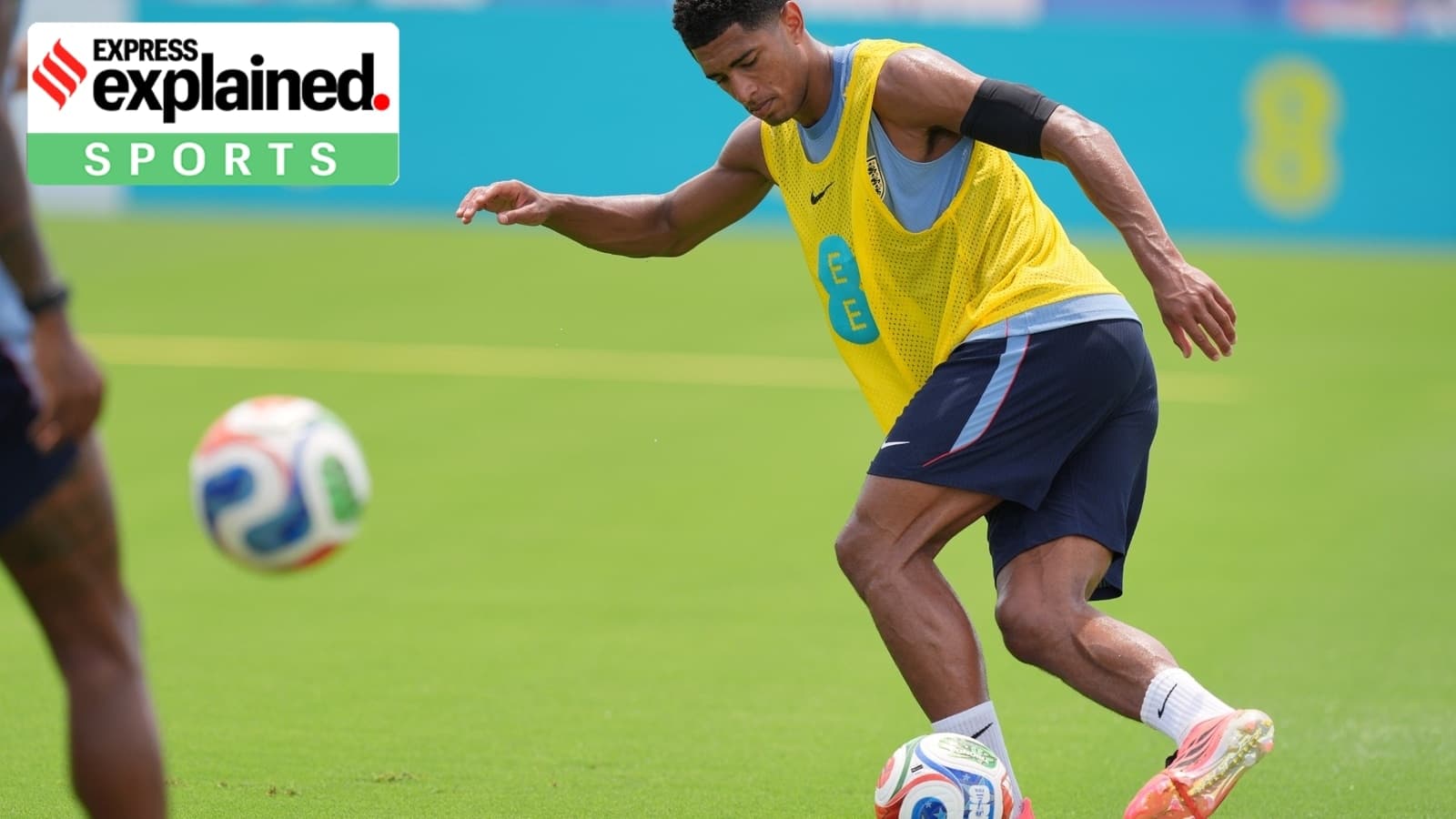
Adidas unveils the Trionda, an AI-powered match ball designed to eliminate officiating errors and provide unprecedented data insights for the upcoming global tournament.
The evolution of the football has come a long way since the iconic black-and-white panels of the 1970 Telstar. As the world prepares for the 2026 FIFA World Cup across North America, Adidas has officially introduced the Trionda—a ball that functions less like traditional sporting equipment and more like a high-performance electronic appliance. Named to represent the three host nations—the United States, Canada, and Mexico—the ball aims to balance symbolic heritage with the most advanced tracking technology ever deployed on a pitch.
Precision Engineering Meets Digital Intelligence
At the core of the Trionda is a sophisticated 500-hertz inertial measurement unit (IMU) motion sensor. Unlike previous designs that suspended sensors in the center, this new iteration integrates the chip directly into one of the four internal panels, with counterbalances ensuring that the ball’s flight remains perfectly symmetrical. This shift is critical; it provides the stability that was notoriously lacking in the 2010 Jabulani ball, promising players a predictable performance regardless of the velocity or spin applied. To maintain this "connected ball technology," the unit requires a 90-minute charge to power six hours of match play.
Transforming Referee Decisions
The primary objective behind the Trionda is to reduce the friction and delays often associated with the Video Assistant Referee (VAR) system. By transmitting razor-sharp movement data 500 times per second to stadium anchor points, the ball acts as a silent assistant for officials. It can pinpoint the exact "kick point"—the precise micro-second of contact between a player’s boot and the ball—which is essential for making definitive offside rulings. Furthermore, its ability to register every touch helps referees adjudicate handball incidents and penalties with a degree of accuracy that the human eye, even with video assistance, has historically struggled to achieve.
A Wider Ecosystem of Data
The ball does not operate in a vacuum. It functions as part of a broader technological suite, working in tandem with 12 specialized pitchside cameras that track player and ball positioning 50 times per second. FIFA is also introducing 3D player avatars, generated from body scans of every athlete, to assist referees in identifying interactions during crowded or obscured moments in the penalty box. As Hannes Schaefke, Football Innovation Lead for Adidas, noted, this level of granularity allows analysts to track metrics that were once impossible to measure, such as touch frequency during dribbling and high-speed running patterns.
Designed for the Global Stage
Beyond the electronics, the Trionda features a surface design with embossed icons engineered to improve grip, a necessary refinement for the diverse climates and damp conditions expected across the tournament's various host cities. By blending this physical durability with internal AI-driven insights, FIFA and Adidas intend to make the 2026 tournament the most data-transparent event in history. While superstars like Lionel Messi and Kylian Mbappé will undoubtedly dominate the headlines, the humble football itself has arguably become the most influential player on the field.
The PoliticalPedia Editorial Desk brings verified, sourced political news and analysis from across India.