Escalating Tensions: Pezeshkian Hits Back at Trump’s Iran Threat Amid Military Standoff
‘Desperation, Not Strength’: Pezeshkian Hits Back At Trump’s Iran Threat
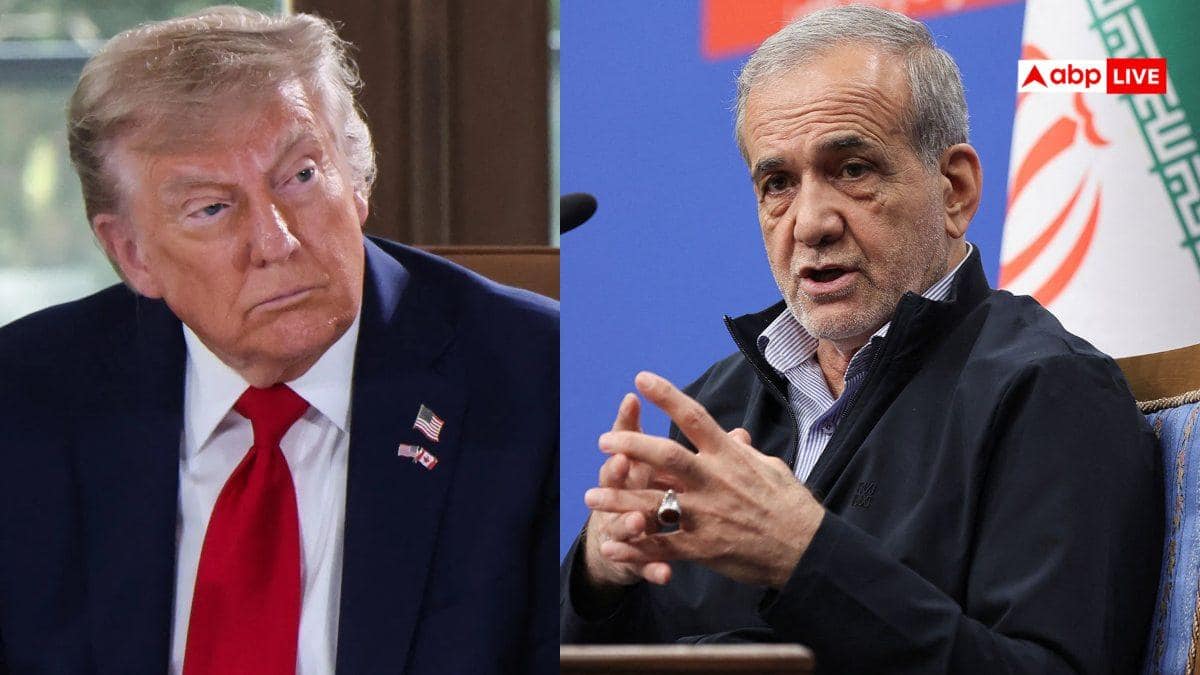
As the United States and Iran exchange heavy fire, Tehran warns that targeting critical infrastructure is a sign of desperation, not strength.
The geopolitical temperature in the Middle East has hit a boiling point, with direct military exchanges between the United States and Iran spiralling into a dangerous new phase. The trigger: the downing of an American Apache helicopter by Iranian forces—the second such loss confirmed by Washington—which prompted a rapid-fire sequence of retaliatory strikes. While the US military successfully rescued the crew from the downed aircraft, the skirmish has evolved into a broader conflict, with reports indicating Iranian strikes on American military installations across Jordan and Bahrain.
A War of Words and Missiles
Speaking from the Oval Office, Donald Trump took a combative stance, accusing Iranian negotiators of bad faith. "We’re going to be attacking them—attacking them very hard," the US President declared, claiming the two nations had been close to a deal before Tehran allegedly began playing the US for "suckers." Trump’s rhetoric has been backed by kinetic action, with the US launching repeated strikes on Iranian targets.
Iranian President Masoud Pezeshkian responded with a sharp rebuke, framing the Trump administration’s warnings as a psychological misstep. Pezeshkian explicitly dismissed the threat to Iran’s energy, water, and transportation networks as desperation, not strength. "Critical infrastructures are the lifeblood of the people," Pezeshkian said, asserting that the nation would stand firm against the mounting military pressure.
The Bigger Picture: Why It Matters
This escalation represents more than just a tactical exchange; it marks a breakdown in the back-channel diplomacy that had previously kept the region from full-scale war. For global markets and regional stability, the implications are severe. The targeting of "critical infrastructure" suggests that both sides are moving away from limited, surgical strikes toward a strategy of economic and systemic attrition.
When major powers move from negotiation to sustained military bombardment, the uncertainty ripple effect is immediate. For observers in India, the primary concern remains the potential for oil price volatility and the safety of the Indian diaspora in the Gulf. With Qatar attempting to mediate, the window for de-escalation is narrowing rapidly. The pattern here is clear: as long as both sides view compromise as a domestic political liability, the cycle of "hitting hard" will likely continue, further destabilising an already fragile regional architecture.
Rohan Gupta covers the economy, markets and companies for PoliticalPedia.