Ecuador’s Giant-Killing Act: A Historic Night in New Jersey
FIFA World Cup: Ecuador join rare club with Brazil and Argentina to beat Germany 2-1, book Round of 32 berth
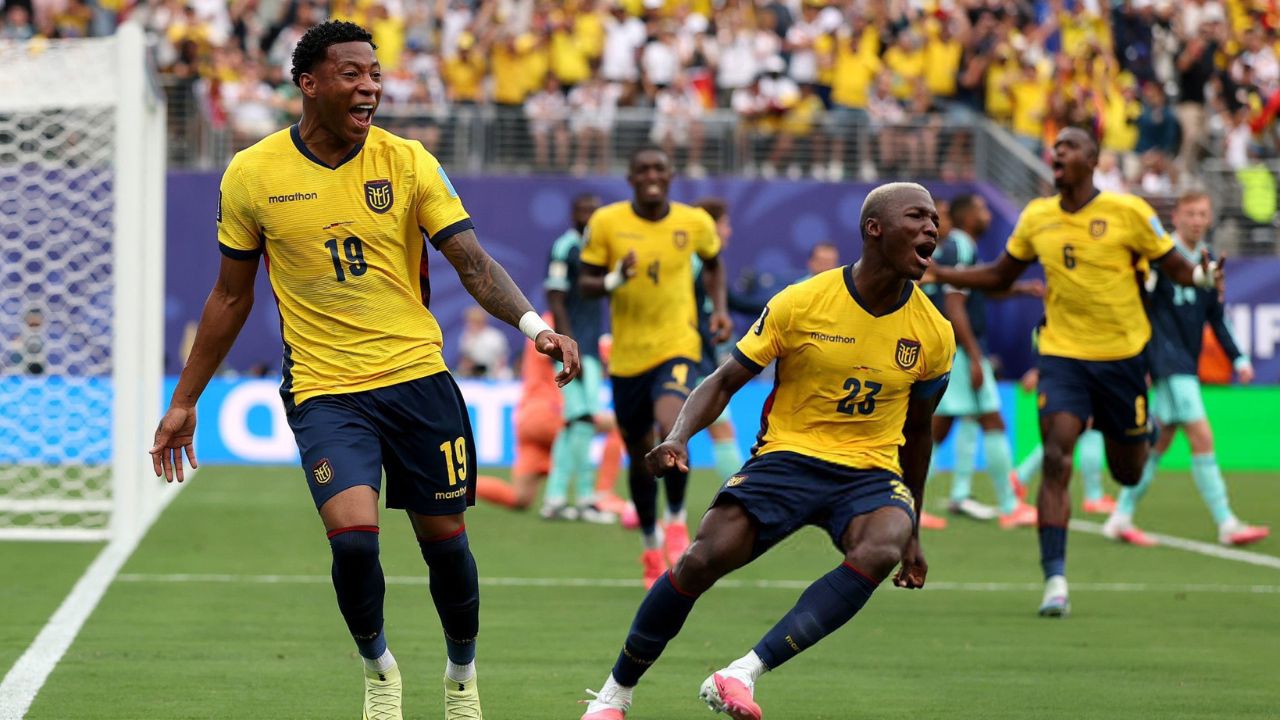
Ecuador stunned the football world with a 2-1 comeback victory over Germany, joining an elite club of South American teams to topple the four-time champions at the FIFA World Cup.
The MetLife Stadium in New Jersey became the stage for one of the most unlikely rescues in modern tournament history. For 77 minutes, Ecuador’s dreams of progressing to the Round of 32 looked dead and buried. Having failed to find the net in their opening two matches against Ivory Coast and Curacao, the South American side appeared destined for an early exit. Yet, football is a game of fine margins, and on Thursday night, Gonzalo Plata’s delicate flick past the legendary Manuel Neuer turned a desperate campaign into a historic triumph.
The night began in nightmare fashion for the Ecuadorians. Within 109 seconds, Leroy Sane had breached their defense, marking the second-fastest goal in the history of the ജര്മ്മന് ദേശീയ ഫുട്ബോള് ടീം at the FIFA World Cup. Only a 1934 strike by Ernst Lehner stands as a faster opening for the Germans. It was a cold, clinical start that suggested a long, painful evening ahead for Ecuador.
Joining the Elite
By turning the tide, Ecuador etched their name into a very exclusive ledger. Before Thursday, only two South American nations had ever managed to defeat Germany in a FIFA World Cup match: Brazil in 2002 and Argentina in 1986. Ecuador now sits alongside those giants, a feat that feels monumental given the perceived gap in pedigree. Furthermore, they are only the second non-European team in history, following Japan in 2022, to come from behind to beat the Germans.
This result has massive implications for their group. Despite the loss, Germany still topped the table, but the victory propelled Ecuador into the next round as one of the best third-placed teams. Ivory Coast also secured their place in history by finishing second, capping off a chaotic and thrilling night of action in New Jersey.
The Bigger Picture
Why does this matter? For the casual observer, it is a classic underdog story. But look closer, and it signals a broader shift in the global game. We are seeing a gradual erosion of the traditional European-South American duopoly that has defined the sport for decades. When smaller footballing nations—like Ecuador or Japan—consistently challenge established powerhouses like Germany, it forces a recalibration of how we view "tournament favorites."
For the players, the shift is personal. As Gonzalo Plata noted after the match, the team suffered through immense pressure after their winless start. That suffering appears to have forged a, "more hungry," squad. If this trend holds, the knockout stages will be far less predictable than the pundits originally predicted. Ecuador hasn't just survived; they have sent a warning to the rest of the tournament that the established order is very much up for grabs.
Ananya Iyer covers global affairs with an Indian lens for PoliticalPedia.