Cauvery Tensions Reignite: TVK Moves Resolution Against Karnataka’s Mekedatu Project
TVK Moves Resolution Against Karnataka's Mekedatu Project, Ally Congress Supports
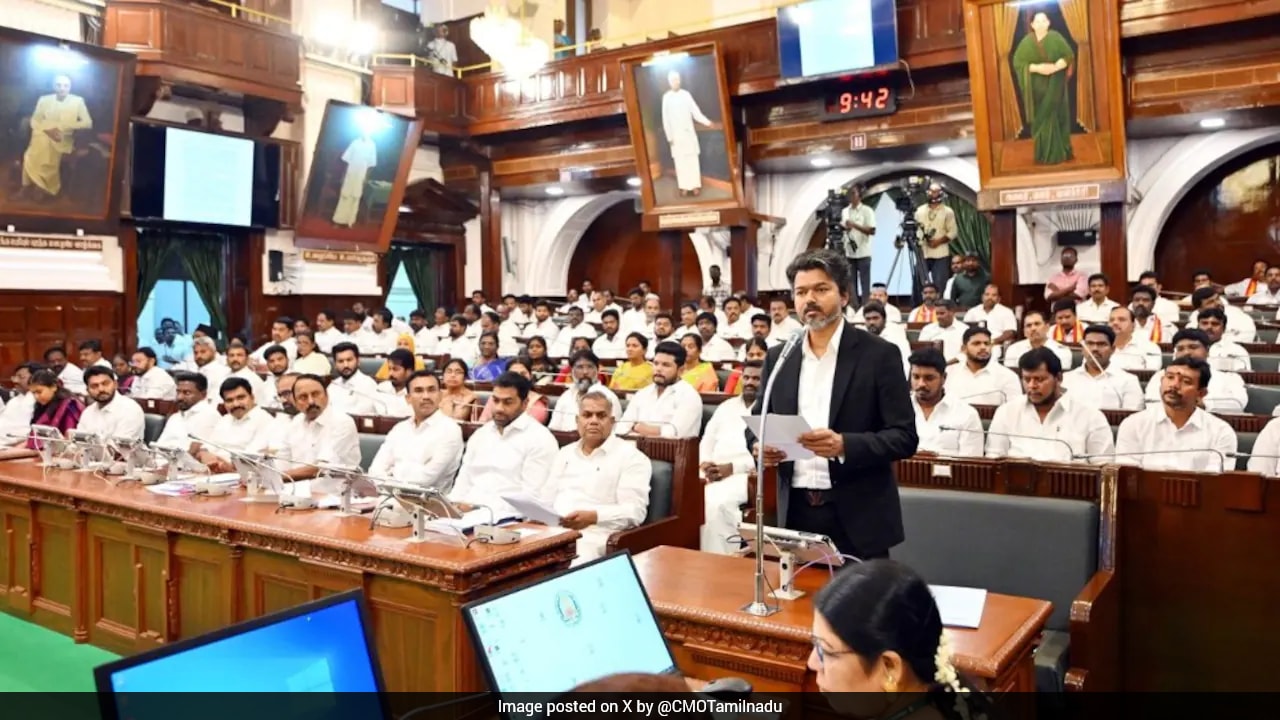
In a rare display of political unity in the Tamil Nadu assembly, the ruling TVK and opposition forces align against the contentious Mekedatu dam proposal.
The age-old friction over the Cauvery waters has found a new stage in the Tamil Nadu assembly. Chief Minister C. Joseph Vijay’s government has officially moved a resolution opposing the Mekedatu project, a multi-purpose dam proposed by Karnataka that has long been a flashpoint for regional discord. What makes this particular session significant is the tactical backing it received from unlikely quarters, as the ally Congress supports the move, creating a unified front that leaves little room for ambiguity regarding the state’s stance on its river rights.
For Tamil Nadu, the Mekedatu project is more than just a matter of infrastructure; it is viewed as a direct threat to the agricultural survival of the delta districts. By proposing to construct the balancing reservoir, Karnataka aims to address its own irrigation and drinking water needs, but officials in Chennai argue that the project would fundamentally alter the flow of the Cauvery, violating long-standing water-sharing agreements.
A Rare Political Alignment
The legislative floor saw a surprising convergence of interests. While the TVK-led government took the lead in presenting the resolution, the opposition—led by Udhayanidhi Stalin of the DMK—affirmed its support. Stalin’s statement made it clear that despite the usual ideological sparring, the party is prepared to back all efforts to protect the state’s legal and riparian rights over the river. This consensus suggests that when it comes to the Cauvery, the political lines in Tamil Nadu often blur in favour of a collective regional interest.
The resolution signals a firm rejection of any unilateral move by the neighbouring state. By formalizing this opposition, the government is looking to bolster its legal standing should the matter escalate to the Supreme Court or central tribunals. The strategy is clear: demonstrate that the entire political establishment in Tamil Nadu speaks with one voice, thereby exerting maximum pressure on the Centre to intervene in the Mekedatu project dispute.
The Bigger Picture
Why does this matter? The Mekedatu project is essentially a stress test for federalism in Southern India. Water remains the most sensitive currency in state politics, and as climate patterns become increasingly erratic, the competition for river resources is only intensifying. This resolution is not merely a symbolic gesture; it is a defensive maneuver designed to preempt any progress on the dam that might be perceived as a fait accompli by Karnataka.
Moving forward, the challenge for the Vijay administration will be to balance this aggressive stance with the realities of inter-state diplomacy. While the current legislative unity provides a strong mandate, the resolution is just the opening salvo in a protracted legal and political battle. The coalition of support—from the ruling TVK to the ally Congress and the opposition—highlights that for the people of Tamil Nadu, the Cauvery is not up for negotiation. How the Union government responds to this unified cry from the state assembly will determine whether this becomes a long-drawn judicial struggle or a platform for a mediated settlement.
Ananya Iyer covers global affairs with an Indian lens for PoliticalPedia.