Beyond the Seam-Bowling Gap: Why Nasser Hussain Wants India to Trust Shafali
Trust Shafali, the bowler: Nasser offers 'safety valve' to India's balance problem
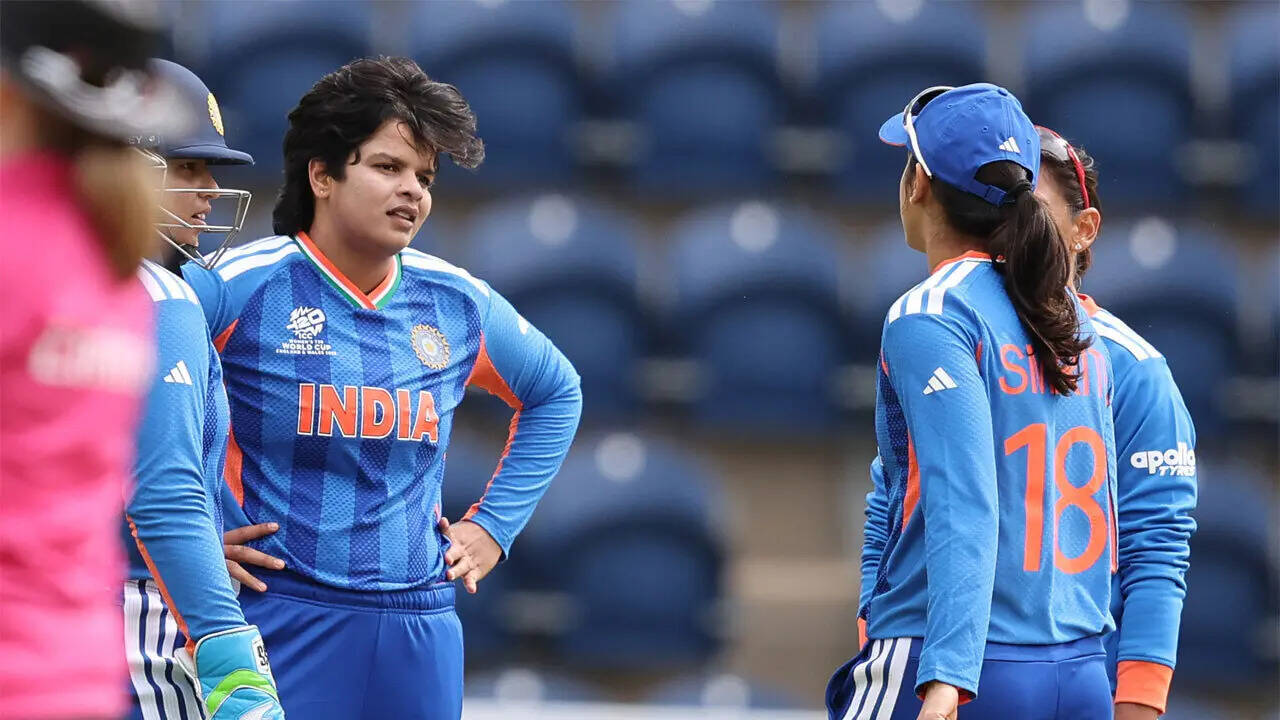
As India eyes another trophy on English soil, the search for balance in the playing XI has sparked a tactical debate ahead of the T20 World Cup opener.
The ghosts of the 2017 semi-final at Derby—where Harmanpreet Kaur’s monumental 171 redefined Indian women’s cricket—still linger in the English air. Now, as the team returns to the land where it all shifted, the stakes have evolved. Harmanpreet, no longer just a challenger, leads a unit that conquered the world in Navi Mumbai last year. Yet, the road to the July 5 final at Lord’s is obstructed by a familiar headache: team composition.
The injury-enforced absence of Amanjot Kaur and Kashvee Gautam has left a void that ripples through the entire squad. These two seam-bowling all-rounders were supposed to be the bridge between a heavy batting lineup and a reliable pace attack. Without them, the selection panel faces a binary choice: lean into batting depth or sacrifice a specialist bat to ensure the bowling unit isn’t left toothless.
The Nasser Solution
Enter Nasser Hussain. The former England captain, speaking during the JioStar Media Day, offered a pragmatic perspective that has caught the attention of the Indian camp. While many might scramble to find a like-for-like replacement, Hussain suggests that the answer to India's balance problem isn't necessarily a new recruit, but a strategic shift involving an existing star.
"I would pack my batting. I would use Shafali as my safety valve bowler," Hussain argued. His confidence stems from historical precedent; he pointed to the 50-over World Cup final where Shafali Verma, initially outside the main squad, stepped up to contribute with both bat and ball. Trusting Shafali to deliver a few overs of spin could allow India to play an extra specialist batter, effectively solving the middle-order fragility while keeping the bowling attack versatile.
The Bigger Picture: Why It Matters
The tactical reliance on multi-dimensional players is no longer a luxury; it is the hallmark of modern T20 cricket. India’s batting firepower is undeniable—Bharti Fulmali’s return, marked by a blistering strike rate of 159.5, adds significant teeth to a lineup already anchored by the aggression of Richa Ghosh. However, a top-heavy batting order can be a liability if the bowling attack lacks the cover of an all-rounder.
By pushing players like Shafali into roles beyond their primary skill, the team management is acknowledging that the "perfect" balance is a moving target. If they commit to Hussain’s "safety valve" approach, it signals a shift toward aggressive, high-risk cricket that prioritizes total runs over defensive bowling. Whether this gamble pays off when they face Pakistan on Sunday will set the tone for their entire World Cup campaign.
Ananya Iyer covers global affairs with an Indian lens for PoliticalPedia.