Beyond the Protest: The Cockroach Janta Party’s Blueprint for Exam Accountability
CJP's exam manifesto: 5 points party proposed at Pune protest if a paper gets leaked
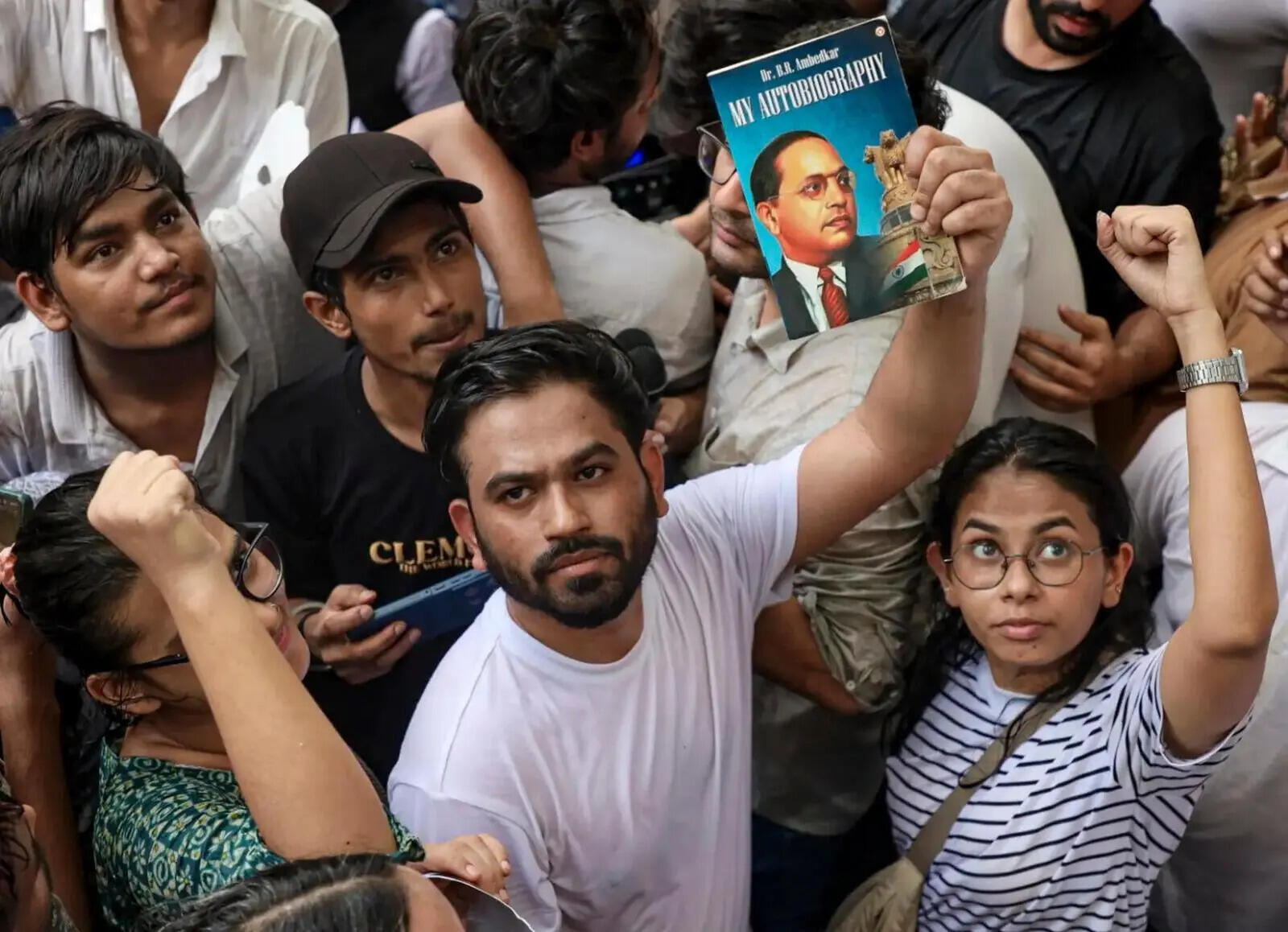
As protests erupt in Pune over recurring exam irregularities, a new political outfit challenges the status quo with a specific five-point manifesto for student welfare.
The air at the Savitribai Phule Pune University campus this Thursday was thick with slogans, as the Cockroach Janta Party (CJP) turned the heat on the Union Education Ministry. With education reform activist Sonam Wangchuk in attendance, CJP founder Abhijeet Dipke led a vocal demonstration, demanding the immediate resignation of Union Education Minister Dharmendra Pradhan. The protest, which echoed the mounting frustration of lakhs of students across India, served as the launchpad for a formal "exam manifesto"—a document the party hopes will address the systemic rot behind recent debacles in NEET, CBSE, and CUET examinations.
A Five-Point Plan for Accountability
The CJP’s manifesto is a direct response to the recurring pattern of paper leaks and administrative lethargy. The party has put forward five non-negotiable demands: a compensation of Rs 10,000 for every student impacted by a leak or delayed result, and a mandatory backup date for re-examinations within 72 hours of any cancellation.
Beyond immediate relief, the manifesto shifts toward structural oversight. It calls for a return to the physical evaluation of answer sheets for paper-based tests, citing concerns over the opacity of online assessment systems. Furthermore, the party is pushing for automatic age-limit relaxations for candidates whose professional timelines have been derailed by exam uncertainty, alongside mandatory, transparent technology and tender audits for all computer-based testing agencies.
The Clock is Ticking
Dipke’s message to the government is blunt: the era of silence is over. The protest in Pune is merely the opening act of a larger, nationwide campaign. The CJP has set a clear deadline for the Union Minister, declaring that if resignation demands are not met, supporters will march to Jantar Mantar in New Delhi on June 20. The party’s name, while unconventional, signals their intent to be a persistent, grassroots presence in the political ecosystem, positioning themselves as a voice for the "one crore students" who they claim have been failed by the current system.
Why it Matters
The rise of the CJP and its focus on examination integrity highlights a widening trust deficit between the youth and national testing agencies. When students lose months of preparation to paper leaks or technical glitches, it is not just a logistical failure; it is a profound loss of faith in meritocracy. By quantifying their demands—from specific compensation figures to strict 72-hour windows—the party is moving the discourse away from vague grievances toward a policy-based ultimatum. Whether this pressure forces a shift in how the government manages high-stakes national examinations remains to be seen, but the optics of a nationwide movement focused on student welfare is a bellwether for how election-bound cohorts might vote in the future.
Ananya Iyer covers global affairs with an Indian lens for PoliticalPedia.